For dogs and cats · Nov 1, 2016
Most herb advice for dogs is either too cautious or dangerously vague
Some kitchen herbs offer real, researched benefits for dogs, but a handful are genuinely toxic, and the difference comes down to biochemistry, not guesswork.
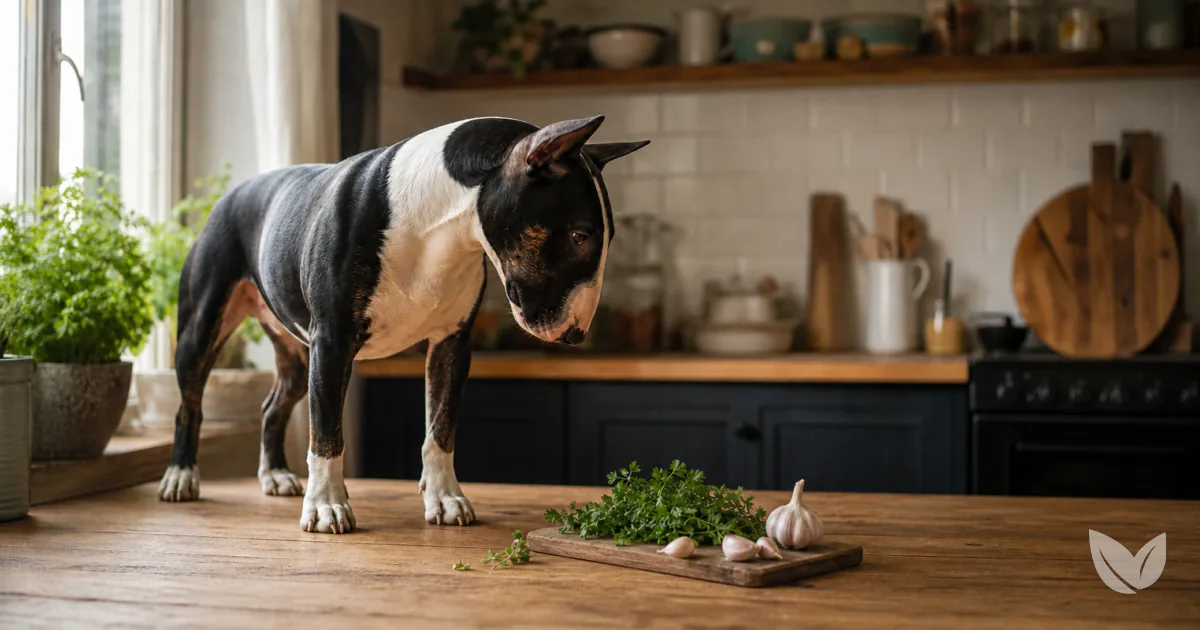
Most kitchen herbs are safe and beneficial for dogs, but two, comfrey and pennyroyal, should never be given. Comfrey contains pyrrolizidine alkaloids that cause serious liver damage and carry confirmed carcinogenic potential. Pennyroyal oil is acutely toxic and documented to kill dogs even after topical application. Garlic requires caution: the form and dose matter significantly, with dried and granulated forms more damaging to red blood cells than fresh, and toxicity established at 5 g/kg daily, well above culinary amounts.
Common misconception: Garlic is toxic to dogs, full stop
I understand why this one has taken hold. Garlic does contain organosulfur compounds, thiosulfates and sulphides, that oxidise erythrocyte membranes, denature haemoglobin by converting iron from Fe²⁺ to Fe³⁺, and at sufficient doses cause Heinz body formation and haemolytic anaemia [5]. That biochemistry is real, and I’m not dismissing it.
What gets lost, though, is that toxicity is entirely a question of dose and formulation, and the research makes this very clear. The threshold dose established in controlled studies is 5 g/kg of fresh garlic daily for seven consecutive days [4]. That is an enormous quantity. To put it in perspective for a 10 kg dog, you would need to feed roughly 50 g of fresh garlic every single day for a week to produce hematological changes. Nobody using garlic sensibly as a supplement is anywhere near that.
Meanwhile, aged garlic extract fed at 90 mg/kg/day for twelve weeks produced no adverse haematological effects, no haemolytic anaemia, and no abnormal clinical signs whatsoever in healthy Beagle dogs, a duration and dose that goes well beyond what any supplement would deliver [2].
The blanket “garlic is toxic to dogs” warning flattens all of this nuance into a single prohibition that the evidence simply does not support. What the evidence supports is this: high doses of certain forms of garlic, fed repeatedly, are harmful. Appropriate doses of appropriate forms are not. That distinction matters, and any manufacturer or practitioner who refuses to make it is not being cautious, they are being imprecise.
How these herbs act in the body, and how some cause harm
Garlic (Allium sativum) contains organosulfur compounds, thiosulfates and sulfides, that oxidise red blood cell membranes and denature haemoglobin. The oxidation converts haemoglobin’s iron from Fe²⁺ to Fe³⁺, producing methemoglobin, which can no longer carry oxygen. At high doses this leads to the formation of Heinz bodies and eccentrocytes in canine erythrocytes, with measurable changes in methemoglobin and erythrocyte-reduced glutathione. The threshold established in dogs is 5 g/kg fresh garlic daily for seven days.
At the other end of the dose scale, aged garlic extract at 90 mg/kg/day for twelve weeks produced no adverse haematological effects in healthy Beagles, and research shows it upregulates the Nrf2 signalling pathway and Nrf2-regulated phase II antioxidant enzymes.
Comfrey contains pyrrolizidine alkaloids that are metabolised by cytochrome P450 enzymes into highly toxic pyrrole metabolites. These damage hepatic endothelial cells, can cause sinusoidal obstruction syndrome, and carry confirmed carcinogenic potential in experimental animals.
Pennyroyal oil is acutely toxic. A documented case in a dog treated topically showed vomiting within two hours and death within 48 hours despite emergency intervention, with necropsy confirming the cause.
Some herbs are very beneficial and completely safe
Artemisia absinthium (wormwood) works against parasites through two documented mechanisms: its extract kills adult ticks (*Rhipicephalus sanguineus*) directly, 93.3% mortality at 20% concentration, and completely inhibits egg hatching at 5% and above. Against intestinal worms, a crude ethanolic extract achieved a 90.46% faecal egg count reduction in sheep at 2.0 g/kg on day 15 post-treatment, with efficacy comparable to albendazole in network meta-analysis of ethnoveterinary studies. But Artemisia too, is toxic in large amounts. (The amount used in our ParaCleanse Formula is completely safe.)
Turmeric (Curcuma longa) contains curcuminoids with documented anti-inflammatory, antioxidant, antimicrobial, and antiparasitic properties. In dogs it has been investigated for antioxidant and anti-inflammatory effects and wound healing in conditions such as gingivitis, and it reduces lipid oxidation in food.
Devil’s claw (Harpagophytum procumbens) root extract contains harpagoside and has demonstrated analgesic and anti-inflammatory effects in animal models, with effects on pain comparable to NSAIDs in some measures.
How to use herbs safely for your dog: what the evidence actually supports
Garlic: dose is everything
The research here is clear, and I want to be direct about it: garlic is not a simple “safe or toxic” question, it is a dose, formulation, and duration question.
– The toxicity threshold established in dogs is 5 g/kg fresh garlic administered daily for 7 days, producing Heinz bodies and eccentrocytes in red blood cells [4]. That is a very large amount, far beyond culinary quantities.
– Aged garlic extract has a distinctly different safety profile: 90 mg/kg/day for 12 weeks produced no adverse haematological effects, no haemolytic anaemia, and no changes in blood parameters in healthy Beagle dogs [2].
– The mechanism of harm is oxidative: organosulfur compounds (thiosulfates and sulfides) oxidise iron in haemoglobin from Fe²⁺ to Fe³⁺, producing methemoglobin incapable of carrying oxygen [5].
Practical takeaway: If you are using a product containing garlic, confirm that the dose is clearly stated on the label. Products using aged garlic extract at levels well below 90 mg/kg have the strongest safety data behind them [2].
Wormwood (Artemisia): anthelmintic and acaricidal use
Artemisia has ethnoveterinary and experimental evidence behind two uses:
– Endoparasites: A crude ethanolic extract at 2.0 g/kg body weight achieved a 90.46% faecal egg count reduction in sheep on day 15 post-treatment, with efficacy comparable to albendazole [9]. Network meta-analysis of ethnoveterinary data places it alongside conventional anthelmintics for helminthic infestation in animals [8].
– Ticks: In vitro testing of Artemisia absinthium extract showed 93.3% mortality of adult Rhipicephalus sanguineus ticks at 20% concentration, with complete inhibition of egg hatching at concentrations of 5% and above [1].
– Devil’s claw root extract (containing harpagoside) has demonstrated analgesic and anti-inflammatory effects in animal models, with some measures comparable to NSAIDs, and is traditionally used for pain and joint conditions [11].
What we’d recommend
Herbal Pet ParaCleanse Formula
Artemisia and other herbs in sensible, safe, effective doses.
See the product.
Frequently asked questions
Is garlic safe for dogs or is it toxic?
Garlic toxicity is real but dose- and formulation-dependent. Fresh garlic at 5 g/kg daily for 7 days causes Heinz bodies and hematological changes. Dried and granulated garlic appear more damaging than fresh in vitro. However, aged garlic extract at 90 mg/kg/day for 12 weeks produced no adverse blood effects in healthy Beagles. The takeaway: form and dose matter enormously, blanket ‘garlic is toxic’ statements ignore the evidence.
Is pennyroyal safe to use on dogs as a natural flea repellent?
No. Pennyroyal oil is documented to be lethal to dogs. A published case report describes a dog treated topically with pennyroyal oil that began vomiting within two hours and died within 48 hours despite emergency veterinary care. I would never recommend pennyroyal in any form, topical or ingested, for dogs.
Why is comfrey considered unsafe for dogs?
Comfrey contains pyrrolizidine alkaloids, which are metabolised by cytochrome P450 enzymes into toxic pyrrole derivatives that damage hepatic endothelial cells, can cause sinusoidal obstruction syndrome, and have confirmed carcinogenic potential in experimental animals. The risk to liver health is well-documented enough that I do not recommend it regardless of the dose.
Can wormwood (Artemisia) be used to treat worms in dogs?
The evidence is genuinely encouraging. A network meta-analysis found Artemisia comparable to conventional anthelmintics, and a sheep study showed a 90.46% faecal egg count reduction at 2 g/kg. Separately, a 20% extract showed 93.3% mortality against dog ticks in vitro. Ethnoveterinary surveys also record widespread traditional use of Artemisia species for gut parasites in dogs and other animals.
What evidence supports turmeric for dogs?
Turmeric (Curcuma longa) has over 4,000 years of traditional use and contains curcuminoids with documented anti-inflammatory, antioxidant, antimicrobial, and antiparasitic properties. In dogs specifically, it has been investigated for antioxidant effects, reduction of lipid oxidation, and use in inflammatory conditions including gingivitis. The research is early but consistent with the traditional use case.
Sources
- Acaricidal activity of extract of Artemisia absinthium against Rhipicephalus sanguineus of dogs
- Safety and efficacy of aged garlic extract in dogs: upregulation of the nuclear factor erythroid 2-related factor 2 (Nrf2) signaling pathway and Nrf2-regulated phase II antioxidant enzymes
- The Effect of the Type and Concentration of Garlic (Allium sativum) on Heinz Body Concentrations in Canine Erythrocytes—An In Vitro Study
- Hematologic changes associated with the appearance of eccentrocytes after intragastric administration of garlic extract to dogs
- The Effect of the Type and Concentration of Garlic (Allium sativum) on Heinz Body Concentrations in Canine Erythrocytes—An In Vitro Study
- Pennyroyal oil toxicosis in a dog
- Comfrey – LiverTox – NCBI Bookshelf – NIH
- Anthelminthic medicinal plants in veterinary ethnopharmacology: A network meta-analysis following the PRISMA-P and PROSPERO recommendations
- Anthelmintic activity of extracts of Artemisia absinthium against ovine nematodes
- Turmeric and Curcumin—Health-Promoting Properties in Humans versus Dogs
- Analgesic Effect of Harpagophytum procumbens on Postoperative and Neuropathic Pain in Rats
- Ethnoveterinary medicines used to treat endoparasites and stomach problems in pigs and pets in British Columbia, Canada