About natural supplements · Jun 30, 2014
Raw feeding delivers real digestibility gains that kibble’s heat processing destroys
The research on raw meat-based diets is still building, but the digestibility numbers and gut microbiome shifts are already compelling, and with correct formulation, the known risks are entirely manageable.
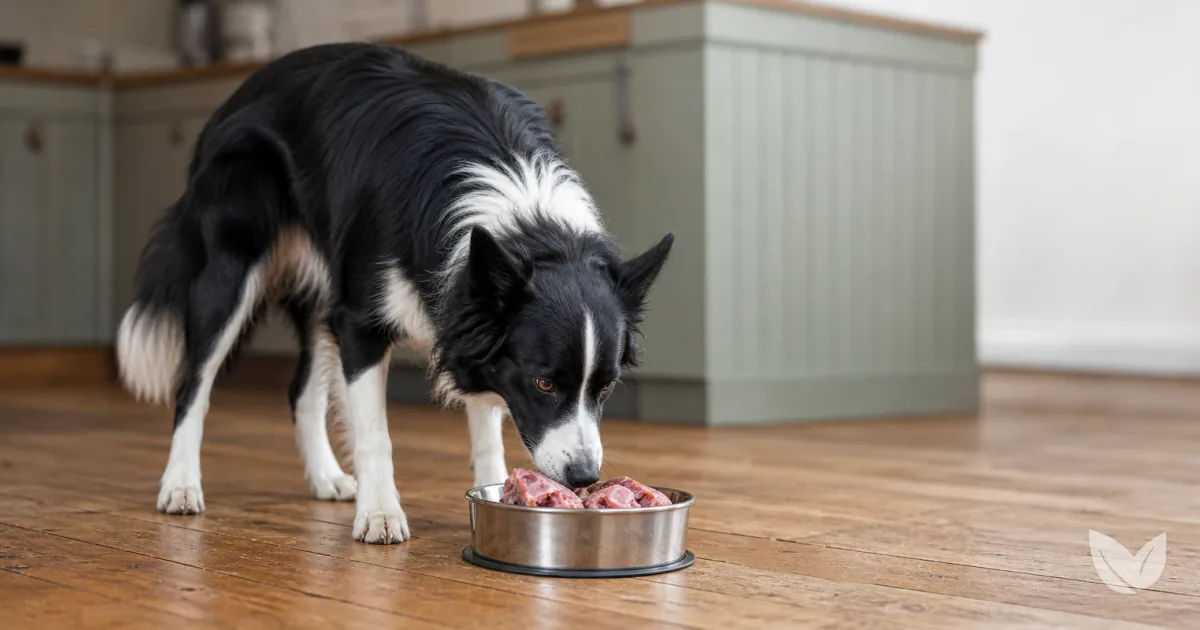
Raw meat-based diets genuinely do digest better, food digestibility reaches 95.7% on raw versus 57.1% on extruded kibble, with fecal output roughly half that of kibble-fed dogs to show for it. Heat processing drives the Maillard reaction, cutting amino acid bioavailability and loading dogs with advanced glycation end-products at up to 122 times the level adult humans consume. That said, formulation matters enormously: deficiencies in calcium, selenium, and zinc are well documented in poorly balanced raw diets, and bacterial shedding is a real consideration. Raw feeding done properly is excellent, done carelessly, it causes harm.
Common misconception: Raw feeding is nutritionally complete by default, just feed meat and bone
I get why this idea takes hold. The logic is clean: wolves thrive on raw prey, dogs descended from wolves, so meat and bone must cover everything. And honestly, some of that logic is backed by real science, raw meat-based diets genuinely do show higher overall digestibility (95.7% vs 57.1%) and better fat digestibility (97.5% vs 92.1%) than extruded kibble [1], and the smaller, firmer stools raw-fed dogs produce aren’t just anecdote; they reflect the body actually using more of what it’s eating [2]. Those are real advantages, and I’m not dismissing them.
The issue isn’t raw feeding. The issue is assuming that “more digestible” and “nutritionally complete” mean the same thing, they don’t.
Research into homemade-style raw diets, which is what most raw feeders are actually putting in the bowl, finds that many are deficient. There’s a published case of a puppy on an all-meat raw diet developing severe diffuse osteopenia, bone mineral density 66% below expected, bone mineral content 40% below expected, directly caused by imbalances in calcium, phosphorus, and vitamin D [7].
Here’s where I land: raw feeding, done properly, has huge merit. Better digestibility, improved stool quality, meaningful microbiome shifts [3], these are worth taking seriously. But “properly” is doing a lot of work in that sentence. A well-formulated raw diet is not the same thing as a bag of mince and some chicken wings. If you’re feeding raw, make sure the diet is balanced for species-specific nutrient requirements, not just species-appropriate protein sources. The protein source is the easy part; the mineral matrix is where most home feeders come unstuck.
How raw meat diets work differently in the body
The most immediately measurable difference between a raw meat-based diet and extruded kibble is digestibility, and the numbers are striking. Research comparing the two found overall food digestibility coefficients of 95.7% for raw versus 57.1% for extruded diets, with fat digestibility also higher on raw (97.5% versus 92.1%). You can see the practical consequence at the other end: raw-fed dogs produce significantly less faecal dry matter (20.9-40.1 g) compared to kibble-fed dogs (56.9-70.4 g). Less waste means more of what goes in is actually being absorbed and used. If you’re already feeding raw, you’ll know exactly what I’m talking about.
A large part of why heat-processed kibble underperforms comes down to what happens during extrusion. High-temperature processing triggers the Maillard reaction, which chemically alters amino acids, lysine in particular loses bioavailability, and produces advanced glycation end-products (AGEs). Dogs eating extruded kibble may be ingesting AGEs at a rate estimated at 122 times higher than adult humans on a metabolic body weight basis. These compounds are associated with disease in humans; their long-term effects in dogs are still being studied, but the dietary load from processed food is substantially higher.
At the microbial level, switching to a raw meat diet shifts the composition of the gastrointestinal microbiome. Populations of Fusobacterium and Clostridium increase, these genera ferment amino acids to produce butyrate, a short-chain fatty acid that supports intestinal homeostasis and acts as a primary energy source for the cells lining the gut. It helps maintain the gut wall and damp down inflammation. This is the body adapting, quite sensibly, to a high-protein, high-fat diet it’s well equipped to handle.
Where I do think raw feeders need to stay honest is nutritional balance. Poorly formulated raw diets, particularly all-meat arrangements without proper bone and organ inclusion, have been documented to cause calcium, phosphorus, and vitamin D deficiencies. In one documented case, a puppy on an imbalanced raw homemade diet developed severe osteopenia, with bone mineral density 66% lower than expected. A correctly formulated raw diet and a badly formulated one are not the same thing, and the biological advantages of raw food can be completely undone by poor composition. Getting the balance right isn’t optional, it’s the whole point.
Making raw feeding work in practice: What the evidence actually supports
Balance is non-negotiable, and it’s easier to get wrong than most people think
The digestibility advantages of raw diets are real, and I’m not going to pretend otherwise. But those advantages only materialise when the diet is correctly put together. Research shows that homemade-style dog foods are frequently deficient, particularly in selenium, copper, zinc, and calcium-to-phosphorus ratio. All-meat diets without bone or appropriate supplementation are specifically associated with rickets in growing animals; there’s a documented case of a puppy developing bone mineral density 66% below expected on exactly this kind of diet.
So let me be direct: feeding raw meat and doing raw feeding are not the same thing. If the diet isn’t formulated to species-specific targets, you’re doing the first, and it carries real risk, particularly for youngsters.
Raw bones are part of the structure, not an optional extra
Whole raw bones contribute calcium and phosphorus in a ratio the body can actually use. This is one of the core structural reasons why muscle meat alone is insufficient. It’s not a quirk, it’s physiology.
Practical hygiene, worth doing, not worth obsessing over
Raw feeders are generally pretty switched on about handling, but it’s worth stating clearly:
– Use stainless steel or ceramic bowls rather than porous materials; be aware that standard dishwasher washing may not fully eliminate all pathogens.
– Handle raw meat with the same discipline you’d bring to preparing your own food, separate boards, thorough hand-washing.
– Your dog may shed bacteria for up to a week after eating contaminated raw food, even with no visible symptoms.
Where the risk profile genuinely changes
– Households with immunocompromised individuals, pregnant women, young children, or elderly people face a documented zoonotic risk from bacterial shedding and contaminated bowls that normal cleaning cannot fully eliminate. That’s worth a frank conversation rather than dismissal.
– Growing puppies and kittens are at specific risk from mineral imbalances. Any raw diet for a growing animal needs rigorous formulation and monitoring, not a best guess.
The practical bottom line
Either work with a nutritionist who has genuine species-specific formulation experience, or buy a properly formulated commercial raw diet. Either route can work well. What doesn’t work is winging it on muscle meat alone and hoping for the best.
What we’d recommend
EveryPet Formula plugs nutritional gaps in modern diets, including raw feeding.
See the product
Frequently asked questions
Is raw food actually more digestible than kibble for dogs?
Yes, and the numbers are striking. Research shows raw meat-based diets achieve overall food digestibility of 95.7% compared to 57.1% for extruded kibble, with fat digestibility of 97.5% versus 92.1%. Raw-fed dogs also produce roughly half the dry-matter faecal output of kibble-fed dogs, 20.9-40.1 g versus 56.9-70.4 g. Less waste coming out means more nutrition going in. That’s not philosophy; it’s measurable physiology.
Does kibble processing destroy nutrients?
It measurably reduces amino acid availability, yes. The high heat of extrusion triggers the Maillard reaction, which degrades lysine and produces advanced glycation end-products, AGEs. Research estimates that dogs eating extruded kibble may be exposed to dietary AGEs at 122 times the level of an adult human on a metabolic body weight basis. AGEs are linked to disease in humans, and what that means for dogs over a lifetime is a question worth taking seriously.
What does a raw diet do to a dog’s gut bacteria?
It shifts the microbiome toward bacteria that specialise in protein and fat utilisation, particularly *Fusobacterium* and *Clostridium*. These genera ferment amino acids to produce butyrate, a short-chain fatty acid that supports intestinal wall integrity and homeostasis. The gut is adapting to what it’s being fed, and in a raw-fed dog, that adaptation looks like a metabolically efficient, high-protein processing environment.
Is raw feeding safe, or does it pose a bacterial risk to my family?
The zoonotic risk is real and I won’t gloss over it. Dogs fed raw meat can shed pathogenic bacteria, including Salmonella, asymptomatically into their environment for up to seven days after eating contaminated food. Salmonella has been found to persist on food bowls even after dishwasher washing at 85°C or scrubbing with bleach. If you feed raw, strict kitchen hygiene and separate handling equipment aren’t optional extras, they’re the baseline.
Can a raw diet be nutritionally incomplete or cause harm?
A poorly formulated one, absolutely. Studies of homemade-style raw diets found 90.9% deficient in selenium, 45.5% deficient in copper and zinc, and over half failing to meet correct calcium-to-phosphorus ratios. A documented case shows a puppy on an all-meat diet developing severe osteopenia, bone mineral density 66% below expected, from calcium, phosphorus, and vitamin D deficiencies. Raw feeding done well is excellent; meat in a bowl with nothing else is not a complete diet.
How strong is the scientific evidence for raw feeding benefits?
Promising, but still building. Most supporting evidence currently sits at Level III or IV, low on the evidence hierarchy, with very few randomised controlled trials conducted so far. The observed benefits around improved body condition and stool quality are real and measurable. The broader health claims, though, are often extrapolated from human research or based on owner observation rather than controlled studies. The science is heading in an encouraging direction; it just isn’t conclusive yet.
Sources
- Current Evidence on Raw Meat Diets in Pets: A Natural Symbol, but a Nutritional Controversy
- Raw diets for dogs and cats: a review, with particular reference to microbiological hazards
- The effects of raw-meat diets on the gastrointestinal microbiota of the cat and dog: a review
- Standardized amino acid digestibility and nitrogen-corrected true metabolizable energy of frozen raw, freeze-dried raw, fresh, and extruded dog foods using precision-fed cecectomized and conventional rooster assays
- Nutritional evaluation of new alternative types of dog foods including raw and cooked homemade-style diets
- Abnormal bone mineralization in a puppy fed an imbalanced raw meat homemade diet diagnosed and monitored using dual-energy X-ray absorptiometry
- Insights into dog owner perspectives on risks, benefits, and nutritional value of raw diets compared to commercial cooked diets
- Current Evidence on Raw Meat Diets in Pets: A Natural Symbol, but a Nutritional Controversy