About natural supplements · Jun 13, 2016
That “complete and balanced” label on your cat’s food doesn’t tell the whole story
Cooking destroys nutrients, cheap mineral additives pass straight through your cat, and the label tells you almost nothing about what she actually absorbs, here’s what to do about it.
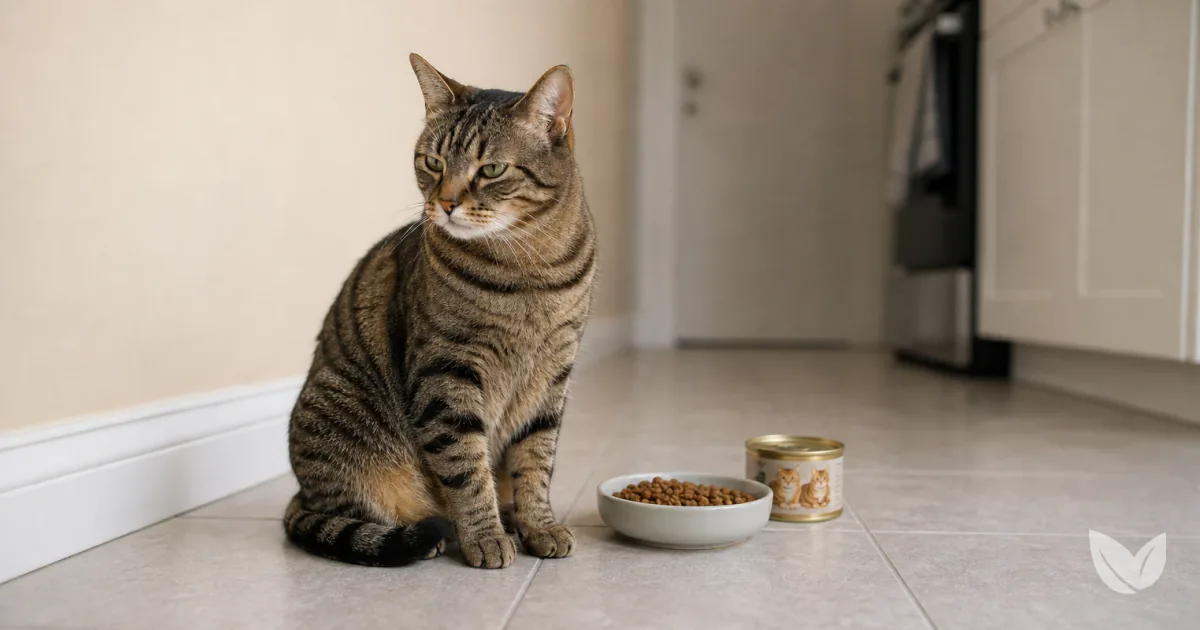
Even if your cat eats a “complete and balanced” food, she may still have nutritional gaps, and here’s why. Heat processing (the kind used to make most tinned and dry foods) can cut the usable protein in a meal by up to 61.8%. On top of that, current guidelines for how much protein cats need appear too low to keep muscle on their bodies. Raw and homemade diets bring their own problems: most fall short on trace minerals like iron, copper, and zinc. Some of the minerals manufacturers do add are poorly absorbed. And nearly half of tested commercial foods contain ingredients that aren’t on the label. That said, not every cat needs a supplement, it depends on what she’s actually eating and how well her body is using it.
Common misconception: Complete and balanced commercial cat food needs no supplementation
I get why cat mums believe this. The “complete and balanced” label sounds official, and it is, to a point. It means the food meets AAFCO minimum nutrient profiles. The cat food industry repeats the no-supplementation message constantly, and the American College of Veterinary Nutrition backs them up [1]. On the surface, it feels reassuring.
The problem is that “complete and balanced” is carrying a lot of weight for a standard with some real cracks in it.
Take the AAFCO profiles themselves. They were worked out using highly refined, purified diets, not actual cat food ingredients. The amino acids in those test diets are far easier for a cat to absorb than the ones in a bag of kibble [9]. A label tells you how much protein is in the food. It does not tell you how much your cat can actually use. Heat processing alone can cut the usable amount of the amino acid lysine by up to 61.8% compared to what the chemistry suggests is there [11]. Amino acid digestibility drops measurably the more heat is applied [25], and kittens fed raw diets digest protein better than those fed heat-processed kibble [24]. The nutrients are listed. That does not mean they are arriving.
Minerals have the same problem. Ingredients like grains, legumes, and seeds contain phytate, a compound that blocks zinc and iron absorption. Too much zinc in the diet suppresses copper uptake. And some of the mineral additives used in commercial cat foods, including iron oxide, copper oxide, and iron carbonate, are poorly digestible forms [12]. In one study, 14 out of 20 raw food products fell below AAFCO minimums for trace minerals [4]. In commercial foods labelled “complete and balanced,” the measured mineral content often does not match what the label implies, which looks like an additive problem, not a recipe problem [13].
Protein is another area where the standard may not be enough. When researchers used lean body mass maintenance, a more meaningful measure of whether a cat is actually doing well, they found adult cats need around 5.2 g of protein per kg of body weight per day. Current AAFCO standards translate to roughly 3.25-3.9 g/kg [15]. Losing lean muscle mass is not just cosmetic: it weakens the immune system and increases the risk of illness.
Then there is what is actually in the food. Unlabelled ingredients have turned up in a median of 45% of tested diets [16]. AAFCO feeding trials for adult cats last only six months, probably not long enough to catch problems that develop slowly over years [10]. Adverse food reactions in cats are on the rise alongside the sheer number of commercial foods available [18], and high-temperature processing increases the cat’s exposure to advanced glycation end-products, compounds that build up in the body over time [19].
None of this means every cat eating commercial food is in trouble right now. Some cats do absolutely fine without added supplements. But “complete and balanced” is a minimum regulatory threshold, tested under conditions that do not fully reflect what ends up in your cat’s body. That is not the same thing as saying supplementation is never needed.
Why “complete and balanced” doesn’t always mean what the label says
The promise on the bag, “complete and balanced”, sounds reassuring. But the research behind it has some real gaps, and I think cat mums deserve to know what they are.
How dry food is made matters more than most people realise. Most kibble goes through a process called extrusion: the ingredients are forced through a machine under high heat and pressure. That heat damages protein. Studies show that the difference between the lysine shown on a food label and the lysine your cat’s gut can actually absorb can be as wide as 61.8%. The label looks fine; the nutrition your cat gets is something else. The chemistry behind this involves Maillard reactions, protein crosslinking, and amino acid changes that happen when food gets very hot. When kittens were fed raw diets alongside heat-processed ones, the raw diets showed noticeably better protein and dry matter digestibility, the processing itself was the reason.
Heat also creates compounds called advanced glycation end-products (AGEs), and cats eating extruded kibble consistently produce more waste and absorb less usable nutrition per meal than cats on fresh or lightly processed food.
Then there’s the mineral problem. Even if a food contains the right minerals on paper, that doesn’t mean your cat absorbs them. Phytate, found in plant ingredients, blocks zinc and iron uptake. Too much zinc suppresses copper absorption. Calcium, magnesium, and phosphorus all get in each other’s way. Some of the mineral additives used in cat food, including iron oxide, copper oxide, and iron carbonate, are simply poorly absorbed. Real-world testing found that 14 out of 20 raw food products had trace mineral levels below AAFCO minimums, and canned pâtés keep turning up as a source of thiamine deficiency.
The testing standards themselves have limits. The feeding trials used to approve adult cat foods run for just six months, which may not be long enough to catch problems that develop slowly over years. The nutrient targets were also set using highly purified lab diets, not the actual ingredients in commercial food, and they don’t account for how well the body absorbs those nutrients in practice.
Protein is another area where the numbers don’t add up. Research that measured what adult cats actually need to maintain lean muscle, rather than simply balance nitrogen, put the requirement at around 5.2 g of protein per kg of body weight. Current AAFCO standards translate to roughly 3.25-3.9 g/kg. That’s a meaningful gap. Losing lean muscle isn’t just a cosmetic issue: it’s linked to a weaker immune system and greater risk of illness.
And the label itself won’t tell you the full story. Pet food labels are only required to list a handful of nutrients, nothing about digestibility or bioavailability. Unlabelled ingredients have been found in a median of 45% of tested diets. For a cat eating the same food every day, that’s a constant, low-level immunological challenge she has no way to avoid.
How to use cat supplements effectively, what the evidence actually tells you
Start with your cat, not a protocol
My first piece of advice has always been the same: know your cat. Know what his normal stools look like, how his coat feels, whether he’s full of beans or dragging. Supplement decisions should follow what you actually see in *your* animal. Some cats will sail through their whole lives on food alone. Others need consistent support. The difference comes down to what your individual cat is eating and how well his body is actually using it.
When you probably do need to supplement
The research points clearly to the situations where there’s a real gap between what the label says and what your cat gets:
– Raw or homemade diets. Studies show raw meat-based diets regularly fall below minimum levels for trace minerals, iron, copper, and zinc, because most raw products contain no mineral additives at all. Cats fed unbalanced homemade diets have developed serious conditions: heart disease from taurine deficiency, neurological signs from thiamine deficiency, and bone problems from too little calcium and vitamin D. If you’re feeding raw or homemade, supplementation isn’t optional, it’s necessary, and it needs to match what the diet is actually missing.
– Dry kibble or tinned food. High-temperature processing reduces how much protein your cat can actually absorb. The gap between the amino acid figure on the label and the amount your cat can use has been measured at up to 61.8% for lysine. Tinned pâtés in particular have been flagged as a category at risk of thiamine shortfall. Plant-based ingredients in commercial food also block zinc and iron absorption, and some of the mineral forms used as additives, iron oxide, copper oxide, iron carbonate, are poorly absorbed by cats in the first place.
– Cats on a diet with treats. Research found that when a standard 10% treat allowance was factored in for less active cats, some diets no longer met minimum protein and fat requirements, and that shortfall pulls micronutrients down with it.
– Cats showing stress-related behaviour. An open-label field study, the first of its kind in cats, found that L-theanine at 25 mg twice daily for 30 days produced measurable improvements in stress-related behavioural signs.
What to keep well away from your cat
Some herbal compounds are genuinely dangerous to cats. Pennyroyal oil and tea tree oil have both caused fatalities in small animals through skin absorption or ingestion. Cats process compounds through their liver differently from dogs or humans, which makes them uniquely vulnerable to things other species handle without trouble.
A plain word about “complete and balanced”
Every “complete and balanced” claim on a cat food label is based on AAFCO nutrient profiles, and those profiles were built using purified research diets that are more bioavailable than the ingredients in actual commercial food. AAFCO itself says the guidelines shouldn’t be applied without checking that nutrients are actually available in the food. Adult maintenance feeding trials can be as short as six months, not long enough to catch many long-term deficiency or disease effects. Audits of commercial cat foods have found unlabelled ingredients in a median of 45% of tested diets. “Complete and balanced” is a starting point, not a promise, and I think you deserve to know that clearly.
What we’d recommend
Daily chews to help support comfort and mobility in cats whose joints are starting to slow them down.
See the product
Frequently asked questions
If commercial cat food is labelled ‘complete and balanced’, why would my cat need supplements?
‘Complete and balanced’ sounds reassuring, but the label tells you what went into the food, not what your cat actually absorbs. Those AAFCO standards are built on studies using purified ingredients that are far easier to digest than what ends up in a real bag or tin. Heat processing alone can wipe out up to 61.8% of available lysine. Independent testing has found raw and canned foods with trace minerals below AAFCO minimums. The label is not a guarantee of what lands in your cat’s body.
Are there real nutritional gaps in commercial cat food, or is this just marketing for supplements?
They are real, and they show up in peer-reviewed research on products currently sitting on shop shelves. Studies have found a mismatch between what ‘balanced’ labels claim and what’s actually in the food, largely blamed on problems with how mineral additives are added, not how the recipe was designed. On top of that, some of the mineral forms used, iron oxide, copper oxide, are poorly absorbed. Plant-based ingredients add phytate, which blocks zinc and iron uptake further. Your cat can be eating a food that looks fine on paper and still fall short.
Do cats fed homemade diets really need supplements?
Yes, and I say that without hesitation. Cats fed unbalanced homemade diets have developed heart disease from taurine deficiency, neurological damage from too little thiamine, and bone problems from shortfalls in calcium and vitamin D. These are not theoretical risks, they are documented outcomes. Generic recipes from the internet are a genuine danger. If you are cooking for your cat, professional nutritional guidance and targeted supplementation are not optional extras.
Are herbal supplements safe for cats?
It depends entirely on which herb you are talking about. Some are genuinely dangerous: pennyroyal oil and tea tree oil have both caused deaths in cats, including through skin absorption. Some Chinese herbal preparations have been found to contain undisclosed amounts of aconite and strychnine. On the other hand, a double-blind randomised controlled trial showed that a formulation containing thyme, rosemary, and fenugreek significantly reduced flea burdens in cats with no reported harm. ‘Herbal’ does not mean safe, the specific plant matters enormously.
Can supplements help with stress and anxiety in cats?
There is published clinical evidence for at least one nutrient. L-theanine given twice daily produced measurable improvements in stress-related behavioural signs in cats over a 30-day field study, the first published trial of its kind in cats. Herbal remedies including lavender, valerian, lemon balm, and hops have recognised mechanisms in nervous system regulation and are used across species in ethnoveterinary medicine, though dedicated feline trials remain limited.
Is there evidence that herbal treatments are actually used in veterinary practice, or is it fringe?
It is far from fringe. A survey of Spanish veterinary practitioners found that 80% of those familiar with medicinal plants used herbal therapy in their work, most often for joint and muscle problems (70%), skin conditions (57%), and digestive issues (52%). Those happen to be the exact conditions that are on the rise in companion cats. Uptake is still stronger in large-animal practice, but herbal medicine is a recognised and growing part of modern veterinary care.
Sources
- Assessing pet supplements
- Evaluation of iron, copper and zinc concentrations in commercial foods formulated for healthy cats
- Commercial vs Homemade Cat Diets: What you need to know
- Use of medicinal plants by veterinary practitioners in Spain: A cross-sectional survey
- A Dietary Plant Extract Formulation Helps Reduce Flea Populations in Cats: A Double-Blind Randomized Study
- Herbal Medicine in Veterinary Patients
- Implementation of a prospective in-clinic validated Feline Osteoarthritis Checklist – PMC
- Diagnosis of Feline Food Sensitivity and Intolerance Using Saliva: 1000 Cases – PMC
- Dietary Modulation of the Gut Microbiota in Dogs and Cats and Its Role in Disease Management – PMC
- Effect of l-theanine tablets in reducing stress-related emotional signs in cats: an open-label field study – PMC
- Medicinal Plants Used for Anxiety, Depression, or Stress Treatment: An Update – PMC
- Dog and Cat Foods – Management and Nutrition – Merck Veterinary Manual
- Use of medicinal plants by veterinary practitioners in Spain: A cross-sectional survey – PMC
- Apparent nutrient digestibility of two raw diets in domestic kittens – PMC
- Heat processing changes the protein quality of canned cat foods as measured with a rat bioassay
- 2022 ISFM Consensus Guidelines on Management of the Inappetent Hospitalised Cat – PMC
- Commercial vs Homemade Cat Diets: What you need to know – PMC
- The Maillard reaction and pet food processing: effects on nutritive value and pet health
- Evaluation of iron, copper and zinc concentrations in commercial foods formulated for healthy cats – PMC
- Investigation of Trace and Macro Element Contents in Commercial Cat Foods – PMC
- Assessment of the Nutritional Impact of the 10% Snack Recommendation in Pet Diets – PMC
- Discrepancy between use of lean body mass or nitrogen balance to determine protein requirements for adult cats – PMC
- DNA and Protein Analyses to Confirm the Absence of Cross-Contamination and Support the Clinical Reliability of Extensively Hydrolysed Diets for Adverse Food Reaction-Pets – PMC