For horses · Dec 21, 2012
Sweet itch is a lifelong immune condition, not just a seasonal itch
Once you understand what’s driving the reaction beneath the skin, managing it properly starts to make a lot more sense, because there is no cure, only informed control.
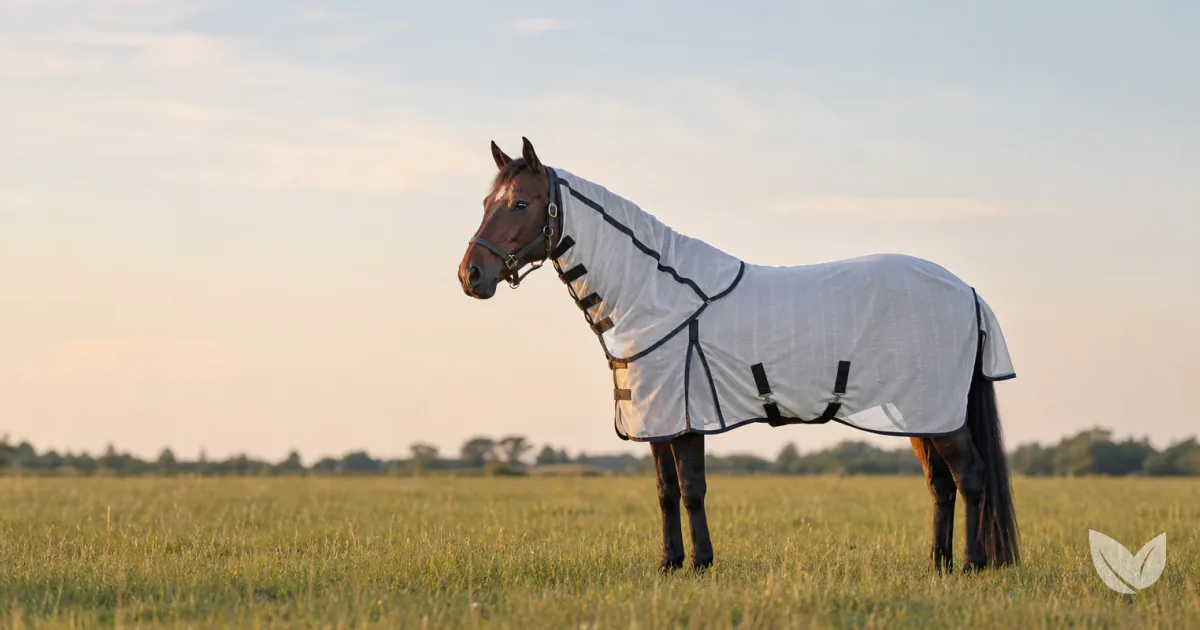
Sweet itch is an allergic reaction to the salivary proteins of *Culicoides* biting midges, and it is the most common cause of itchiness in horses. When a sensitised horse is bitten, IgE antibodies trigger mast cell degranulation and histamine release. The problem is that horses respond poorly to antihistamines, which tells us other inflammatory mediators are driving much of the reaction. Lesions tend to appear at the midge’s preferred feeding sites, the mane, tail, ventral midline, and neck, where the intense itch causes rubbing that leads to secondary skin damage and infection. There is no cure; this is a life-long condition, and management is focused on reducing midge exposure as much as possible.
Sweet itch is a histamine problem, so antihistamines should control it
It’s easy to see why this idea sticks. The mechanism looks straightforward on paper: Culicoides saliva triggers IgE release, IgE causes mast cell degranulation, mast cells release histamine, histamine causes itch. So reach for an antihistamine, logical, right?
The difficulty is that horses show a poor clinical response to antihistamines, and the research explains why [1, 3, 13]. Sweet itch is a mixed hypersensitivity reaction, both a Type I immediate response (the IgE/histamine cascade) and a Type IVb delayed response [3]. That means inflammatory mediators well beyond histamine are driving the allergic cascade [13]. Blocking histamine alone addresses only part of the picture, and in horses it appears not to be the dominant part.
There’s more to it than that. After each subsequent Culicoides exposure, IgE production increases and eosinophilia builds [5], this is an immune system being progressively sensitised season after season, not simply a histamine tap you can turn off. The condition tends to worsen in succeeding years precisely because the underlying immune dysregulation compounds over time [8].
Antihistamines are not without a place in equine medicine, but expecting them to control sweet itch is likely to leave you frustrated. The more productive approach is midge avoidance, stabling between 4 PM and 7 AM, rugging with hoods, fans to exploit midges’ poor flying ability [7], combined with strategies that address immune modulation rather than just downstream histamine. In South Africa we are well accustomed to this approach, as Culicoides also carry African Horse Sickness.
How sweet itch develops: the immune cascade behind the itch
When a Culicoides midge bites a horse, allergenic proteins from the midge’s saliva travel to the regional lymph nodes, where naïve T-lymphocytes are activated during an initial sensitisation phase. With each subsequent exposure, IgE production rises and eosinophilia increases.
The reaction itself involves a mix of Type I and Type IVb hypersensitivity. In the Type I arm, allergen-specific IgE binds to receptors on mast cells, triggering mast cell degranulation and the release of histamine alongside other inflammatory mediators. Despite histamine being central to this cascade, horses respond poorly to antihistamines, which tells us that other mediators beyond histamine are doing much of the driving.
Not every horse exposed to Culicoides develops clinical disease, and that distinction is worth understanding. IgG antibodies against Culicoides salivary gland antigens appear in both allergic and healthy horses exposed to midges. Allergen-specific IgE, however, is found only in horses showing active signs of hypersensitivity, not in healthy controls or in horses currently in remission. Studies also show that a meaningful proportion of clinically healthy horses carry skin-sensitising IgE against Culicoides allergens without ever developing sweet itch, suggesting that non-allergic horses have immune regulatory mechanisms that hold the response in cheque.
The visible skin lesions, typically along the ventral midline, head, mane, and tail, don’t arise directly from the bite itself. They’re the result of intense pruritus driving the horse to rub and bite, which then produces secondary skin eruptions and infections at those sites.
On the ingredient side, here is what the research supports:
Phycocyanin (a component of Spirulina platensis) suppresses antigen-specific IgE antibody production and reduces allergic responses in animal models, while at the same time enhancing mucosal IgA responses.
Vitamin E influences immune function by reducing PGE2 production via COX-2 inhibition and by modulating Th1/Th2 balance. In horses specifically, vitamin E supplementation reduced TNF-α gene expression and improved both oxidative and inflammatory responses, with natural forms outperforming synthetic ones on bioavailability. It also enhanced humoral immune responses to novel antigens.
Echinacea fed to horses increased the phagocytic ability of isolated neutrophils and boosted peripheral lymphocyte counts, pointing to stimulation of innate immunity. Echinacea purpurea similarly activates neutrophils, macrophages, and natural killer cells through phagocytosis activation and leukocyte mobilisation.
Flavonoids have shown benefit across allergic disease models. A systematic review found that the majority of flavonoid preparations improved symptom scores in allergic conditions, though the mechanism varies depending on flavonoid type and dose.
On apple cider vinegar used topically: studies in atopic dogs found that once-daily application of a 0.5% acetic acid solution was not sufficient to maintain lower skin pH or reduce dermatitis severity during allergen exposure, and caused irritation in the majority of patients. The evidence for topical vinegar as a standalone therapy simply isn’t there.
How to manage Sweet Itch practically: what the evidence actually supports
Environmental control, the non-negotiable foundation
No supplement or topical will do much if your horse is still out at peak midge time. Culicoides are weak flyers and most active around dawn and dusk, so stabling from 4 PM to 7 AM during warmer months makes a real difference. A well-fitted sweet itch rug with a hood covers the preferred feeding sites, the ventral midline, neck, mane, and tail are the areas most at risk. Apply an approved insecticide or repellent regularly, and keep a fan running in the stable: the air movement alone is enough to deter midges, which struggle in even a light breeze. If your yard sits near streams, ponds, or marshy ground, be aware that these are exactly the habitats Culicoides larvae depend on, proximity to water genuinely increases exposure.
Topical care for broken skin
Once a horse starts rubbing in earnest, you move from allergic reaction to secondary skin infection surprisingly quickly. For open or damaged skin, a topical containing propolis or Calendula officinalis (pot marigold) is a sound choice. Propolis has well-documented anti-inflammatory, antimicrobial, and wound-healing activity, with its phenolic compounds and flavonoids supporting re-epithelialisation and skin regeneration. Calendula contains flavonoids, triterpenoids, and carotenoids with anti-inflammatory and wound-healing properties, and has been used for skin repair for centuries, there is a reason it has stayed in the toolkit so long.
One thing I would caution against: applying apple cider vinegar to broken or rubbed-open skin. Acetic acid on damaged tissue will sting and irritate. The evidence for dilute acetic acid (0.5%) as a topical in atopic dermatitis is also underwhelming, once-daily application was not sufficient to maintain lower skin pH or reduce dermatitis severity when allergen exposure continued, and the majority of patients in one study experienced irritation. I do not recommend it as a primary topical therapy.
Internal support: immune modulation
The itch in sweet itch is driven by IgE-mediated mast cell degranulation and the subsequent release of histamine and other inflammatory mediators, but horses respond poorly to antihistamines, which tells you that histamine is not the only driver. Anything you do internally needs to address immune regulation and mast cell stabilisation rather than histamine blockade alone.
– *Flavonoids (dietary or supplementary):* A systematic review of 15 randomised controlled trials found that 80% of flavonoid preparations showed some benefit in allergic diseases, with improvements in symptom scores across allergic rhinitis, asthma, and atopic dermatitis. The specific flavonoid and dose matter; the review does not support a single universal approach.
– *Vitamin E:* Vitamin E influences the inflammatory response through mechanisms including reduced PGE₂ production and modulation of Th1/Th2 balance, working at the level of immune regulation rather than simply suppressing symptoms.
– *Spirulina (Spirulina platensis):* Phycocyanin, a key component of spirulina, has been shown to suppress antigen-specific IgE production and reduce allergic responses in experimental models, while enhancing mucosal IgA. That is precisely the direction you want to push in an IgE-driven allergy.
– *Echinacea (Echinacea angustifolia):* Feeding a standardised Echinacea angustifolia extract to horses increased neutrophil phagocytic activity and peripheral lymphocyte counts, suggesting support for innate immune function.
What is not supported
Allergen-specific immunotherapy using commercially available Culicoides extracts is not supported by existing evidence for horses with insect bite hypersensitivity. Diagnosis rests on clinical signs, seasonality, and response to insect control, not allergy testing. Sweet itch is a condition you manage and reduce; as things stand there is no cure, and management is life-long.
What we’d recommend
Itch Mix from The Herbal Horse
Supports a calmer immune response to the midge bites that trigger sweet itch.
See the product
Frequently asked questions
What actually causes Sweet Itch in horses?
Sweet Itch is an allergic reaction to the salivary proteins injected when Culicoides midges bite. It involves both a Type I (immediate) and a Type IVb hypersensitivity reaction. In the Type I response, allergen-specific IgE binds to mast cell receptors, triggering the release of histamine and other inflammatory mediators. With each subsequent midge season, IgE production increases and eosinophilia worsens, which is why the condition tends to get worse year on year rather than better.
Why does my horse react to midge bites when other horses in the same field don’t?
Sensitisation to Culicoides allergens is actually fairly common, studies find skin reactivity in around 14% of young horses and 38% of adults, but not every sensitised horse goes on to develop clinical disease. Non-allergic horses appear to have immune regulatory mechanisms that keep the response in cheque. Once a horse does become clinically allergic, IgE antibodies against Culicoides salivary antigens are detectable during active disease, but not in healthy controls or horses that are currently in remission.
Where are midges worst, and when should I stable my horse?
Culicoides midges breed in aquatic and semi-aquatic habitats, the moist soil around streams, ponds, and marshes. They are most active at dawn and dusk and in warm, humid conditions. Because they are weak flyers, stabling from around 4 PM to 7 AM during the warmer months, combined with fans to create air movement, makes a meaningful difference to exposure. Rugs and hoods provide an additional physical barrier on top of that.
Why don’t antihistamines work well for Sweet Itch?
It’s a reasonable question, because histamine is clearly part of what’s happening. The difficulty is that the allergic cascade in Sweet Itch reaches well beyond histamine, multiple inflammatory mediators are released during mast cell degranulation, and the condition also involves a delayed (Type IVb) hypersensitivity component. Blocking histamine alone leaves most of that cascade untouched, which is why clinical response to antihistamines is consistently poor in horses with insect bite hypersensitivity.
Can allergen immunotherapy cure Sweet Itch?
Not cure, but there is emerging evidence it can help. Immunotherapy works by shifting the immune response from Th2 toward Th1, inducing regulatory T cells and generating blocking IgG antibodies that compete with IgE at the mast cell receptor. That said, current guidelines are clear that commercially available Culicoides extracts are not supported by the evidence. Experimental recombinant allergen protocols showed benefit in only 56% of horses with pruritic dermatitis. For most horses, management and appropriate supplementation remain the primary approach.
What can propolis or calendula actually do for open Sweet Itch lesions?
Both have genuine, evidence-backed skin-repair properties that are relevant here. Propolis contains phenolic compounds and flavonoids that promote re-epithelialisation, and research supports its anti-inflammatory, antimicrobial, and wound-healing activity on skin. Calendula officinalis (pot marigold) similarly contains flavonoids, triterpenoids, and carotenoids with anti-inflammatory and wound-healing activity, it has been used medicinally for skin damage since the 12th century. Neither addresses the underlying allergy, but applied to broken skin they support barrier repair and reduce the risk of secondary infection.
Sources
- Insect Bite Hypersensitivity in Horses: Causes, Diagnosis, Scoring and New Therapies
- Biting Midges of Animals – Integumentary System – Merck Veterinary Manual
- Insect Bite Hypersensitivity in Horses: Causes, Diagnosis, Scoring and New Therapies
- Detection of IgG and IgE serum antibodies to Culicoides salivary gland antigens in horses with insect dermal hypersensitivity (sweet itch)
- Insect Bite Hypersensitivity in Horses: Causes, Diagnosis, Scoring and New Therapies
- Cul o 2 specific IgG3/5 antibodies predicted Culicoides hypersensitivity in a group imported Icelandic horses
- Biting Midges of Animals – Integumentary System – Merck Veterinary Manual
- A Pilot Qualitative Investigation of Stakeholders' Experiences and Opinions of Equine Insect Bite Hypersensitivity in England
- Use of propolis for skin wound healing: systematic review and meta-analysis
- An Updated Review on the Multifaceted Therapeutic Potential of Calendula officinalis L
- Investigation into the Effects of Allergen Exposure and Topical Vinegar and Water Spray on Skin Barrier Parameters in Atopic Dogs
- Equine allergic skin diseases: Clinical consensus guidelines of the World Association for Veterinary Dermatology
- Insect Bite Hypersensitivity in Horses: Causes, Diagnosis, Scoring and New Therapies
- Phycocyanin enhances secretary IgA antibody response and suppresses allergic IgE antibody response in mice immunized with antigen-entrapped biodegradable microparticles
- Therapeutic Efficacy of Flavonoids in Allergies: A Systematic Review of Randomized Controlled Trials
- Influence of vitamin E and selenium supplement on antibody production in horses
- Form of Vitamin E Supplementation Affects Oxidative and Inflammatory Response in Exercising Horses
- The Role of Vitamin E in Immunity
- Immunological and haematinic consequences of feeding a standardised Echinacea (Echinacea angustifolia) extract to healthy horses
- Echinacea purpurea: Pharmacology, phytochemistry and analysis methods
- Investigation into the Effects of Allergen Exposure and Topical Vinegar and Water Spray on Skin Barrier Parameters in Atopic Dogs
- Sensitization of skin mast cells with IgE antibodies to Culicoides allergens occurs frequently in clinically healthy horses
- Allergen immunotherapy using recombinant Culicoides allergens improves clinical signs of equine insect bite hypersensitivity