About natural supplements · Feb 19, 2013
Natural does not mean safe or legal in competition horses
From unlabelled pharmaceuticals in herbal blends to banned alkaloids in common feedstuffs, the risks inside “natural” products are real and avoidable if you know what to look for.
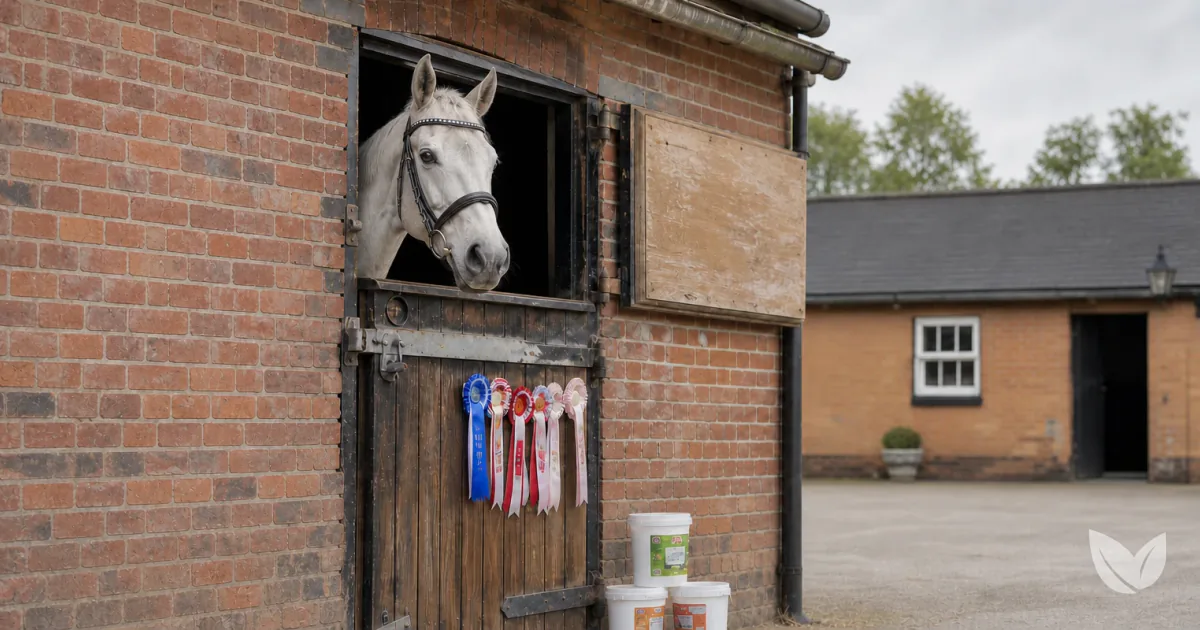
Not all herbal supplements are safe for competition horses. Vitamins, minerals, and traditional feedstuffs are permitted. Herbs are not automatically in that category. Ephedra (Ephedra sinica) carries ephedrine, a prohibited stimulant. Cocoa-derived ingredients contain caffeine and theobromine at concentrations that will trigger a positive test. Worse, some manufacturers have illegally added undeclared pharmaceuticals, phenylbutazone, anabolic steroids, to herbal products. A GMP-certified supplier does not eliminate this risk entirely, but it reduces it significantly.
If it’s natural, it’s automatically safe and competition-legal
I understand why people believe this. “Natural” implies harmless, and it feels logical that regulators only target synthetic drugs. That assumption gets competition riders into serious trouble. It also gets horses hurt.
Natural origin is no guarantee of safety. Ephedra (Ephedra sinica) contains ephedrine, a potent stimulant the FDA banned from human dietary supplements because it was linked to more reports of death, cardiac arrhythmia, heart attack, stroke, and seizure than every other dietary supplement combined [4]. Cocoa and coffee husks contain caffeine and theobromine; horses have been poisoned by accidental feed contamination with coffee husks [5, 6]. Even low-toxicity ingredients cause harm when used excessively, and some active compounds carry real toxicity at elevated doses [7].
Competition legality is a separate problem entirely. The FEI prohibits substances by effect, not by origin. Morphine and codeine from opium poppy contamination in lucerne and hay can produce positive tests if a horse consumes enough [3]. One South African rider was prosecuted, and later exonerated, after a positive test for synephrine, which occurs naturally in eragrostis grass. Horses can accumulate doping-level caffeine from contaminated feed [6]. Naturally occurring anabolic steroid precursors such as ecdysterone enter the diet through hay, pasture plants, and even parasitic infection, and individual horses vary considerably in how much reaches the bloodstream [12].
“Natural” is not a defence. It never was.
How natural substances trigger positive tests
The phrase “natural supplement” does not mean “competition safe.” There are two distinct ways a horse fails a doping test after consuming something that looks entirely innocuous. Both are worth understanding.
Banned substances that occur naturally in plants
Some plants contain pharmacologically active compounds that are themselves prohibited. Ephedra contains the alkaloid ephedrine, a potent stimulant. This is not an inert botanical curiosity. The FDA linked ephedrine to deaths, cardiac arrhythmias, stroke, and seizure in humans. Cocoa and its by-products contain caffeine and theobromine. When one feed manufacturer switched to cocoa husks as an ingredient, horses accumulated caffeine to doping-level concentrations in plasma and urine. Even ordinary forage carries risk: lucerne (alfalfa) and hay can be contaminated with opium poppy material, introducing morphine and codeine at concentrations detectable in post-competition samples. Pasture and hay can also carry ecdysterone, a naturally occurring anabolic steroid precursor, and individual horses vary considerably in how much reaches the bloodstream from identical dietary exposure.
Adulteration and contamination in manufactured products
Herbal products are not subject to the same regulatory scrutiny as pharmaceuticals. A study of 260 Asian patent medicines found that 25% contained high levels of heavy metals and 7% contained undeclared prescription drugs added deliberately. That is fraud. Separate from intentional adulteration, the manufacturing environment itself introduces risk. Good Manufacturing Practice (GMP) guidelines exist to control cross-contamination between batches, verify raw material identity, and document every production stage. Without them, the label tells you very little about what is inside the container.
A rider can feed what they genuinely believe to be a legal product and still return a positive. Not because they cheated, but because the substance was either inherent to the ingredient or introduced during manufacture.
How to use herbal supplements in competition horses without triggering a positive test
Cheque the prohibited substances list before you feed anything
Most horse owners assume that “natural” means “safe to compete on.” It does not. The FEI, ARCI, and other equestrian bodies test urine and blood at any event, in any discipline, at any time, including out-of-competition. [1][2] Detection techniques improve every year. Trace quantities that would have passed unnoticed a decade ago now show up clearly. Before you introduce any supplement, cheque the current list for your governing body. FEI Prohibited Substances List: https://inside.fei.org/fei/cleansport/ad-h/prohibited-list.
Know what is permitted, and where the grey area starts
Vitamins, minerals, and ingredients horses naturally graze are not banned. Endogenous substances already present in the horse’s body at normal concentrations are not banned either. [3] The grey area begins with herbal products. There are two reasons for it.
*1. Undeclared pharmaceutical adulteration*
Some manufacturers have added pharmaceutical substances to herbal formulations without listing them on the label. Phenylbutazone, anabolic steroids, caffeine. [5] A study of Asian patent medicines found that 7% of products contained undeclared prescription drugs added deliberately. [8] The horse owner feeds what they believe is legal and collects a positive result they did not earn.
*2. Naturally occurring banned substances in the herb itself*
Some herbs contain prohibited substances by nature. Ephedra, cocoa, caffeine-bearing plants, and poppies are the obvious examples. The problem is not the manufacturer. The problem is the plant.
Select on manufacturing standard, not marketing claims
Equine nutraceuticals sit in a regulatory gap. [7] The most practical filter you have is manufacturing quality. Good Manufacturing Practice (GMP) requires authenticated raw materials, controlled facilities that prevent cross-contamination, documented quality-control procedures, and trained personnel at every stage. [9] GMP compliance reduces the risk of contamination and adulteration. It does not eliminate it entirely. [11] Ask any brand directly: is this product manufactured to GMP standards? (The Herbal Horse products are manufactured to GMP standards.)
Be aware that environmental contamination exists independently of supplements
Racetrack environments carry detectable levels of prohibited drugs in soil, stall surfaces, dust, and water. NSAIDs including flunixin and phenylbutazone have been found. [10] This background contamination exists regardless of what you feed. It is worth knowing if you ever need to account for an unexpected result.
What we’d recommend
Competition-safe herbal blends with rigorous quality control and no undeclared drugs.
See the product
Frequently asked questions
Can a natural or herbal supplement cause a positive doping test?
Yes, and in more ways than most people realise. Some herbs contain naturally occurring prohibited substances: ephedra carries ephedrine, cocoa and coffee husks carry caffeine and theobromine. Feed contamination is a separate problem. Lucerne and hay can carry trace morphine and codeine from opium poppy. Racetrack soil and dust have measurable NSAID levels. None of this requires anyone to have done anything deliberate.
What banned substances have been found hidden in herbal horse supplements?
This is one of the industry’s genuinely dirty secrets. Documented adulterants include phenylbutazone, anabolic steroids, and caffeine, added by manufacturers and not declared on the label. A study of Asian patent medicines found 7% contained undeclared prescription drugs. Heavy metals, lead, arsenic, mercury, appeared in 25% of products examined in the same study. None of it was on the label.
Is ephedra safe to give to horses?
No. Ephedra contains ephedrine, a potent stimulant and a prohibited substance in competition. In humans, ephedrine-containing supplements are associated with deaths, heart attacks, arrhythmias, stroke, and seizures. The FDA banned them outright. There is no reason to assume horses are exempt from cardiovascular risk. The doping implications alone make ephedra unsuitable for any competing horse. The safety implications make it questionable for any horse at all.
How can I tell if a herbal supplement is safe for a competition horse?
Look for manufacturers who follow Good Manufacturing Practice (GMP). GMP requires authenticated raw materials, documented supplier selection, contamination-prevention systems, and quality control at every production stage. That rigour closes the door on accidental adulteration. A company that can demonstrate GMP compliance is materially lower risk than one that cannot. The Herbal Horse products are manufactured to GMP standards.
Can horses test positive from pasture or feed rather than from a supplement?
Yes. Ecdysterone, a naturally occurring anabolic steroid precursor found in common pasture plants and hay, can reach reportable blood concentrations with large variation between horses eating identical amounts. Synephrine positives can arise from Eragrostis hay. Morphine and codeine come from poppy-contaminated lucerne. Methylxanthines come from cocoa or coffee husks in compound feeds. The supplement is not always the source. That is exactly what makes this so difficult to manage.