About natural supplements · May 30, 2013
Colic, fractures, and neurological signs need a vet, not a forum
Know your horse’s baseline, resting heart rate (32-48 bpm), normal temperature (37.2-38.3 °C), and gut sounds, and you’ll catch an emergency before it becomes a crisis.
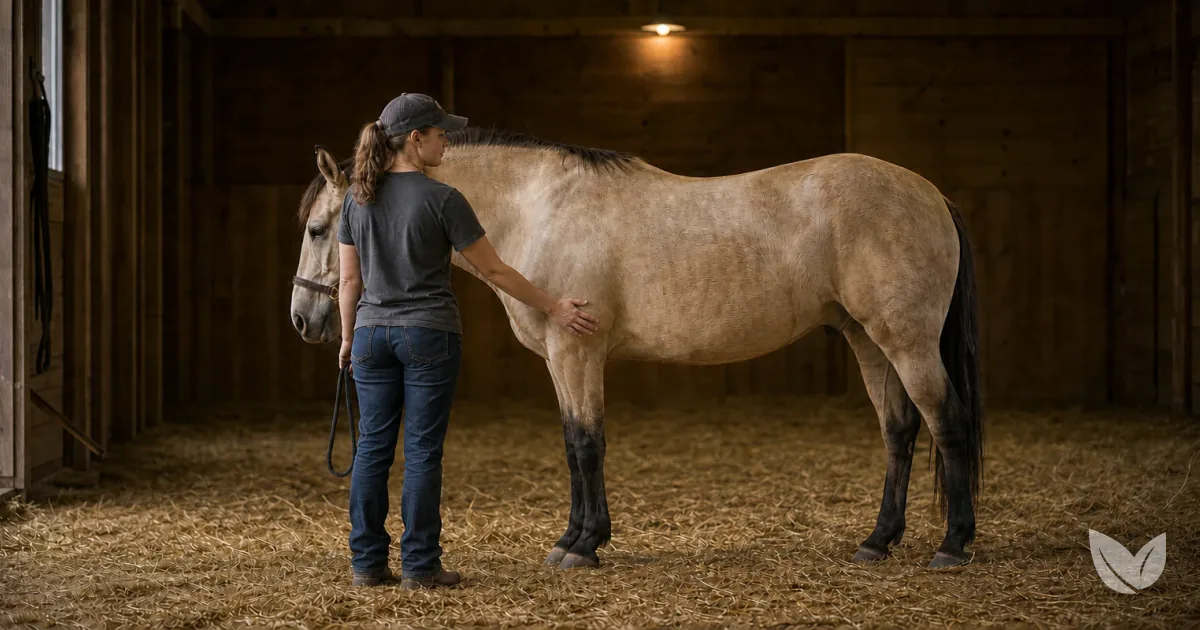
If your horse is showing signs of colic, neurological symptoms, suspected fractures, choking, or severe diarrhoea, call your vet, not the forum. Colic alone is the leading cause of emergency treatment and death in horses, with nearly 20% of cases requiring intensive care or surgery, and outcomes depend heavily on how quickly you act. Knowing your horse’s baseline vitals matters: a normal resting heart rate is 32-48 bpm and normal body temperature is 37.5-38.5 °C, learn what’s normal for your individual horse so you can recognise when something has genuinely shifted. Herbal remedies have no validated role in any of these emergencies.
Herbs and supplements can manage serious equine emergencies without a vet
I understand why this belief takes hold. There’s a growing body of knowledge around herbal support for horses, and some of it has genuine clinical backing. Veterinary care is expensive, and online communities are full of confident voices suggesting a particular tincture or feed supplement sorted a problem right out. I get it.
But there’s a line I won’t move on: for acute, potentially life-threatening conditions, herbs are not a substitute for calling your vet.
Take colic. Nearly 20% of cases are critical, requiring intensive care or surgery, and up to 16% of horses either die or are euthanised [1]. The signs that tell you surgery is needed, severe or recurring pain after analgesia, loss of gut sounds, can’t be assessed or addressed with a supplement [2]. Every hour matters. No herb changes that.
The same is true for neurological symptoms, suspected fractures, choking, and severe diarrhoea. With a choking horse, for example, administering mineral oil, something that comes up regularly in lay forums, can cause permanent lung damage if it’s aspirated [4]. That’s the kind of well-meaning intervention that makes things worse.
Where does herbal medicine genuinely belong? Supportive and preventive roles: joint inflammation, skin conditions, respiratory management between episodes [8]. Even there, I’ll be honest with you, most herbs used in horses haven’t been rigorously tested in that species, and several trials have returned disappointing results [8, 9, 10]. That doesn’t mean I’ve lost faith in well-formulated botanical products. It means I’m clear-eyed about what the evidence currently shows and where the limits of self-management sit.
Know your horse’s normal vital signs so you can recognise when something is genuinely wrong. A healthy adult horse has a resting heart rate of 32-48 beats per minute [3] and a normal resting body temperature of 37.2-38.3 °C (99-101 °F). Learn those numbers. Write them down if you need to. Then call your vet. Herbs have their place. It just isn’t first in a crisis.
Why these signs mean the body is failing, and fast
Colic isn’t a single disease, it’s a syndrome of abdominal pain, and it’s the leading cause of emergency treatment and death or euthanasia in horses. Nearly 20% of cases are critical, needing intensive care or surgery, and up to 16% of animals either die or are euthanised. The reason speed matters so much is that the signs pointing towards a surgical case, moderate to severe pain, pain that returns after analgesics, and diminished gut sounds, deteriorate quickly without intervention. When surgery is needed and happens promptly, survival rates are significantly better than when treatment is delayed.
Neurological symptoms, circling, weakness or paralysis, falling, stumbling, and loss of coordination, need immediate veterinary assessment. Subtle signs can easily be mistaken for lameness, and diagnosis relies on a careful history and physical examination. Waiting for imaging or antibody results is time the horse may simply not have.
Leg fractures announce themselves with a characteristic loud crack, sudden non-weight-bearing lameness, and a limb that looks or feels wrong, misaligned or unstable. The immediate priority is reducing anxiety, preventing further injury, and stabilising the leg before transport. None of that is straightforward without professional guidance.
Choke, oesophageal obstruction, produces drooling, repeated attempts to swallow, and discharge of saliva or feed from the nose. Straightforward obstructions may resolve within an hour once the horse is sedated and the muscles relax, but prolonged cases need oesophageal lavage and carry a genuine risk of aspiration pneumonia. One thing I feel strongly about: do not give mineral oil to a choking horse. If it’s aspirated, it can cause permanent lung damage. This is one of those well-meaning internet-forum suggestions that can have devastating consequences.
Acute diarrhoea calls for intravenous fluid therapy, electrolyte supplementation, and anti-inflammatory support. A definitive cause is found in fewer than 50% of cases, but most horses do recover well with prompt, non-specific supportive treatment, which means calling the vet, not watching and waiting.
Knowing your horse’s baseline vital signs is what makes any deviation recognisable. Normal resting heart rate in adult horses runs from 32 to 48 beats per minute, with three- to seven-year-olds typically sitting around 32.9 beats per minute. Normal body temperature sits between 37.5 and 38.5 °C. You can’t spot abnormal if you’ve never established what normal looks like for your horse, so take these measurements regularly when your horse is well, not just when something looks off.
When to call the vet immediately, and when herbs or supportive care can play a role
Know your horse’s baseline first
You can’t judge “abnormal” without knowing “normal.” Make it a habit during grooming to cheque for cuts, swelling, and heat, and take the time to learn your individual horse’s resting vital signs. Evidence-based reference ranges for adult horses:
– Resting heart rate: 32-48 beats per minute (three- to seven-year-olds tend to sit at the lower end of that range)
– Resting body temperature: 37.5-38.5 °C (99.5-101.3 °F)
– Resting respiratory rate: 8-16 breaths per minute
If your horse is outside any of these ranges at rest, that’s a conversation with your vet, not a wait-and-see.
Call the vet immediately, no exceptions, no forum posts
The situations below need prompt professional assessment. Delay worsens outcomes and, in some cases, is fatal:
– Colic signs, sweating, rolling, getting up and down repeatedly, looking at the flank. Colic is the leading cause of emergency treatment in horses; nearly 20% of cases are critical and require intensive care or surgery, and up to 16% of affected animals either die or are euthanised. The clearest indicators that surgery is needed are moderate to severe abdominal pain, pain that returns after appropriate analgesia, and reduced intestinal sounds. Early recognition and prompt veterinary attention significantly improve surgical outcomes.
– Neurological signs, circling, falling, staggering, stumbling, weakness, or loss of coordination. These can be surprisingly subtle and are easily mistaken for lameness; diagnosis relies on careful history-taking and physical examination.
– Suspected leg fracture, a loud crack, sudden non-weight-bearing lameness, or a limb that looks or feels misaligned or unstable. The priority is reducing anxiety, preventing further injury, and stabilising the limb before any attempt at transport.
– Choking, food or saliva coming from the nostrils, repeated swallowing attempts. Simple obstructions often resolve within an hour with sedation and muscle relaxation, but prolonged cases carry a genuine risk of aspiration pneumonia. Do not give mineral oil to a choking horse, if aspirated, it causes permanent lung damage.
– Acute severe diarrhoea, needs intravenous fluid therapy, electrolyte supplementation, and anti-inflammatory support. A definitive cause is found in fewer than 50% of cases, but most horses do well with supportive treatment when it’s started early.
– Heavy bleeding, blood in urine, temperature well outside the normal range (above 38.5 °C / 101.3 °F or below 37.5 °C / 99.5 °F), refusal of food, straining to urinate or defecate, or suspected snake bite.
On herbs and complementary approaches
Herbal medicines have shown some clinical benefit in horses for conditions including recurrent obstructive pulmonary disease, allergic dermatitis, and joint inflammation. That said, most commonly used herbs and functional foods haven’t been properly tested in horses, and the evidence base is still limited. In an emergency, this is important to be clear about: complementary approaches are not a substitute for veterinary triage in any of the situations listed above. Where they may have a genuine supporting role, chronic joint management, for example, that’s a separate conversation, and one where I’d always say your vet should know what you’re giving.
What we’d recommend
Supports your horse’s natural defences as part of consistent, everyday care.
See the product
Frequently asked questions
How serious is colic in horses, does it always need a vet?
Colic is the leading cause of emergency treatment in horses and a significant cause of death or euthanasia, up to 16% of cases end in one or the other. Nearly 20% are critical and require intensive care or surgery. I never advise waiting it out. The signs that most reliably point to surgery being needed are moderate to severe pain, pain that returns after pain relief, and reduced gut sounds. Getting a vet out early genuinely saves lives.
What is a normal resting heart rate and body temperature for a horse?
Normal resting heart rate in adult horses is 32-48 beats per minute. Research in Thoroughbreds shows that three- to seven-year-olds tend to sit at the lower end of that range, around 33 beats per minute. Normal body temperature for an adult horse is 37.2-38.3 °C (99-101 °F). Knowing your own horse’s baseline matters, a meaningful departure from what’s normal for them, in either direction, is reason enough to call your vet.
What are the signs that a horse is choking and what should I do?
Choking presents as drooling, repeated swallowing attempts, coughing, and discharge of saliva or feed from the nostrils. Simple obstructions often resolve within an hour once the horse is sedated and the muscles relax, but that still requires veterinary intervention. Prolonged cases need oesophageal lavage. One thing I feel strongly about: do not give mineral oil to a choking horse. If it’s aspirated, it causes permanent lung damage.
Which neurological symptoms in a horse are a veterinary emergency?
Circling, weakness or paralysis, falling, stumbling, rolling, and loss of coordination all need immediate veterinary attention. These signs can be subtle and are easily mistaken for lameness, which is precisely why a proper clinical examination matters. Diagnosis should be grounded in history and physical examination, neurological problems in horses are not something to try and figure out on a forum.
What should I do if my horse has a suspected leg fracture before the vet arrives?
Signs of a fracture include a loud crack, sudden complete non-weight-bearing lameness, or a visibly misaligned or unstable limb. While you wait for the vet, focus on keeping the horse calm, limiting further movement, and stabilising the leg with splinting and padding if you can do so safely. The aim is to reduce additional injury during transport to a properly equipped facility.
Does a horse with severe diarrhoea need veterinary treatment or can it be managed at home?
Acute diarrhoea in horses needs a level of supportive care that goes well beyond what an owner can provide at home. Intravenous fluid therapy, electrolyte supplementation, and anti-inflammatory treatment are the standard of care. A definitive cause is only identified in fewer than half of cases, but most horses recover well with appropriate non-specific supportive treatment. This is a call-the-vet situation, not a wait-and-see one.
Is it safe to use herbal remedies instead of calling a vet for a horse emergency?
No. For the emergencies covered here, colic, fractures, neurological symptoms, choking, severe diarrhoea, there is no herbal substitute for prompt veterinary care. Herbal medicines have shown some clinical benefit in horses for conditions like joint inflammation and respiratory disease, but most have not been rigorously tested, and reaching for a supplement when your horse needs emergency attention is genuinely dangerous.
Sources
- Equine colic: A comprehensive overview of the sonographic evaluation, diagnostic criteria, and management of different categories
- Equine colic: A comprehensive overview of the sonographic evaluation, diagnostic criteria, and management of different categories
- Changes in heart rate and heart rate variability as a function of age in Thoroughbred horses
- Emergency Care for Horses
- The Neurologic Evaluation in Horses
- Emergency Care for Horses
- Overview of Infectious Diarrheal Diseases in Horses
- Concurrent use of veterinary drugs and herbal medicines in racing Standardbreds
- Efficacy of treatment of equine anhidrosis with acupuncture and Chinese herbs is low but higher in treated horses compared with placebo
- Evaluation of a Chinese herbal supplement on equine squamous gastric disease and gastric fluid pH in mares