About natural supplements · Jun 26, 2013
Your pet’s odd cravings may be self-medication, and the science backs that up
Zoopharmacognosy, animals seeking out plants to heal themselves, was only recognised as a legitimate science in 1987, but the behaviour it describes is ancient, widespread, and rather humbling.
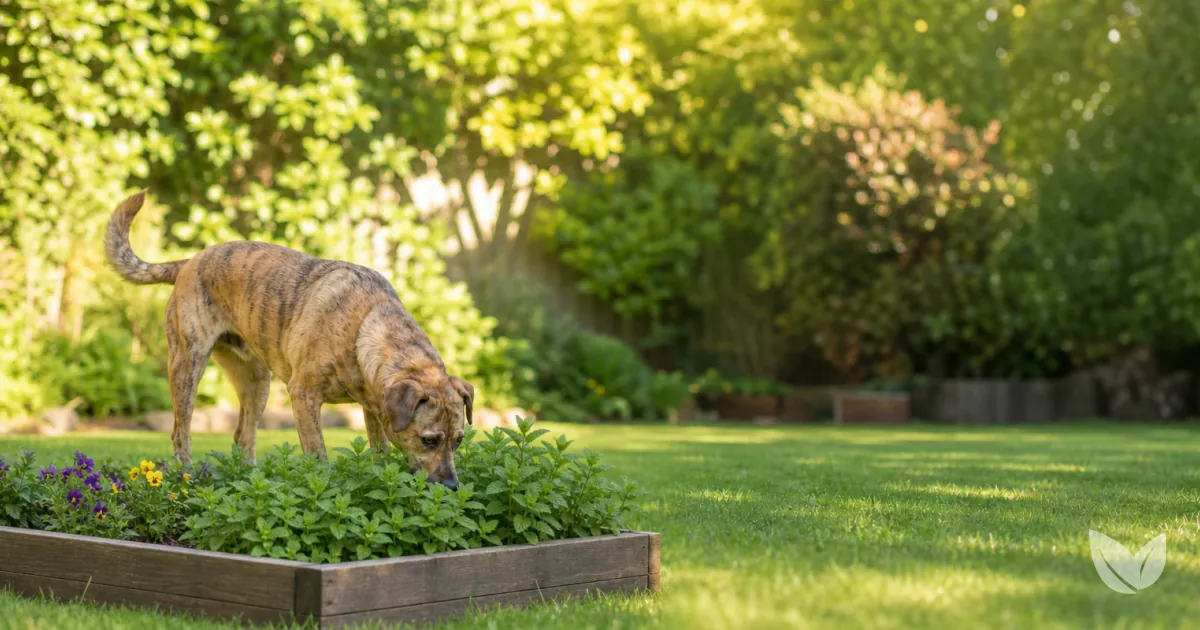
Animals self-medicate, and there’s a whole scientific discipline built around studying it. Zoopharmacognosy was formally recognised in 1987 and the evidence spans everything from primates to insects. Chimpanzees swallow whole bristly leaves without chewing to physically flush intestinal worms out of their gut. Monarch butterfly larvae, when parasitised, actively increase how much cardenolide alkaloid they eat from milkweed, and it works. That same instinct covers prevention, not just cure, medicating before you’re sick is still medicating. A dog grazing grass or a horse eating soil may not be unwell yet; they may simply be doing what biology has always nudged them to do. When modern diets strip out the minerals, trace elements, and plant diversity a free-ranging animal would naturally find, that instinct can surface as pica. Most species haven’t been experimentally proven to self-medicate beyond any doubt, but the behaviour looks innate rather than reasoned, an evolved sensitivity baked in long before anyone thought to study it.
It’s complicated
Here’s the thing, not every animal eating a plant is self-medicating. That’s the bit the enthusiast corner of this field tends to gloss over.
When it’s just a dietary gap: A web-based survey of thousands of dog owners found that only 9% of plant-eating dogs looked ill before they started eating plants, and only 22% regularly vomited afterwards [14]. Most of them looked perfectly fine. Then there’s the case of an 11-year-old Poodle who’d spent seven years eating grass every single day and vomiting after it, classic “self-medication” story, right? Except it wasn’t. Switch the dog to a high-fibre diet, and the behaviour stopped completely [26, 42]. That dog wasn’t fighting disease. It was compensating for something missing from its bowl.
When it’s a symptom, not a solution: Pica, the compulsive eating of non-food items, gets lumped into the self-medication category surprisingly often. But clinically, it’s strongly tied to gut pathology. A retrospective study found that 83% of dogs with pica showed partial or complete resolution once they were treated for chronic enteropathy, and 100% of biopsied animals had gastrointestinal abnormality [15, 27]. The eating behaviour was a red flag for disease, not a fix for it.
What genuine self-medication actually looks like: The field’s own leading researchers are strict about this. Michael Huffman’s widely-used criteria for identifying real self-medication require that the plant isn’t a normal part of the diet, provides little or no nutritional value, gets eaten specifically when parasites are most active, and that other animals in the group don’t join in [2, 25]. Most cases of animals eating plants, including most domestic animal examples, are never rigorously checked against those criteria.
The clearest verified examples come from insects. When monarch butterfly larvae are parasitised, they increase their intake of milkweed cardenolides, and researchers have confirmed all three things you’d need to see: the behaviour improves survival in infected individuals, it reduces survival in healthy ones, and it’s parasitism that triggers it [3, 37, 41]. That’s proper experimental verification. Most field observations of plant-eating don’t come close to meeting that bar.
None of this means zoopharmacognosy isn’t real, it clearly is, documented across multiple taxa [7, 13]. But “this animal is eating a plant” and “this animal is deliberately self-medicating” are not the same statement. Conflating the two doesn’t help the animals, and it doesn’t help their owners make good decisions.
How animals self-medicate: The mechanisms behind zoopharmacognosy
Mechanical parasite expulsion
Here’s a simple one to start with. Chimpanzees swallow whole bristly leaves without chewing, the leaves aren’t digested, they just pass straight through. As they go, they physically speed up gut movement and scrub nematodes out of the intestinal tract. Researchers have found the expelled worms sitting right alongside the leaves in the faeces. It’s about as direct a mechanism as you’ll find, which is why it’s become one of the most studied examples of self-medication in any species.
Pharmacological antiparasitic action
This one is more chemical. When monarch butterfly larvae get infected with parasites, they start eating more milkweed cardenolide alkaloids, compounds that are toxic to the parasites. What’s particularly telling is that a *mixture* of cardenolides protects the larvae significantly better than any single compound at the same total concentration. The compounds work synergistically. And here’s the clincher: that same increased intake *reduces* survival in unparasitised larvae. So it’s not just routine feeding behaviour, the larvae are doing something specifically because they’re sick, and it costs them if they’re not.
Sometimes the disease itself drives the cure
You might assume self-medication requires some level of conscious learning, try this plant, feel better, remember it. But in insects like caterpillars, that’s not what’s happening. Parasitism itself changes their taste perception, which drives them to eat more of the plants that help them. No prior experience needed. Genetic variation in taste or behaviour provides the survival advantage, and natural selection does the rest. The animal doesn’t “decide” anything, it’s wired to respond this way.
Prophylactic versus therapeutic use
Most people think of self-medication as reactive, sick animal finds a remedy. But zoopharmacognosy includes preventative behaviour too, and honestly, this distinction is where a lot of the interesting complexity sits. In dogs, plant eating sometimes functions as parasite-control behaviour inherited from wild ancestors. Proactive medicating is still medicating, same instinct, different trigger.
What the evidence actually supports, and what it doesn’t
Zoopharmacognosy describes what animals do in the wild. It’s not a protocol you can lift and apply directly to your horse or dog. Its not something you can control. The same things that matter in zoopharmacognosy, dose, context, physiological state, matter just as much when you’re the one deciding what goes in the feed bucket or the bowl.
What the science actually shows
Self-medicative behaviour has been documented across at least 25 geographical regions, involving 40 different plant species, and linked to more than 20 animal species through case studies and observational evidence [2][10]. The behaviours range from leaf-swallowing and bitter pith-chewing to topical application and nest fumigation, used for everything from antiparasitic and antibacterial purposes to anti-inflammatory ones [8]. These are real, repeatable observations, not folklore.
Where dosing guidance runs out
The research doesn’t give us translatable dosing figures or even substances for companion animals or horses. What it does show is this:
– Monarch butterflies actively choose milkweed with higher cardenolide concentrations when they’re parasitised, but that same higher-cardenolide diet increases mortality in healthy, unparasitised individuals [3][17]. Dose selectivity is entirely context-dependent. It matters enormously *who* is eating it and *why*.
– Mixtures of cardenolide compounds protect better than a single compound at the same total concentration [4], which tells us that the interaction between plant constituents matters more than any one isolated dose. (By the way, I must say here – this s a core principle of The Herbal Horse and Pet. Whole plants are better than standardised extracts.)
– Even under controlled laboratory conditions, diseased inbred mice didn’t reliably self-medicate. In fact, they ingested *less* of an available therapeutic agent as their disease progressed, not more [5][16]. Captivity and inbreeding appear to blunt the instinct entirely.
What this actually means for your animal
The real takeaway from zoopharmacognosy isn’t a prescription, it’s a mechanism. Animals have evolved the capacity to detect and selectively consume bioactive plant compounds in response to physiological need [6][22], and that’s driven the discovery of genuinely effective therapeutics [7][13]. That’s a solid argument for taking plant-based supplements seriously. But it’s not a substitute for evidence-based dosing when you’re the one administering something to an animal that can’t freely self-select.
For dogs, the picture is messier than the popular narrative makes it sound. A large survey found that most plant-eating dogs looked perfectly healthy before ingestion and didn’t vomit afterwards [14], so the simplified “dogs eat grass because they’re sick” story doesn’t hold up especially well. A case study of an 11-year-old Poodle who’d eaten grass daily for seven years found the behaviour resolved completely on a high-fibre diet, no illness, no parasites, just a dietary gap [26].
Meanwhile, pica, compulsive ingestion of non-food materials, has been clinically associated with chronic enteropathy, and resolved in 83% of affected animals following appropriate veterinary treatment [15]. In my own experience, pica often signals nutritional gaps rather than a foraging instinct working properly. It’s one of the reasons I formulated Everypet Formula, to fill what modern diets most commonly leave out. We’ve seen pica resolve with it. But if your dog is compulsively eating unusual materials, a vet visit comes first. Nutritional support and clinical investigation aren’t either/or.
What we’d recommend
Fills the nutritional gaps that modern pet diets miss, and we’ve seen it stop pica in dogs and cats
See the product
Frequently asked questions
What is zoopharmacognosy and is it a real science?
Yes, and it’s been formally recognised as a scientific discipline since 1987, though people have been noticing animals picking out medicinal plants since ancient Greece. Put simply, it’s the science of animal self-medication. The evidence now spans vertebrates and invertebrates, and it’s well past the stage of being dismissed as anecdote. Once you understand it, you start paying closer attention to what your horse or dog is seeking out in the field.
How do scientists know an animal is self-medicating rather than just eating something it fancies?
Researcher Michael Huffman put together four criteria that are now widely used: the plant isn’t normally part of the animal’s diet; it offers little or no nutritional value; the animal reaches for it when parasites are most likely to be causing trouble; and crucially, other animals in the group don’t join in. It’s that last one that’s telling, this isn’t social feeding behaviour, it’s targeted. Researchers have applied these criteria across 40 different plants in 25 regions.
Does zoopharmacognosy apply to preventive behaviour, not just reactive self-medication?
Absolutely, and this distinction matters. In wild primates, self-medication can be either preventive or therapeutic. In dogs, plant-eating looks like a prophylactic behaviour inherited from wild ancestors. A proactively medicating animal isn’t doing something random, it may simply be ahead of the problem. The fact that it’s not visibly ill yet doesn’t make the behaviour any less purposeful.
Do animals consciously choose to self-medicate, or is it instinct?
Almost certainly not conscious in the way we’d use that word. What the evidence points to is innate behavioural plasticity, genetic variation in taste or feeding behaviour that confers a survival advantage and spreads through natural selection. In parasitised caterpillars, altered responses to plant toxins appear to drive increased consumption automatically, no learned association required. It’s built in, not worked out.
Is my dog eating grass self-medicating?
Probably not therapeutically, in most cases. A large survey found only 9% of plant-eating dogs looked unwell beforehand, and only 22% vomited afterwards, so the classic ‘sick dog eating grass’ image doesn’t hold up statistically. Younger dogs eat plants most often, which fits a routine prophylactic behaviour rather than a sick animal treating itself. That said, persistent eating of non-food substances, pica, can signal underlying gut disease and is worth a conversation with your vet. In my experience, nutritional gaps are often a factor; modern diets leave a lot of animals quietly deficient, and pica is frequently the result.
Does self-medication always work, and are there risks?
Not always, and the costs can be very real. Monarch butterfly larvae ramp up their intake of milkweed cardenolide alkaloids when parasitised, which does reduce parasite load, but those same higher doses reduce survival in unparasitised larvae. Get the dose wrong and the medicine becomes the problem. Self-medication also appears to break down in captivity: laboratory mice with autoimmune disease didn’t increase their intake of an immunosuppressive compound as disease progressed, they actually preferred less of it, possibly because prolonged inbreeding had blunted their normal responsiveness.
Do mixtures of plant compounds work better than single compounds for self-medication?
The evidence from monarch butterflies says yes. Mixtures of milkweed cardenolide compounds protected parasitised larvae significantly better than individual compounds at the same total concentration, genuine synergy, not just more of the same thing. It helps explain why animals seek out botanically varied sources rather than fixating on one plant. This is also a core philosophy at The Herbal Horse and Pet: plants are rich, complex mixtures of active molecules, and the modern habit of isolating a single ‘active ingredient’ works against the way these compounds actually function.
Sources
- Behavioural defences in animals against pathogens and parasites: parallels with the pillars of medicine in humans
- News Feature: Animals that self-medicate
- Self-Medication as Adaptive Plasticity: Increased Ingestion of Plant Toxins by Parasitized Caterpillars
- Mixtures of Milkweed Cardenolides Protect Monarch Butterflies against Parasites
- Zoopharmacognosy in Diseased Laboratory Mice: Conflicting Evidence
- News Feature: Animals that self-medicate
- Zoopharmacology: A Way to Discover New Cancer Treatments
- Self-medication in nonhuman primates: A systematic evaluation of the possible function of the use of medicinal plants
- Folklore, Animal Self-Medication, and Phytotherapy-Something Old, Something New, Something Borrowed, Some Things True
- Zoopharmacology: A Way to Discover New Cancer Treatments – PMC
- Behavioural defences in animals against pathogens and parasites: parallels with the pillars of medicine in humans – PMC
- Pica as a clinical sign of a chronic enteropathy in dogs and cats
- Zoopharmacognosy in Diseased Laboratory Mice: Conflicting Evidence – PMC
- Mixtures of Milkweed Cardenolides Protect Monarch Butterflies against Parasites – PubMed
- Zoopharmacognosy in Diseased Laboratory Mice: Conflicting Evidence – PMC
- Self-Medication as Adaptive Plasticity: Increased Ingestion of Plant Toxins by Parasitized Caterpillars – PMC
- Zoopharmacology: A Way to Discover New Cancer Treatments – PMC
- News Feature: Animals that self-medicate – PMC – NIH
- Zoopharmacognosy in Diseased Laboratory Mice: Conflicting Evidence – PMC
- News Feature: Animals that self-medicate – PMC – NIH
- A high fiber diet responsive case in a poodle dog with long-term plant eating behavior – PubMed
- Pica as a clinical sign of a chronic enteropathy in dogs and cats in: Journal of the American Veterinary Medical Association
- Mixtures of Milkweed Cardenolides Protect Monarch Butterflies against Parasites – PubMed
- Self-Medication as Adaptive Plasticity: Increased Ingestion of Plant Toxins by Parasitized Caterpillars
- Self-Medication as Adaptive Plasticity: Increased Ingestion of Plant Toxins by Parasitized Caterpillars
- Self-Medication as Adaptive Plasticity: Increased Ingestion of Plant Toxins by Parasitized Caterpillars
- A high fiber diet responsive case in a poodle dog with long-term plant eating behavior
- AAFP/AAHA Antimicrobial Stewardship Guidelines