For horses · Jun 11, 2014
Biotin alone won’t fix your horse’s hooves, here’s why
Strong hoof horn needs the right amino acids, minerals, and vitamins working together, get any one of them wrong and the whole picture suffers.
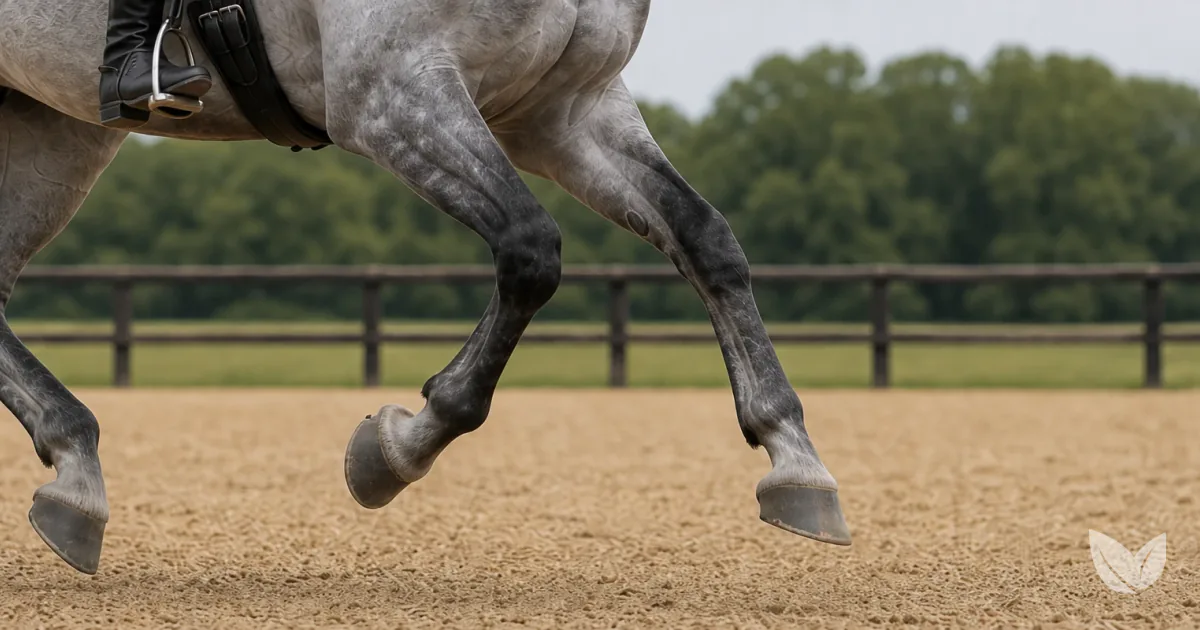
Nutrition directly determines hoof quality in horses, there’s no getting around it. Biotin is the most researched nutrient here: 20 mg daily improved hoof horn hardness, tensile strength, and crack frequency in controlled trials, though it takes 9-19 months to see the full benefit, and those gains fade if supplementation stops. The hoof wall is roughly 93% protein on a dry matter basis, which is why sulphur-containing amino acids, particularly methionine and cysteine, matter so much structurally. Zinc and copper are also essential for keratinisation and hoof horn integrity, and chelated forms are absorbed more efficiently than inorganic ones.
Biotin is all you need for better hooves
It’s easy to see why biotin has become the default answer for hoof problems. It’s the most researched single nutrient for equine hoof quality, and the evidence behind it is genuinely strong, a double-blind controlled trial in Lipizzaner stallions found that 20 mg daily for nine months produced significant improvements in hoof horn hardness, tensile strength, white line condition, and cracking [1], and a separate pony trial recorded a 15% higher hoof growth rate compared to controls [3]. When something works that visibly, it becomes the first thing people reach for, and often the only thing.
The problem is that hoof wall is approximately 93% protein on a dry matter basis [4], and that protein is keratin. Keratin relies on disulfide bonds between sulphur-containing amino acids to hold its structure together. Methionine is an essential amino acid, the horse cannot make it, so it has to come from the diet. The horse converts methionine into cysteine, and between them these two amino acids form the structural scaffold of the keratin matrix [4]. Without enough methionine in the diet, there is nothing solid for biotin to build on.
Minerals matter here too. Zinc drives the keratinisation process directly, and horses with poor horn quality consistently show lower zinc levels in both blood and hoof tissue [6]. Copper is needed for the enzyme that forms cross-links between keratin proteins [6]. Chelated (organic) forms of both minerals are absorbed more efficiently than the inorganic sulphate forms you’ll find in cheaper supplements [6][8]. The research on tensile strength makes the broader picture clear: hoof horn strength is positively associated with sulphur content, and both seasonal factors and nutritional choices measurably affect mineral composition and wall strength [5].
Biotin is not optional, the evidence for it is solid and I would always include it. But it is one part of a wider nutritional picture that also calls for the right amino acids and properly bioavailable minerals. Feed biotin alone and you may see some improvement; address the whole matrix and you give the hoof what it actually needs to rebuild correctly.
How nutrition builds, and breaks, hoof horn
Hoof wall is approximately 93% protein on a dry matter basis, which tells you straight away that what your horse eats is almost entirely responsible for the quality of horn it can grow [4].
At the heart of that protein structure are the sulphur-containing amino acids. Methionine is one your horse cannot make for itself, so it has to come from the diet. Once absorbed, the body converts methionine into cysteine, and together they provide the disulfide bonds that hold keratin together and give hoof horn its strength [4]. This matters practically: tensile strength of hoof horn is directly linked to its sulphur content, and both nutritional regime and season have been shown to shift that strength measurably [5].
Biotin has the most thoroughly researched effect on hoof horn quality. In a double-blind controlled trial, Lipizzaner stallions given 20 mg daily for nine months showed significantly better hoof horn quality than those on placebo, including improved tensile strength, fewer white-line defects, and less cracking [1]. In ponies, biotin produced a 15% higher horn growth rate compared to controls over five months [3]. The key thing to understand about biotin is that it works on actively growing horn, so results take time to show. They also fade, in the majority of horses, hoof horn condition deteriorates once supplementation is reduced or stopped [2]. It’s not a short-term fix.
Zinc and copper work at the level of the keratinisation process itself. Zinc is needed for keratinisation to happen properly, while copper activates an enzyme responsible for forming cross-linking junctions between keratin proteins, the structural bridges that hold everything together [6]. Horses with poor horn quality tend to have measurably lower blood and hoof zinc levels [6]. Supplying zinc and copper as chelated (organic) complexes rather than inorganic sulphate forms improves how well they’re absorbed, because the chelated forms are taken up via intestinal amino acid pathways rather than competing with other minerals for uptake [6, 8]. One balance worth keeping in mind: at very high intakes, zinc above 1,000 ppm can interfere with copper absorption, which is why a zinc:copper ratio of 3:1 to 4:1 is the accepted formulation approach [7].
How to supplement for stronger hooves: dose, timing, and what to expect
Biotin: the foundation, but not a quick fix
Biotin is the most thoroughly researched nutrient for hoof quality, and the evidence is pretty clear on both dose and duration. Adult horses need 15-25 mg daily according to Merck Veterinary Manual guidance, and controlled trial data supports 20 mg daily as an effective dose, that’s the level that produced significant improvements in hoof hardness, white line integrity, tensile strength, and crack reduction in a double-blind trial run over 9 to 19 months in Lipizzaner stallions. Ponies at comparable weight-adjusted doses showed a 15% increase in hoof horn growth rate within 5 months.
On timing, and this is something I feel strongly about, a hoof takes 9-15 months to grow out fully. Meaningful results won’t show at 6 weeks. Studies demonstrating clear macroscopic and histological improvement ran for 8-15 months at minimum, so please commit to at least that long before drawing any conclusions.
Just as important: don’t stop once you see improvement. In one long-term study, hoof horn condition deteriorated in 7 out of 10 horses after biotin was reduced or discontinued. Continuous supplementation is what maintains the benefit. This isn’t a course of treatment, it’s an ongoing nutritional strategy.
Zinc and copper: form matters as much as dose
Both zinc and copper are essential for keratin formation and cross-linking. Chelated (organic) forms, like those we use, are absorbed more efficiently than inorganic sulphate forms. The reason comes down to how they’re taken up: chelated minerals travel via intestinal amino acid transport pathways rather than having to compete through the same channels as other minerals. Where you have a choice, chelated zinc and copper are worth choosing over inorganic sulphates.
The zinc:copper ratio across the daily diet should sit at 3:1 to 4:1. Our ratio for Farriers Mix is 3.2:1. Zinc intakes exceeding 1,000 ppm interfere with copper absorption and are associated with developmental orthopaedic problems in young horses, so more isn’t better here. Balance is what we’re aiming for.
Sulphur-containing amino acids: non-negotiable for structure
Methionine is an essential amino acid, the horse cannot make it and must get it from the diet. It’s the precursor to cysteine, which forms the disulfide bonds that give keratin its structural integrity. If the diet is short on sulphur-containing amino acids, no amount of biotin will make up for the missing raw material. This is a prerequisite, not an optional extra.
What we’d recommend
Biotin, key amino acids, and chelated minerals work together to support stronger hoof horn and better growth.
See the product
Frequently asked questions
How long does biotin take to improve horse hoof quality?
You need to be patient, there’s no shortcut here. The double-blind Lipizzaner trial showed significant improvement after 9 months at 20 mg daily, with further gains continuing through 19 months. That timeline makes sense when you consider that a full hoof capsule takes roughly a year to grow out. You’re waiting for new, biotin-supported horn to replace the old. Don’t expect results in weeks.
What happens if I stop giving my horse biotin supplements?
The evidence is clear on this: hoof condition deteriorated in 7 out of 10 horses when biotin supplementation was reduced or stopped. That comes from a long-term study across 97 horses. Biotin isn’t correcting an underlying deficiency that you can resolve and move on from, it’s an ongoing nutritional input. Stop it, and you should expect to see regression.
What is the correct biotin dose for horses with poor hooves?
The controlled pony trial scaled dose to bodyweight, and the Merck Veterinary Manual recommends 15-25 mg per day for adult horses with soft or poor-quality hoof walls. The Lipizzaner trial used 20 mg daily with clear positive results. I’d use that 15-25 mg range as a starting point and only go higher with veterinary guidance.
Why are methionine and cysteine important for horse hoof health?
The hoof wall is roughly 93% protein on a dry matter basis, and its strength depends on keratin, a protein held together by disulfide bonds between sulphur-containing amino acids. Methionine is essential, meaning the horse cannot make it and must get it from the diet. The horse then converts methionine into cysteine. Without enough methionine coming in, the horse simply cannot build or maintain sound hoof horn.
Do chelated (organic) zinc and copper work better than standard mineral supplements for hooves?
Yes, and there’s a clear reason why. Zinc is central to the keratinisation process, while copper drives an enzyme responsible for forming the protein cross-links that give hoof horn its structure. Chelated minerals are absorbed via the same intestinal pathways as amino acids, which makes them more bioavailable than inorganic sulphate forms. Trials using chelated minerals show meaningfully improved hoof horn structure compared to inorganic supplementation.
Can too much zinc harm my horse?
Yes. Zinc intakes above 1,000 ppm are associated with developmental orthopaedic disease in young horses, largely because excess zinc interferes with copper absorption. This is why well-formulated supplements maintain a zinc-to-copper ratio of 3:1 to 4:1. More is not better, the balance between these two minerals matters just as much as the individual amounts.
Sources
- Hoof horn abnormalities in Lipizzaner horses and the effect of dietary biotin on macroscopic aspects of hoof horn quality
- The long-term influence of biotin supplementation on hoof horn quality in horses
- Effect of supplementary dietary biotin on hoof growth and hoof growth rate in ponies: a controlled trial
- Nutritional Requirements of Horses and Other Equids
- Effects of season and diet on tensile strength and mineral content of the equine hoof wall
- Preliminary Study on the Connection Between the Mineral Profile of Horse Hooves and Tensile Strength Based on Body Weight, Sex, Age, Sampling Location, and Riding Disciplines
- Nutritional Diseases of Horses and Other Equids
- Partial substitution, with their chelated complexes, of the inorganic zinc, copper and manganese in sow diets reduced the laminitic lesions in the claws and improved the morphometric characteristics of the hoof horn of sows from three Greek herds