For dogs and cats · Mar 15, 2012
Garlic does not harm your pet, fifty cloves would
The thiosulphate threshold that causes real damage sits so far beyond a normal supplement dose that the fear of garlic in pet nutrition simply does not hold up.
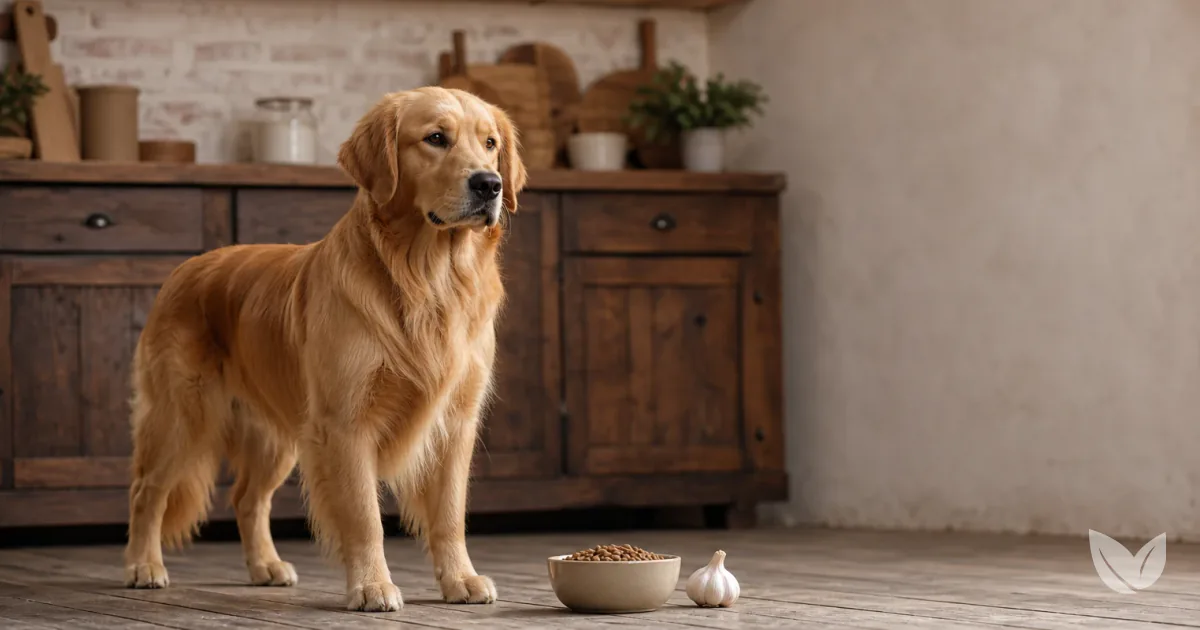
The garlic-is-toxic myth needs to stop. Garlic does contain thiosulphate, the same compound in onions that triggers haemolytic anaemia, where red blood cells rupture faster than the body can replace them. But a dog would need to eat 50 large cloves in one sitting to reach a harmful dose. One or two cloves daily carries no risk, and garlic earns its place: it supports immune function, flea resistance, blood sugar stability, digestion, and cardiovascular health. Onions are the actual problem. A single meal of 600 to 800 grams, or 150 grams daily, is enough to cause real damage. Garlic in a well-formulated supplement is nowhere near that territory.
Garlic is toxic to dogs and cats
The concern is understandable. Garlic and onions both contain thiosulphate, which weakens and ruptures red blood cells, causing haemolytic anaemia. Onions genuinely are a problem: 600 to 800 grams in a single meal, or 150 grams daily, is enough to trigger that reaction. People extrapolate that risk to garlic. What the extrapolation misses is the dose. To produce an adverse reaction from garlic alone, you would need to feed your pet FIFTY large cloves. One or two cloves a day sits nowhere near that threshold. At a sensible dose, garlic has documented antifungal, antibacterial, blood-sugar-stabilising, digestive, and cardiovascular benefits. It also helps repel fleas. The danger is real. It just does not start where most people think it does.
How thiosulphate damages red blood cells, and why garlic dose changes everything
Both onions and garlic contain thiosulphate, an oxidising compound that attacks red blood cells from the inside. Enough of it overwhelms the cell’s defences, damages the haemoglobin within, and leaves the cells so fragile they rupture before their time. That is haemolytic anaemia: the body destroying its own oxygen-carrying cells faster than it can replace them.
The critical word is “enough.” Onions carry a far higher thiosulphate concentration than garlic, and the threshold for harm is genuinely low: a single meal of 600 to 800 grams, or a daily portion of 150 grams, triggers haemolytic anaemia in a dog. Garlic is a different story. To produce the same effect, a dog would need to eat approximately 50 large cloves. That is not a practical accident.
At the small, supplementary amounts present in a well-formulated pet product, garlic is nowhere near that threshold. The benefits are well-documented. Allicin and related organosulphur compounds, produced when garlic is crushed or chewed, have demonstrated antifungal, antibacterial, and blood-sugar-stabilising activity. The same sulphur compounds that repel fleas support cardiovascular function and act as a digestive tonic.
The toxicity concern is real. It just belongs to a dose no responsible formulation would ever use.
How much garlic is actually safe for your dog or cat
The compound responsible for toxicity in both onions and garlic is thiosulphate. It causes haemolytic anaemia by oxidising red blood cell membranes until the cells rupture. The question is always: how much?
For onions, the threshold is low. A single meal of 600 to 800 grams, or a cumulative daily intake of 150 grams, is enough to trigger haemolytic anaemia in dogs. Leave onions out of your pet’s diet entirely.
Garlic is a different matter. The amount required to produce an adverse reaction is 50 large cloves. At normal supplementation levels, one to two cloves per day sits well within safe limits. At that dose, garlic supports immune function, flea repellence, blood sugar stability, digestion, and cardiovascular health, with antifungal and antibacterial activity documented alongside those benefits.
Herbal Pet supplements contain garlic at levels far below any threshold of concern. Fed as directed, there is no grounds for alarm.
One genuine contraindication: do not feed garlic to an animal that is already anaemic or undergoing treatment for a red blood cell disorder. The margin for additional oxidative stress on red blood cells is too narrow. The risk is not worth it.
What we’d recommend
Real herbal formulations that support your pet’s immune system, repel fleas, and address disease at the root.
See the product
Frequently asked questions
Is garlic safe for dogs and cats?
Yes, at sensible amounts. The toxic compound in garlic is thiosulphate, and it causes haemolytic anaemia by weakening and rupturing red blood cells. The quantity needed to trigger that in a dog or cat is around 50 large cloves. A clove or two daily carries no risk. The garlic in a properly formulated supplement sits well within that safe range.
How is garlic different from onions? Aren’t they both toxic to pets?
Both contain thiosulphate, but the concentrations are not comparable. Onions become dangerous at a single meal of 600 to 800 grams, or a daily intake of around 150 grams. For garlic, the threshold is roughly 50 large cloves. The practical risk profiles are completely different. Treating them as equivalent is a mistake.
What does garlic actually do for my pet?
Garlic (Allium sativum) supports immune function, helping pets resist disease. It acts as a natural flea repellent, has documented antifungal and antibacterial properties, helps stabilise blood sugar, supports digestion, and functions as a heart tonic. These are not marketing claims. They reflect properties documented in the scientific literature.
Can I give my pet garlic supplements alongside vet-prescribed medication?
Garlic has documented effects on blood sugar and cardiovascular function. If your pet is on medication for diabetes, heart disease, or anticoagulant therapy, cheque with your vet before adding garlic to the diet. For healthy pets on no chronic medication, the amounts in standard herbal supplements carry no known interaction risk.
How long before I see results from a garlic-containing supplement?
Flea-repellent effects are typically noticed within two to four weeks, as the active compounds build up in skin and coat secretions. Immune and digestive benefits are cumulative. Most owners report visible changes in coat condition and general vitality within four to six weeks of consistent use.
Why do so many sources online say garlic is toxic to dogs?
They repeat the thiosulphate warning without giving the dose context. Yes, thiosulphate is the toxic agent. But toxicity is always a question of quantity, and the quantity required to cause haemolytic anaemia is FIFTY large cloves. A warning without that number is incomplete information. It leads owners to avoid an ingredient that would genuinely benefit their pet.