For horses · Dec 21, 2012
Your stressy horse may be quietly running low on one vitamin
Vitamin B1 helps keep your horse’s energy and nerves ticking over nicely, but hard work, everyday stress, and high-carb feeds can push his needs beyond what his feed bucket is actually delivering.
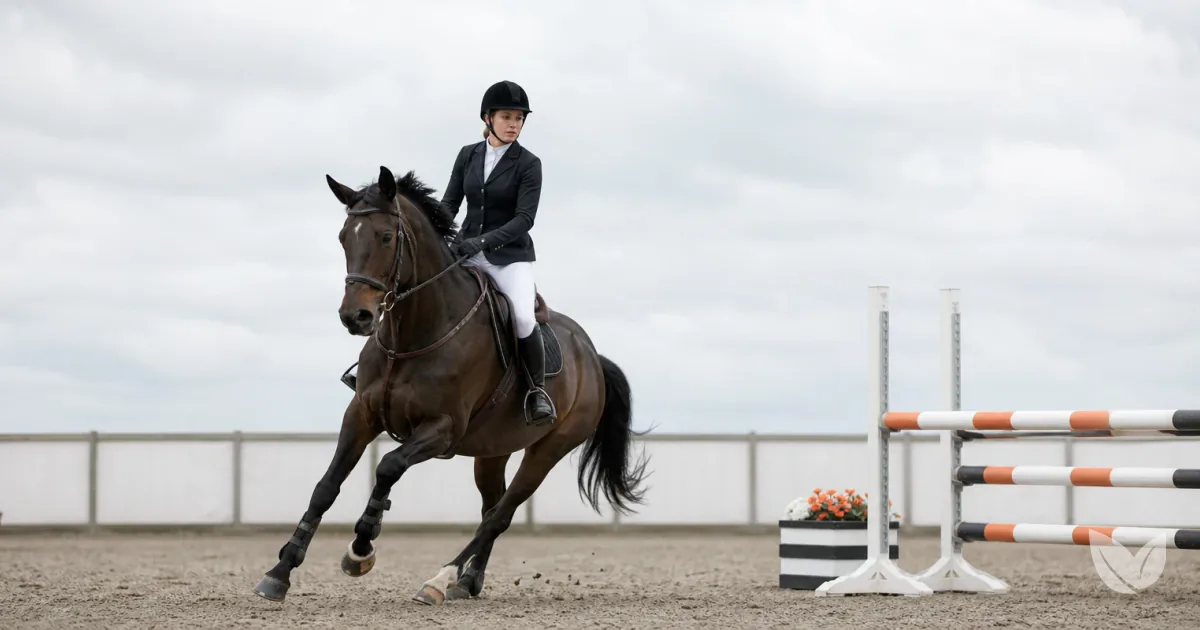
Thiamine (vitamin B1) is one of those quiet workhorses of equine nutrition. It helps your horse’s body turn the by-products of exercise into usable energy rather than lactic acid, meaning less muscle fatigue and a quicker recovery after hard work. It’s also essential for healthy nerve and muscle communication, which plays into both how your horse moves and how calmly he goes about his day. If your horse is in heavy work, he may need up to double his usual daily amount. The reassuring part: thiamine is water-soluble, so any excess is simply flushed out in the urine, and toxicity has never been reported in horses.
Common misconception: Horses on a normal diet can’t be thiamine-deficient, so supplementation is pointless
I completely understand why this idea has taken hold. The Merck Veterinary Manual tells us that thiamine deficiency is rarely reported in horses, that the minimum daily requirement is easily met by a balanced diet, and that the helpful bacteria living in your horse’s large colon make extra thiamine on top of what comes in through the feed. On the face of it, that sounds reassuring, like thiamine is just one less thing to worry about.
But “rarely deficient under normal circumstances” is doing a lot of heavy lifting, and the word *normal* is where I’d gently push back.
Those same Merck sources acknowledge that stress raises thiamine requirements, and that horses in hard work may need up to double their usual intake. They also note that no one has actually gone out and formally measured thiamine status in working horses, which is a gap in the research, not proof that your event horse or endurance horse is well covered.
Here’s the part that really matters for everyday horse owners. Thiamine is a key helper molecule for the enzymes that turn feed into usable energy. When there isn’t quite enough of it, your horse’s muscles can’t process carbohydrates cleanly. Instead of being burned efficiently for fuel, a substance called pyruvate, think of it as an energy intermediate, piles up and gets converted into lactic acid. Human research on thiamine restriction showed measurable drops in stamina, a lower threshold before the body tips into the “burning” anaerobic zone, and faster build-up of lactic acid in the blood. These aren’t niche findings; they map directly onto the same pathways thiamine is responsible for in your horse.
There’s another piece that often surprises horse owners. Thiamine also plays a role in how nerves fire and how muscles respond to nerve signals, and this is completely separate from its energy role. Studies using thiamine-blocking compounds showed that without enough thiamine, normal nerve-to-muscle communication breaks down. If your horse is spooky, distracted, or just not quite with you during a schooling session, it’s worth thinking about nutritional status alongside temperament.
The horses most likely to feel the pinch are those on high-cereal diets doing serious work. The more carbohydrates they’re processing, the harder those thiamine-dependent enzymes have to work, right at the moment when the demands of exercise are already pushing requirements up. Assuming that diet plus hindgut synthesis automatically covers a hard-working horse is just that: an assumption, not something anyone has measured.
The reassuring part? Thiamine is water-soluble. Your horse’s body simply passes any excess out through the urine, and toxicity has never been reported in horses. The downside risk of supplementing is essentially zero. The cost of being short shows up in performance and behaviour.
How thiamine works: Energy, nerves, and keeping calm under pressure
Thiamine does its work in its active form, thiamine pyrophosphate (TPP), acting as a helper molecule for some of the most important enzymes your horse’s body relies on: pyruvate dehydrogenase, alpha-ketoglutarate dehydrogenase, and transketolase. These enzymes keep energy production running smoothly, feeding into the pathways that make ATP, the fuel that powers every cell, and keeping the mitochondria doing their job properly.
So why does thiamine keep coming up when we talk about horses in work? Think about what’s happening inside your horse’s body when he’s cantering across a field or competing. As he exercises, carbohydrates break down into a molecule called pyruvate. Normally, pyruvate dehydrogenase, which depends on thiamine to function, takes that pyruvate and converts it into acetyl-CoA, feeding it into the energy cycle. If thiamine is running low, that conversion slows, pyruvate piles up, and the body shunts it towards lactic acid instead. That lactic acid builds up in the muscles, and that’s when things start to feel hard. Human studies confirm it directly: when thiamine levels in cells drop, maximal oxygen use, anaerobic threshold, and the point at which blood lactate starts to climb all fall measurably. In mouse research, a thiamine derivative improved endurance, grip strength, lactate clearance after exercise, markers of muscle damage, and glycogen storage in both liver and muscle, all pointing to the same underlying picture.
Thiamine also has an important job in the nervous system that sits quite separately from energy metabolism. Research using thiamine-blocking compounds showed it’s needed for proper nerve-to-muscle signalling, specifically something called post-tetanic potentiation, which is simply the way a nerve strengthens a signal after repeated firing. When horses were experimentally made thiamine-deficient using a thiamine antagonist called amprolium, they developed bradycardia (a slowed heart rate), ataxia (loss of co-ordination), and muscular fasciculations (muscle twitching), alongside raised lactate and pyruvate in the blood. You see the same pattern in bracken fern poisoning, where an enzyme called thiaminase in the plant actively destroys thiamine.
There’s a calmer, subtler dimension to thiamine too, one I think deserves more attention than it gets. In rodent studies, thiamine deficiency reduced exploratory behaviour and novelty-seeking; essentially, the animals became more withdrawn. Supplementation has been shown to bring down anxiety-like behaviours, lower oxidative stress, restore serotonin levels, and reduce pro-inflammatory markers including IL-1β, TNF, Cox-1, and Cox-2. In human clinical work, thiamine at 250 mg per day successfully addressed anxiety disorders, along with chronic fatigue, poor sleep, and loss of appetite, in people whose cells simply weren’t using thiamine efficiently. When their levels came back to normal with supplementation, their symptoms improved too. If you’ve ever had a horse who seems tense, spooky, or hard to settle, this line of research is worth knowing about.
Finally, thiamine plays a genuine anti-inflammatory and antioxidant role, reaching into the NFκB/p38 MAPK/AMPK signalling pathways that help the body manage oxidative damage and inflammation. When thiamine runs seriously low in the central nervous system, the knock-on failure of pyruvate dehydrogenase and alpha-ketoglutarate dehydrogenase causes lactic acid to accumulate in localised brain areas, triggering oxidative stress, excitotoxicity, and ultimately cell death. That’s why a genuine, prolonged deficiency isn’t just about tiredness, it produces real neurological signs. Your working horse likely isn’t anywhere near that point, but understanding the mechanism tells you exactly why keeping thiamine topped up matters.
How to use thiamine supplementation effectively in horses
Who needs it most
The NRC sets the minimum daily thiamine requirement for horses at 0.06 mg/kg body weight, and for most horses on a reasonable diet, that target is met without any extra help [4]. But two situations push that baseline further than diet and gut synthesis can reliably cover: hard work and stress.
If your horse is in regular, strenuous work, the Merck Veterinary Manual recommends up to double the normal daily intake [6]. Think of it this way, the harder your horse works and the more grain he eats to fuel that work, the more thiamine his body burns through to keep those energy pathways running [1, 13]. A competition horse on a grain-heavy ration is exactly the horse I have in mind. And stress is explicitly flagged as another factor that tips requirements higher than diet alone can manage [5, 17]. Whether that’s the pressure of a busy competition season, travelling, or any other disruption to normal routine, it all counts.
Route of administration
For everyday supplementation at home, oral is absolutely the right choice. IV thiamine can cause adverse reactions in horses, and while a pharmacokinetic study showed no clinical signs at intravenous doses of 5-20 mg/kg, plasma levels fell away quickly, the half-life is just 0.77-1.12 hours [9, 15]. Oral supplementation sidesteps that reaction risk entirely and is straightforward to build into your daily routine.
Safety margin
This is one thing you can genuinely stop worrying about. Oral thiamine is water-soluble, which means any amount your horse’s body doesn’t need simply leaves via the kidneys, no build-up, no toxicity risk. Toxicity has not been reported in horses at any oral dose [7, 17]. In human medicine, oral thiamine hasn’t been linked to adverse events or liver injury even at high doses [12]. The risk with a working or stressed horse is not giving too much, it’s giving too little.
When to prioritise supplementation
– Horses in regular hard work, where the body is constantly converting fuel and producing lactate as a by-product [6, 13]
– Horses showing signs that could suggest deficiency: poor appetite, weight loss, lack of coordination, anxious or nervy behaviour, or a horse who just isn’t responding to training the way you’d expect [8, 16, 20]
– Horses with access to bracken fern (*Pteridium aquilinum*) or other thiaminase-containing plants, these actively destroy thiamine in the gut, which is a serious concern [8]
– Horses going through periods of significant physical or emotional stress, when requirements creep above what diet and gut microbes can reliably provide [5, 17]
Contraindications
The one clear caution in the evidence is IV administration without veterinary supervision, hypersensitivity reactions are a documented risk by that route [9, 12]. For oral supplementation in horses, no contraindications have been reported.
What we’d recommend
Gentle thiamine support to help your horse stay settled when life gets stressful.
See the product
Frequently asked questions
Why does an exercising horse need more thiamine?
When your horse is working hard, his body burns through carbohydrates at a much faster rate, and thiamine is the vitamin that keeps that energy process running cleanly. Without enough of it, a waste product called lactate builds up in the muscles, which is what causes that post-work stiffness and early tiredness. Official guidelines actually recommend up to double the usual thiamine intake for horses in hard work. We haven’t seen formally recorded deficits in fit horses, but the underlying biology makes a strong case for topping up.
Can thiamine really help calm a nervous or spooky horse?
This is something I feel strongly about, and the science backs it up. Thiamine isn’t just about energy, it plays a direct role in how nerve signals are sent and how muscles respond to those signals. Research using thiamine-blocking compounds confirms it’s essential for normal nerve and muscle communication. If your horse is jumpy, hard to settle, or just not mentally *there*, it may not be a training issue at all. It could be a biochemical shortfall that a good thiamine supplement can genuinely help with.
If horses make their own thiamine in the gut, why would they ever be short of it?
Horses do produce some thiamine via microbes in the large colon, but the Merck Veterinary Manual is clear that this production may not cover everything your horse needs, especially when life gets harder. Stress pushes requirements up. High-starch diets increase demand. And some plants, bracken fern being the main culprit, contain enzymes called thiaminases that actively destroy thiamine in the gut. So gut synthesis gives your horse a baseline, not a safety net you can always rely on.
What are the signs of thiamine deficiency in horses?
In experimental studies, horses made thiamine-deficient showed loss of appetite, weight loss, poor coordination, muscle tremors, a slow heart rate, and raised lactate levels in the blood. In severe cases, heart enlargement was found post-mortem. These are the same signs seen in bracken fern poisoning, where the plant’s enzymes deplete thiamine stores. In everyday life, you’re more likely to spot the subtler end, a horse that tires quickly, recovers slowly, or seems anxious and unsettled for no obvious reason.
Is thiamine supplementation safe for horses?
Oral thiamine is very safe. Because it’s water-soluble, any amount your horse doesn’t need is simply passed out in the urine, toxicity hasn’t been reported in horses at all. The one form to be careful with is intravenous thiamine, which can cause adverse reactions and really should be left to veterinary situations where it’s truly necessary. For everyday support, oral supplementation is absolutely the right route, and the evidence supports it as both effective and gentle on the system.
Does thiamine have anti-inflammatory or antioxidant effects that could help my horse?
It does, and it’s an area I think gets overlooked. In its active form, thiamine is involved in pathways that help manage oxidative damage and keep your horse’s cells producing energy efficiently. Studies in rodents show thiamine supplementation reduces inflammatory markers and lowers overall oxidative stress. We don’t yet have equivalent horse-specific trials, but the underlying biology is consistent across mammals, and it’s a compelling reason to think about thiamine as part of a broader recovery and wellbeing routine.
Sources
- Shedding Light on the Shadows: A Trio of Neuro-Ophthalmic Cases Emerging From Rapid Weight Loss-Induced Thiamine Deficiency
- Effects of thiamine supplementation on exercise-induced fatigue
- The Effects of Thiamine Tetrahydrofurfuryl Disulfide on Physiological Adaption and Exercise Performance Improvement
- Nutritional Requirements of Horses and Other Equids – Management and Nutrition – Merck Veterinary Manual
- Nutritional Diseases of Horses and Other Equids – Management and Nutrition – Merck Veterinary Manual
- Nutritional Requirements of Horses and Other Equids – Management and Nutrition – Merck Veterinary Manual
- Nutritional Diseases of Horses and Other Equids – Management and Nutrition – Merck Veterinary Manual
- Nutritional Diseases of Horses and Other Equids – Management and Nutrition – Merck Veterinary Manual
- Nutritional Requirements of Horses and Other Equids – Management and Nutrition – Merck Veterinary Manual; Pharmacokinetics of thiamine (vitamin B1) in adult horses after administration of three single intravenous doses
- Vitamin B1 (Thiamine) – StatPearls – NCBI Bookshelf – NIH
- Effects of Thiamin Restriction on Exercise-Associated Glycogen Metabolism and AMPK Activation Level in Skeletal Muscle
- Vitamin B – LiverTox® – NCBI Bookshelf – NIH; Vitamin B1 (Thiamine) – StatPearls – NCBI Bookshelf – NIH
- The effects of endurance training and thiamine supplementation on anti-fatigue during exercise
- Possible role of thiamine in neuromuscular transmission
- Pharmacokinetics of thiamine (vitamin B1) in adult horses after administration of three single intravenous doses
- Amprolium-Induced Thiamine Deficiency in Horses: Clinical Features
- Nutritional Requirements and Diseases of Horses and Other Equids – Merck Veterinary Manual
- Thiamine Compounds Alleviate Oxidative Stress, Over-Expression of Pro-Inflammatory Markers and Behavioral Abnormalities in a Mouse Predation Model of PTSD
- Thiamine Mitigates Nicotine Withdrawal Effects in Adolescent Male Rats: Modulation of Serotonin Metabolism, BDNF, Oxidative Stress, and Neuroinflammation
- The Role of Vitamins and Minerals in Psychiatry
- Thiamine deficiency activates hypoxia inducible factor-1α to facilitate pro-apoptotic responses in mouse primary astrocytes
- Thiamine Supplementation Alleviates Lipopolysaccharide-Triggered Adaptive Inflammatory Response and Modulates Energy State via Suppression of NFκB/p38 MAPK/AMPK Signaling
- Thiamine Compounds Alleviate Oxidative Stress in a Mouse Predation Model of PTSD