Anxiety · Oct 28, 2015
Half of all dogs live with fear, and most owners don’t know what to do
Noise phobia, vet anxiety, and seasonal stress affect the majority of pet dogs, and the evidence points somewhere quite different from the advice most owners receive.
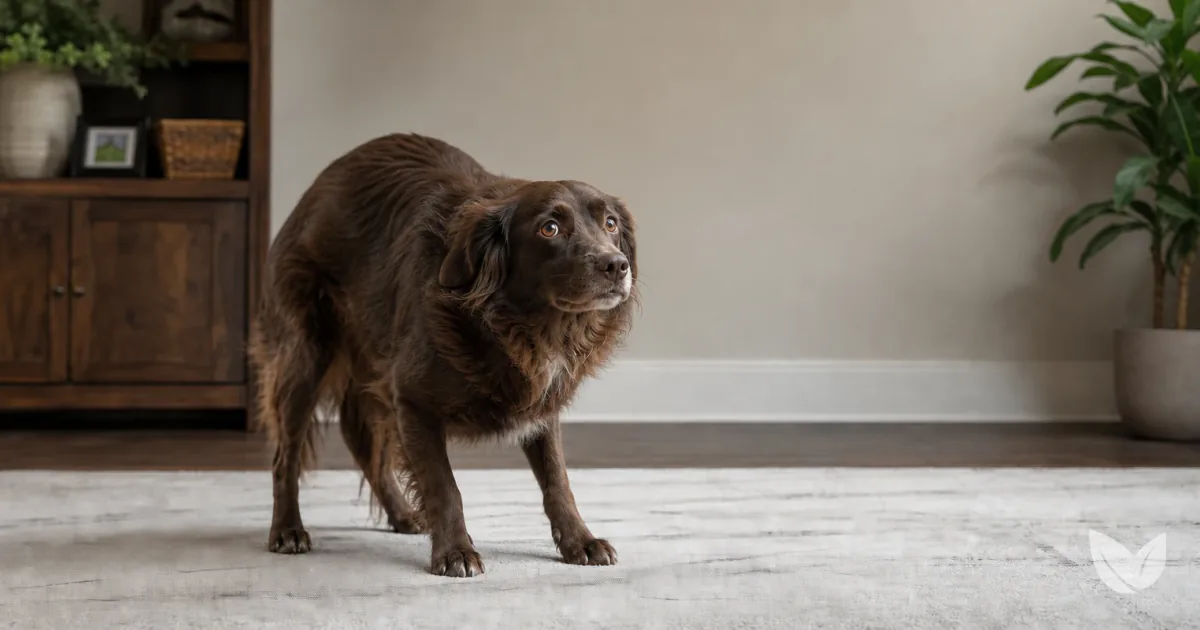
Between a quarter and half of all pet dogs are affected by noise fears, making it the most common behavioural problem in the species. Natural supplements combining ingredients such as tryptophan, theanine and passionflower (*Passiflora incarnata*) have shown statistically significant fear reduction in controlled trials. Behavioural approaches, desensitisation, counterconditioning, and a calm owner presence, add real, evidence-based benefit on top of that.
Pressure wraps (ThunderShirts) reliably calm anxious dogs
I understand why people reach for a ThunderShirt. The idea that gentle, sustained pressure can soothe the nervous system is intuitive, and plenty of owners genuinely believe it helps their dog. But the evidence doesn’t back them up as a reliable standalone solution.
A systematic review of pressure wrap studies rated confidence in the available literature as low, with moderate-to-high bias risks and inconsistent findings. Many studies lacked proper control groups, which means placebo effects can’t be ruled out. And here’s what I find most telling: some dogs don’t relax in a pressure vest at all, they freeze. That can look like calm, but it isn’t [3].
This distinction matters. A dog who has stopped moving isn’t necessarily a dog who feels better. If you mistake suppressed behaviour for genuine relief, the underlying anxiety goes unaddressed and your dog continues to suffer, just more quietly.
None of this means pressure wraps should never be tried. Individual dogs do respond differently, and a vest is unlikely to cause harm. But if you use one, watch your dog carefully. A dog who has genuinely relaxed will show lower muscle tension, easy breathing, and some willingness to engage with the world around them. A dog who goes very still and wide-eyed is a different picture entirely. For dogs with real noise phobia or persistent situational anxiety, the evidence points far more firmly towards behavioural modification, appropriate nutritional support, and, where necessary, veterinary medication [4].
How natural calming ingredients work in the nervous system
Several natural ingredients used in calming supplements have identifiable mechanisms, though the depth of evidence varies by compound.
Passiflora incarnata (passionflower) works by modulating the GABA system, its flavonoid constituents act as partial agonists at GABA-A receptors, which are the same receptors targeted by conventional anti-anxiety drugs. In clinical trials, this translated to anxiety reduction comparable to the benzodiazepine oxazepam, with no adverse effects on memory or cognitive function.
Chamomile (*Matricaria chamomilla* L.) appears to work through a similar route. Its flavonoid components, including apigenin, are thought to interact with GABA receptors in a way that dampens the anxiety response. Human clinical trials support its anxiolytic effect, though studies in companion animals are not yet in the literature.
L-theanine, an amino acid from tea leaves, reduces anxiety through its influence on neurotransmitter activity. In a randomised controlled trial with 69 dogs, a diet containing L-theanine alongside L-tryptophan produced meaningful reductions in salivary cortisol and improved behavioural scores.
Magnesium has a well-documented relationship with how the body handles stress. Guide dogs under active training showed markedly lower serum magnesium levels than dogs who had moved through to the adapted phase, a pattern that mirrors what we see in human research, where low magnesium intake is associated with greater anxiety and depression severity. A pilot study combining omega-3 fatty acids, magnesium citrate, and zinc sulfate in anxious dogs found significant reductions in fearfulness scores over 126 days.
Inositol, a precursor to membrane phosphoinositides involved in how cells pass signals along, reduced anxiety-like behaviours in animal models; the effect was most pronounced in individuals with the highest baseline anxiety. Low brain inositol is associated with increased anxiety and depression in mammals, though specific evidence in dogs and cats remains limited.
How to use natural calming support effectively, timing, duration, and what the evidence actually says
Start well before the stressful event
This is the point most people get wrong. The tryptophan, valerian, and passiflora combination studied in dogs showed statistically significant fear reduction, both behaviourally and via salivary cortisol, after 42-48 days of continuous supplementation ahead of a fireworks event [5]. That is not a “give it the night before” situation. If you are planning for Guy Fawkes, Christmas, or a kennelling stay, count backwards from the date and start supplementing six to seven weeks out.
The L-theanine trial in cats used 50 mg/day for 30 days before improvements in stress-related signs, inappropriate urination, fear-induced aggression, hypervigilance, became apparent [9]. The nutraceutical diet trial in anxious dogs, combining L-theanine, L-tryptophan, and botanical extracts, similarly ran over several weeks before meaningful cortisol reduction and behavioural improvement were recorded [10].
The consistent message across these trials is that these ingredients work through neurobiological pathways, modulating GABA receptors, loading serotonin precursors, helping to rebalance neurotransmitters, and those processes take time to produce a real shift. These are not sedatives that act within an hour.
Duration
For acute seasonal triggers such as fireworks, holiday disruption, or storms, the evidence points to continuous supplementation across the entire risk window rather than a single dose. The pilot study using omega-3 fatty acids combined with magnesium citrate (12-15 mg/kg) and zinc sulfate (5 mg/kg) ran for 126 days and recorded significant reductions in fearfulness scores over that period [15]. For ongoing generalised anxiety rather than a one-off seasonal event, longer programmes are supported: the chamomile (Matricaria chamomilla L.) human trial demonstrating anxiolytic efficacy ran for 26 weeks [12], which offers some indication of the timescales involved in sustained management, though drawing direct comparisons to dogs and cats requires caution.
Combine with behavioural work where possible
Supplementation alone is rarely the whole answer. A standardised four-week desensitisation and counterconditioning programme showed mild effectiveness for pre-existing veterinary fear in dogs, and there is good evidence that combining supplements or medication with behavioural modification speeds learning and improves outcomes [4]. Early counterconditioning, pairing noise or other fear triggers with positive rewards, is well-evidenced for preventing phobias from taking hold in the first place, particularly during the sensitive socialisation window at 5-10 months [7]. If your dog or cat is young, that period is your highest-leverage opportunity.
Owner behaviour matters
Owner anxiety amplifies pet anxiety. Staying calm and not overreacting to distress signals is evidence-based advice, not a platitude [8]. Physical contact and stroking are genuinely useful: they prompt the release of oxytocin, prolactin, and endogenous opioids, supporting real physiological relaxation [8]. Staying present during a stressful procedure or event reduces distress compared to leaving your animal alone [8].
Pressure wraps: keep your expectations realistic
The systematic review of compression wraps such as the ThunderShirt and Anxiety Wrap found weak and inconsistent evidence, with confidence in the available literature rated low due to moderate-to-high bias risk [3]. Some dogs become frozen rather than relaxed when wearing them, so watch how your individual animal responds rather than assuming benefit [3]. I would not rely on a pressure wrap as a primary intervention for severe noise phobia.
When natural support is not enough
If fear is severe, prolonged, showing signs of extreme distress, or worsening year on year, that warrants a conversation with your vet. Pharmaceutical anxiolytics are a legitimate tool, and combining them with behavioural modification produces better outcomes than either approach on its own [4]. Having that conversation in advance means the option is there when you need it, rather than trying to arrange it in a panic on the night.
What we’d recommend
L-theanine, magnesium, inositol, passionflower, and chamomile work together to ease stress-related behaviours during disruption and noise events.
See the product
Frequently asked questions
How common is fear of fireworks and loud noises in dogs?
More common than most owners realise. Studies put noise phobia in 25-50% of pet dogs, with fireworks specifically affecting at least 52% to some degree. Fear isn’t just unpleasant in the moment, severe cases can take weeks or months to fully recover from, and the problem tends to worsen with repeated exposure rather than resolving on its own.
Can natural supplements genuinely reduce fear and anxiety in dogs?
Yes, and there is published evidence behind that, not just anecdote. A placebo-controlled trial found that a supplement combining tryptophan, valerian (Valeriana officinalis), and passionflower (Passiflora incarnata) produced statistically significant reductions in fear behaviour and salivary cortisol in dogs exposed to real fireworks after 42-48 days of use. A separate randomised controlled trial using a formula that included ashwagandha (Withania somnifera), Passiflora incarnata, hops, and vitamin B6 also showed measurable improvement in anxiety-related behaviours.
How does L-theanine help with anxiety in dogs and cats?
L-theanine is an amino acid found in tea leaves that works by influencing neurotransmitter activity in the brain. In a randomised controlled trial involving 69 anxious dogs, a nutraceutical diet containing L-theanine and L-tryptophan produced significant reductions in cortisol and improved behavioural parameters. In cats, a clinical trial using 50 mg per day for 30 days showed improvement in stress-related signs including fear-induced aggression, inappropriate urination, and hypervigilance.
Does stroking or staying with your pet during fireworks actually help, or does it reinforce fear?
Staying with your pet genuinely helps, the old advice to ignore a frightened animal is not well supported by the evidence. Research shows that owner presence during stressful events reduces distress, and physical contact such as stroking triggers the release of oxytocin, prolactin, and endogenous opioids, all of which support physiological relaxation. Staying calm yourself matters too, since owner anxiety can amplify rather than ease a pet’s fear response.
When should desensitisation training start, and does it actually prevent noise phobia?
The earlier the better. The critical socialisation window of roughly 5-10 months is when exposure to a wide range of experiences, including controlled noise, most strongly shapes how a dog responds to fear triggers later in life. Counterconditioning, which involves pairing noise with something the dog enjoys, is highly effective at preventing phobias when started in puppyhood. A structured desensitisation programme can also reduce pre-existing fear, though it takes consistent owner commitment and tends to work faster when combined with appropriate supplementation or medication.
Sources
- Investigating risk factors that predict a dog's fear during veterinary consultations
- Therapy and Prevention of Noise Fears in Dogs—A Review of the Current Evidence for Practitioners
- A Systematic Review of the Efficacy of Compression Wraps as an Anxiolytic in Domesticated Dogs
- Effect of a Standardized Four-Week Desensitization and Counter-Conditioning Training Program on Pre-Existing Veterinary Fear in Companion Dogs
- Is It Possible to Mitigate Fear of Fireworks in Dogs? A Study on the Behavioural and Physiological Effects of a Psychoactive Supplement
- The Effect of Pet Remedy on the Behaviour of the Domestic Dog (Canis familiaris)
- Not a one-way road-Severity, progression and prevention of firework fears in dogs
- Minimising Stress for Patients in the Veterinary Hospital: Why It Is Important and What Can Be Done about It
- Effect of l-theanine tablets in reducing stress-related emotional signs in cats: an open-label field study
- Effects in dogs with behavioural disorders of a commercial nutraceutical diet on stress and neuroendocrine parameters
- Effects of a Nutritional Supplement (DìRelaxTM) on Anxiety in Dogs in a Randomized Control Trial Design
- Long-term Chamomile (Matricaria chamomilla L.) treatment for generalized anxiety disorder: A randomized clinical trial
- Passiflora incarnata in Neuropsychiatric Disorders—A Systematic Review
- Analysis of serum magnesium ions in dogs exposed to external stress: A pilot study
- Effect of Supplementation With Omega-3 Fatty Acids, Magnesium, and Zinc on Canine Behavioral Disorders: Results of a Pilot Study
- The anxiolytic effect of chronic inositol depends on the baseline level of anxiety