For horses · Dec 21, 2012
Simple management shifts can heal horse ulcers without drugs
More turnout, plenty of forage, and a steady routine can do wonders, and honestly, for glandular ulcers, omeprazole often isn’t doing much anyway.
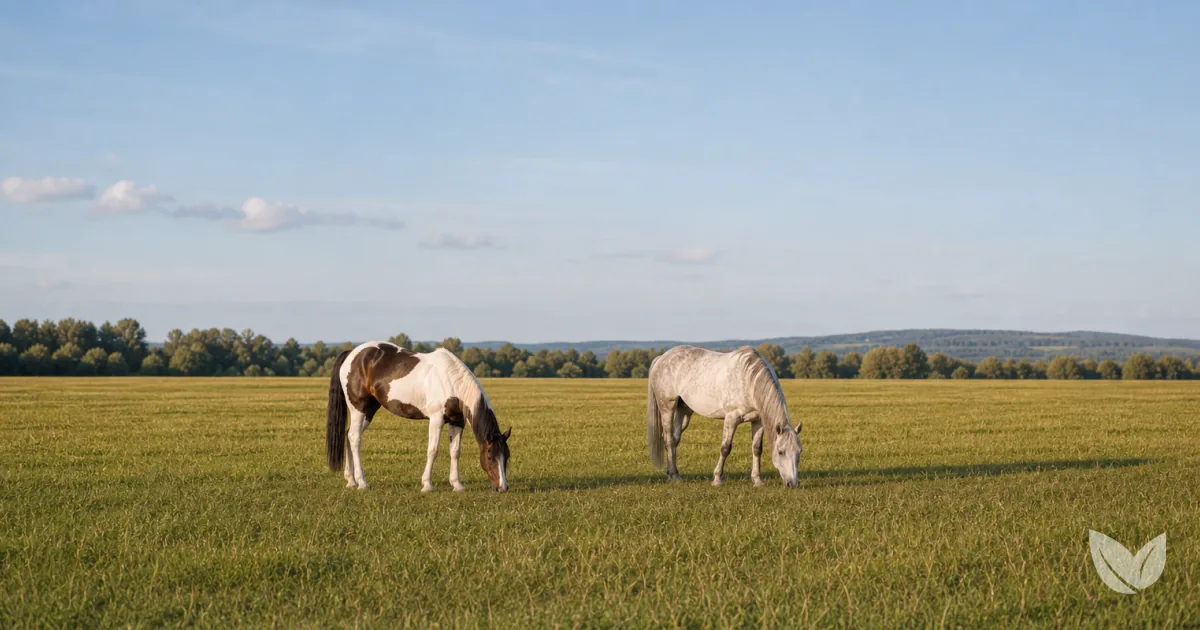
It might surprise you, but a 2023 peer-reviewed study showed that severe equine squamous gastric disease can actually heal without any omeprazole at all, just ad libitum forage, a predictable daily routine, and familiar caretakers. Simple things, but they matter enormously. Stall confinement and high-concentrate diets are well-established risk factors, while turnout at pasture is genuinely protective. And here’s something worth knowing: standard omeprazole only achieves around a 25% healing rate for glandular disease anyway, so pharmaceuticals aren’t always the clear-cut answer people assume they are.
Omeprazole fixes all equine gastric ulcers
It’s completely understandable why this one has stuck around, omeprazole is licensed, it’s heavily marketed, and it genuinely does work well for a certain type of ulcer. But here’s the thing: “equine gastric ulcer syndrome” isn’t actually one condition. It’s an umbrella term covering at least two quite different diseases. There’s equine squamous gastric disease (ESGD), which affects the upper, non-glandular lining, and equine glandular gastric disease (EGGD), which affects the lower, acid-secreting region. Omeprazole suppresses acid, which makes reasonable sense for squamous disease, where acid splash is a primary driver. For glandular disease, though, the picture is a lot more complicated, and the drug’s track record shows it.
The European College of Equine Internal Medicine consensus statement is pretty candid about the numbers: standard omeprazole dosing heals around 78% of squamous cases, which is respectable, but only 25% of glandular cases. And 23% of horses with glandular disease actually showed worsening grades while on treatment. So if your horse is on omeprazole and simply not getting better, it may well be that the drug is the wrong tool for what’s going on, rather than any sign that ulcers aren’t the problem.
What’s also really interesting is that management changes alone, ad libitum forage, a predictable daily routine, consistent handlers, have been shown to heal severe squamous gastric disease without any pharmaceutical intervention at all. A 2023 peer-reviewed study documented exactly that. Add to that the evidence that magnesium oxide supplementation improved squamous disease scores in young trotters after 30 days, and you start to see the fuller picture: acid suppression is one lever among several, not the whole answer. Omeprazole absolutely has its place, but treating it as a universal solution means a fair number of horses end up under-treated, or treated for entirely the wrong thing.
How the stomach lining comes under attack, and what can protect it
The horse’s stomach is really two regions in one, and they each have their own weak spots, which matters a lot when you’re trying to figure out what’s going wrong.
The upper, squamous region doesn’t produce acid itself, so it relies on a physical buffer, a steady layer of saliva and chewed fibre sitting between the acid pool below and the unprotected lining above. When a horse is stabled and fed set meals rather than having constant hay in front of him, that buffer disappears, and acid splashes up onto tissue that simply isn’t built to handle it. The good news? Studies show that management changes alone, constant forage access, a predictable daily routine, can heal even severe equine squamous gastric disease (ESGD) without any pharmaceuticals at all. Sometimes the simplest fix really is the right one.
The lower, glandular region is where things get more complicated. This is the acid-producing part, and it responds poorly to the standard pharmaceutical approach. Omeprazole, the proton pump inhibitor most vets reach for first, does reliably push gastric pH above 4.0, but peer-reviewed consensus data show only a 25% healing rate for equine glandular gastric disease (EGGD) at standard doses. Compare that to 78% for squamous disease, and you start to see the problem. Twenty-three per cent of horses actually get worse on standard omeprazole dosing. To me, that’s a clear signal that the glandular region’s issue isn’t simply too much acid.
On the buffering front, magnesium antacids have been shown to raise gastric pH above 4.0, and magnesium supplementation improved squamous disease scores in young trotters in training after 30 days. The effect size is still being characterised, but it’s a decent pointer that sustained buffering through feed additives can make a real difference, especially on the squamous side.
Then there’s the gastric microbiome, which doesn’t get nearly enough attention. Prebiotic inulin-type fructans and fructooligosaccharides (FOS), fermentable fibres, increase Lactobacillus populations and reduce Streptococcus in the equine stomach. When those fibres ferment, they produce short-chain fatty acids including butyric acid, which looks promising for mucosal protection. The clinical translation to ulcer healing hasn’t been fully nailed down yet, but the direction of travel is encouraging.
Slippery elm (*Ulmus rubra*) inner bark works through a completely different route: its mucilage stimulates mucous and saliva production, physically coating damaged gastric mucosa. It’s a mechanism that makes good biological sense for mucosal protection, even if we’re still waiting on published clinical trials in horses testing it specifically for EGUS.
Curcumin, the active polyphenol from turmeric (*Curcuma longa*), has shown anti-inflammatory and antioxidant activity in lab and animal studies, along with gastroprotective effects against NSAID-induced ulcers in humans. No equine-specific efficacy trials have been published yet, so I’d call it promising rather than proven.
Finally, Saccharomyces, a live yeast probiotic, survived passage through the equine GI tract in a peer-reviewed study and significantly reduced the severity and duration of acute gastrointestinal disease compared to placebo. That study focused on enterocolitis rather than gastric ulcers specifically, but it does confirm that this particular yeast can do useful work in the equine gut.
How to support a horse with gastric ulcers, what the evidence actually backs
Management changes first, and they genuinely work
Here’s the thing I always come back to: management isn’t a consolation prize while you wait for the drugs to do their job. A 2023 peer-reviewed study showed that severe equine squamous gastric disease can heal through management changes alone, no omeprazole in sight. What did that look like in practice? Ad libitum forage access, a predictable daily routine, and consistent caretakers [3]. Simple stuff, but it made a real difference.
Turnout is part of this picture too. Horses with access to pasture consistently show lower rates of squamous gastric disease, and moving a horse from field to single stabling triggers measurable stress-related immune changes [2]. If your horse can be out, let him be out.
Ad libitum forage, honestly, start here
High-concentrate diets and stall confinement push ulcer risk up; ad libitum forage brings it down [2, 3]. If you’re currently feeding two large hard feed meals a day, that’s the first thing worth looking at. The horse’s stomach produces acid around the clock, forage keeps a physical buffer sitting in there, doing its quiet job.
Buffering supplements, some good evidence, best used alongside management
Magnesium supplementation improved squamous gastric disease scores in young trotters under training after 30 days [5], which is encouraging. Magnesium antacids have been shown to raise gastric pH above 4.0, though that effect lasts no more than a couple of hours before pH drifts back [4]. Worth knowing: these are short-acting buffers, not a substitute for the management foundations above.
Prebiotics and gut microbiota support
Inulin-type fructans and fructooligosaccharides (FOS) modify the equine gastric microbiota in some rather useful ways, nudging Lactobacillus up and Streptococcus down, and they’re fermented to produce short-chain fatty acids including butyrate, which has potential mucosal-protective effects [7]. On the probiotic side, the live yeast *Saccharomyces* has shown real efficacy in reducing the severity and duration of equine gastrointestinal disease, and it does survive the journey through the GI tract [6].
Mucosal-coating botanicals, traditional use with a mechanism that makes sense
Slippery elm (*Ulmus rubra*) inner bark contains mucilage that stimulates mucous and saliva production, theoretically coating and soothing damaged gastric mucosa [8, 10]. It has a long history of empirical use for equine stomach over-acidity, often alongside chamomile (*Matricaria recutita*) and peppermint (*Mentha piperita*) [8]. I want to be straight with you: no published clinical trials in horses exist for any of these botanicals. But the mechanism is plausible and the traditional use is consistent across different cultures and traditions.
Curcumin, the active polyphenol from turmeric (*Curcuma longa*), has shown gastroprotective effects in animal studies and human trials, including against NSAID-induced ulcers, and sits comfortably alongside standard ulcer therapies [9]. Again, no equine-specific RCTs yet, but it’s on my radar.
When pharmaceutical intervention is warranted
If your horse has glandular gastric disease (EGGD) rather than squamous disease, there’s something important worth knowing: standard omeprazole dosing heals only 25% of EGGD cases, compared with 78% for squamous disease, and 23% of horses on standard treatment actually worsen [1]. That’s not a reason to avoid your vet; it’s a reason to go in with your eyes open, knowing that omeprazole alone often isn’t enough for EGGD and that management and adjunct support matter whichever form you’re dealing with.
What we’d recommend
Gentle gut support through natural mucilage and microbiota-friendly ingredients, alongside good management habits.
See the product
Frequently asked questions
Can equine gastric ulcers heal without omeprazole?
For squamous disease, quite possibly yes! A 2023 peer-reviewed study found that severe squamous ulcers healed with no omeprazole at all, just ad libitum forage, a predictable routine, and familiar caretakers. It’s a lovely reminder that getting management right genuinely matters. That said, omeprazole does work well for squamous disease (78% healing), so if things aren’t improving, a scope and a chat with your vet is absolutely the right move.
Why does stabling a horse at night increase ulcer risk?
Horses are built to trickle-feed almost around the clock, their stomachs produce acid continuously, and forage is what buffers it. Take that forage away overnight and the acid just keeps on coming. On top of that, stabling brings restricted movement, social isolation, and the kind of low-level stress that measurably shifts immune markers. Research confirms that horses with regular turnout have lower rates of squamous gastric disease, while stall confinement and high-concentrate diets are well-recognised risk factors.
Does omeprazole work for glandular gastric ulcers in horses?
Honestly, not very well on standard dosing, and this is something I wish more people heard. The European College of Equine Internal Medicine consensus data put healing rates for glandular disease at just 25% on standard omeprazole, compared with 78% for squamous disease. And here’s the bit that really troubles me: 23% of horses with glandular disease actually get worse grades despite treatment. It’s a real limitation that doesn’t always get communicated clearly at the point of prescribing.
Can magnesium supplements help with horse ulcers?
There’s some genuinely encouraging evidence here. A 2023 study in young trotters found that magnesium supplementation improved squamous gastric disease scores after 30 days, suggesting a useful buffering role. Earlier work on magnesium antacids showed gastric pH raised above 4.0 for at least two hours, which is helpful, though shorter-lived than pharmaceutical options. Neither replaces scoping or sorting out management, but as part of a broader strategy, buffering support makes a lot of sense.
Is slippery elm bark useful for horses with gastric ulcers?
Slippery elm (*Ulmus rubra*) inner bark contains mucilage that stimulates mucous and saliva production, which theoretically coats and soothes irritated gastric mucosa, and that mechanism really does make biochemical sense. It has a long, well-documented history in ethnoveterinary practice across North America for equine stomach acidity. I’ll be upfront: there are no published clinical trials in horses to confirm it. But the mechanism is credible, the safety profile is excellent, and it’s a herb I keep coming back to.
Do probiotics help horses with gut problems?
For broader gastrointestinal upsets, there’s some solid evidence worth knowing about. *Saccharomyces boulardii* was shown in a peer-reviewed equine study to meaningfully reduce both the severity and the duration of acute enterocolitis compared to placebo, that’s a real, measurable difference. On the prebiotic side, fructooligosaccharides (FOS) have been shown to increase beneficial *Lactobacillus* and reduce *Streptococcus* in the equine stomach, with fermentation producing butyric acid that may help protect the mucosa. Neither finding is specific to ulcer healing, but supporting gut microbiota feels like a sensible, low-risk part of any recovery plan.
Sources
- European College of Equine Internal Medicine Consensus Statement—Equine Gastric Ulcer Syndrome in Adult Horses
- Prevalence and Risk Factors for the Presence of Gastric Ulcers in Pleasure and Breeding Horses in Italy
- Changes in Management Lead to Improvement and Healing of Equine Squamous Gastric Disease
- Effect of aluminum hydroxide/magnesium hydroxide antacid and bismuth subsalicylate on gastric pH in horses
- Effect of a blend of magnesium oxide on Equine Squamous Gastric Disease in young trotter horses under training
- Efficacy of Saccharomyces boulardii for treatment of horses with acute enterocolitis
- Modification of the equine gastrointestinal microbiota by Jerusalem artichoke meal supplementation
- Ethnoveterinary medicines used for horses in Trinidad and in British Columbia, Canada
- Curcumin: A Potent Protectant against Esophageal and Gastric Disorders
- Slippery Elm