For horses · Dec 21, 2012
Echinacea gives horses a measurable, evidence-backed immune advantage
Controlled equine trials show real immunological changes, but how you use echinacea matters as much as whether you use it at all.
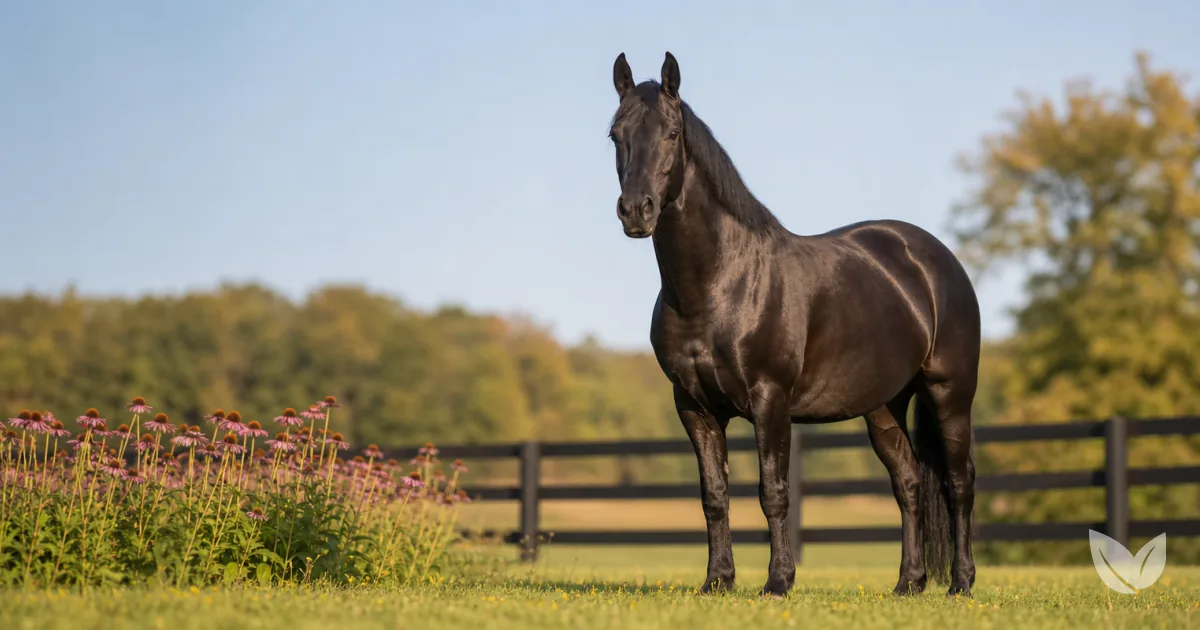
Echinacea genuinely supports immune function in horses: a double-blind, placebo-controlled equine trial demonstrated increased neutrophil phagocytic activity, higher lymphocyte counts, and improved red blood cell and haemoglobin levels. Its bioactive alkamides, polysaccharides, and caffeic acid derivatives activate macrophages, natural killer cells, and neutrophils across both innate and adaptive immunity. It has a wide safety margin in animal studies, though pulsed use, rather than continuous long-term dosing, is considered best practice, as full immune response is likely reached within a few weeks.
Echinacea loses its effect if you use it continuously, so you must cycle it
I understand why this belief is so widespread, it appears on product labels, in vet advice, and in regulatory guidance from bodies like the European Scientific Cooperative on Phytotherapy and the World Health Organisation, both of which recommend limiting continuous use to eight weeks [1]. When an instruction comes from that level of authority, owners and practitioners repeat it without much question.
But the evidence behind that ceiling is thinner than it looks. Long-term studies involving continuous ingestion of echinacea preparations for up to six months found no toxicological concerns and actually supported recommendations for extended use [1]. Mouse studies showed daily echinacea was prophylactic, extended lifespan, and produced no immune dependency or suppression when used long-term [7]. The concern that the immune system will simply stop responding, or worse, become dependent, has not been well documented in the literature [10].
What the research does suggest is more nuanced: the full immunological response probably peaks within a few weeks and doesn’t keep climbing with continued dosing, which makes pulsed use a sensible practical strategy rather than a safety necessity [10]. And in the trials that have specifically looked at long-term preventive use, results have been less convincing than those for short-term therapeutic use, giving echinacea early during an acute episode, when the immune system actually needs the stimulus [11].
So the cycling rule isn’t wrong exactly, but the reason given for it usually is. It isn’t that continuous use becomes toxic or switches the immune system off. It’s that short, targeted use during periods of challenge, transport, competition, illness onset, is simply where the evidence is strongest [11]. That’s a very different conversation from “you must stop or it stops working.”
How Echinacea activates the immune system
Echinacea contains several classes of bioactive compounds, alkamides, caffeic acid derivatives, flavonoids, and polysaccharides, that work together rather than through a single pathway. Three broad mechanisms account for its immunological action: activation of phagocytosis, stimulation of fibroblasts, and enhanced respiratory activity that increases leukocyte motility.
At the cellular level, these compounds activate neutrophils, macrophages, polymorphonuclear leukocytes, and natural killer cells. The polysaccharide fraction is particularly well characterised: purified polysaccharides from Echinacea purpurea directly activate macrophages, prompting them to increase production and secretion of oxygen radicals and interleukin-1, and to develop pronounced cytotoxic activity. The compounds also stimulate cytokine production more broadly and enhance phagocytosis, the process by which immune cells engulf and destroy foreign particles. Together, these effects modulate both the innate and adaptive arms of the immune response, which is why the term *immunomodulatory* is now considered more precise than simply *immunostimulatory*.
In a double-blind, placebo-controlled trial in horses specifically, echinacea increased the phagocytic ability of neutrophils, boosted peripheral lymphocyte counts, and stimulated neutrophil migration, all direct measures of immune readiness. The same trial recorded increases in red blood cell size and concentration alongside higher haemoglobin levels, suggesting effects beyond the immune system alone.
How to use echinacea effectively: Timing, duration, and what to watch for
Duration and cycling
The most consistently supported guidance from regulatory bodies, including the European Scientific Cooperative on Phytotherapy and the World Health Organisation, is to limit continuous use to a maximum of 8 weeks [1]. This aligns with the view that immunostimulants are best delivered as pulsed treatments: the immune response likely reaches its full peak within a few weeks and does not continue to climb with prolonged administration [10]. Running echinacea indefinitely as a background supplement is not well supported; the evidence for long-term continuous use as a preventive is weaker than for targeted, shorter courses [11].
That said, the picture is not entirely clear-cut. Long-term studies of up to 6 months have reported no toxicological concerns [1], and research in mice found that daily consumption extended lifespan without producing immune dependency or suppression [7]. The practical middle ground, and the approach I use in formulation, is cycled use: a course of several weeks on, with a rest period, rather than indefinite daily supplementation.
When to use it
The strongest evidence for echinacea is for acute immune challenge: starting at the first sign of respiratory stress or infection and continuing through the acute period [11]. This maps well onto equine situations, the horse returning from a busy competition, a yard where something is circulating, or an animal that’s just been transported. The equine trial that demonstrated increased neutrophil phagocytic activity, elevated lymphocyte counts, and improved haemoglobin used a 42-day feeding period [2], which gives a reasonable frame of reference for a structured course.
Frequency
No specific dosing frequency for horses is established in the current research pool [9]. Controlled equine work has used daily administration [2], and that is the basis on which most equine products are designed.
Dosage
There is no validated dose established for horses in the available research [9]. I won’t invent one here. Follow the guidance of the specific product you’re using, which should be formulated to a standardised extract with a defined active compound content, preparation type, plant part, and extraction method all affect what ends up in the horse [12].
Safety and contraindications
Echinacea has a broad safety margin. Oral LD50 in mice exceeded 30 g/kg [6], and short-term use in humans and animals is associated with only mild, transient adverse events, mainly gastrointestinal upset, when they occur at all [8]. Severe allergic reactions are rare [8].
Concerns about echinacea triggering or worsening autoimmune conditions are frequently repeated but remain poorly documented [10]. I would nonetheless exercise caution in any animal with a confirmed autoimmune condition until more specific evidence is available, not because the risk is proven, but because it is unresolved.
No contraindications specific to horses are established in the current research literature [9].
What we’d recommend
Boosts immune cell activity and increases red blood cell counts in horses naturally.
See the product
Frequently asked questions
How does echinacea actually work to support the immune system?
Echinacea contains alkamides, caffeic acid derivatives, flavonoids, and polysaccharides that work together to activate macrophages, neutrophils, and natural killer cells, while stimulating cytokine production and phagocytosis. Three core pathways are involved: phagocytosis activation, fibroblast stimulation, and enhanced respiratory activity that increases leukocyte motility. In short, it raises the activity level of the cells your horse’s body already uses to fight infection.
Has echinacea actually been tested in horses, or is this just based on human research?
There is a controlled equine study. A double-blind, placebo-controlled trial found that echinacea increased neutrophil phagocytic ability, boosted peripheral lymphocyte counts, stimulated neutrophil migration, and raised red blood cell concentration and haemoglobin levels in horses. That said, researchers note that controlled studies specifically investigating safe and efficacious doses in horses remain limited, so the evidence base is growing but not yet extensive.
Is echinacea safe for horses, are there any toxic effects?
Animal studies show a large safety margin. In mice, the oral LD50 exceeded 30 g/kg body weight, many times any realistic supplementation dose. Short-term use in humans and animals is associated with mild, transient adverse events at most, typically gastrointestinal upset. Severe reactions are rare, and clinical trials have not linked echinacea to liver injury.
How long should I give my horse echinacea before taking a break?
Regulatory bodies including the European Scientific Cooperative on Phytotherapy and the WHO recommend no more than 8 weeks of continuous use. From a practical immunology standpoint, this makes sense: full immune response is likely reached within a few weeks and does not continue to increase with prolonged dosing, so pulsed use is considered the more rational approach rather than continuous administration.
Is echinacea better used as a daily preventive or only when a horse is already showing signs of illness?
The evidence leans toward short-term therapeutic use rather than ongoing prevention. Long-term trials used as a preventive have not shown positive results compared to short-term use during acute infection. Echinacea appears most effective when given early at the onset of symptoms, which is when I’d prioritise it for horses under stress from travel or competition.
Does the type of echinacea preparation or species matter?
Yes, and this is where a lot of products fall short. Efficacy varies significantly depending on the plant species used, which part of the plant was extracted, the extraction method, and the resulting content of active compounds. ‘Echinacea’ on a label tells you very little without knowing the standardisation. I’d look for preparations with documented bioactive compound levels rather than simply a species name.
Sources
- Review and Assessment of Medicinal Safety Data of Orally Used Echinacea Preparations
- Immunological and haematinic consequences of feeding a standardised Echinacea (Echinacea angustifolia) extract to healthy horses
- Phytochemistry, Mechanisms, and Preclinical Studies of Echinacea Extracts in Modulating Immune Responses to Bacterial and Viral Infections: A Comprehensive Review
- Echinacea purpurea (L.) Moench: Biological and Pharmacological Properties. A Review
- Macrophage activation and induction of macrophage cytotoxicity by purified polysaccharide fractions from the plant Echinacea purpurea
- Echinacea purpurea: Pharmacology, phytochemistry and analysis methods
- Echinacea: a Miracle Herb against Aging and Cancer? Evidence In vivo in Mice
- The safety of herbal medicinal products derived from Echinacea species: a systematic review
- Some commonly fed herbs and other functional foods in equine nutrition: a review
- Veterinary Herbal Medicine: A Systems-Based Approach
- Immune system effects of echinacea, ginseng, and astragalus: a review
- Phytochemistry, Mechanisms, and Preclinical Studies of Echinacea Extracts in Modulating Immune Responses to Bacterial and Viral Infections: A Comprehensive Review