Active horses · Mar 7, 2025
Middle eastern heat demands more from your sport horse’s supplement stack
Heat stress, muscle damage, and salt loss pile up fast in extreme climates, here is what the evidence actually supports for keeping athletic horses working.
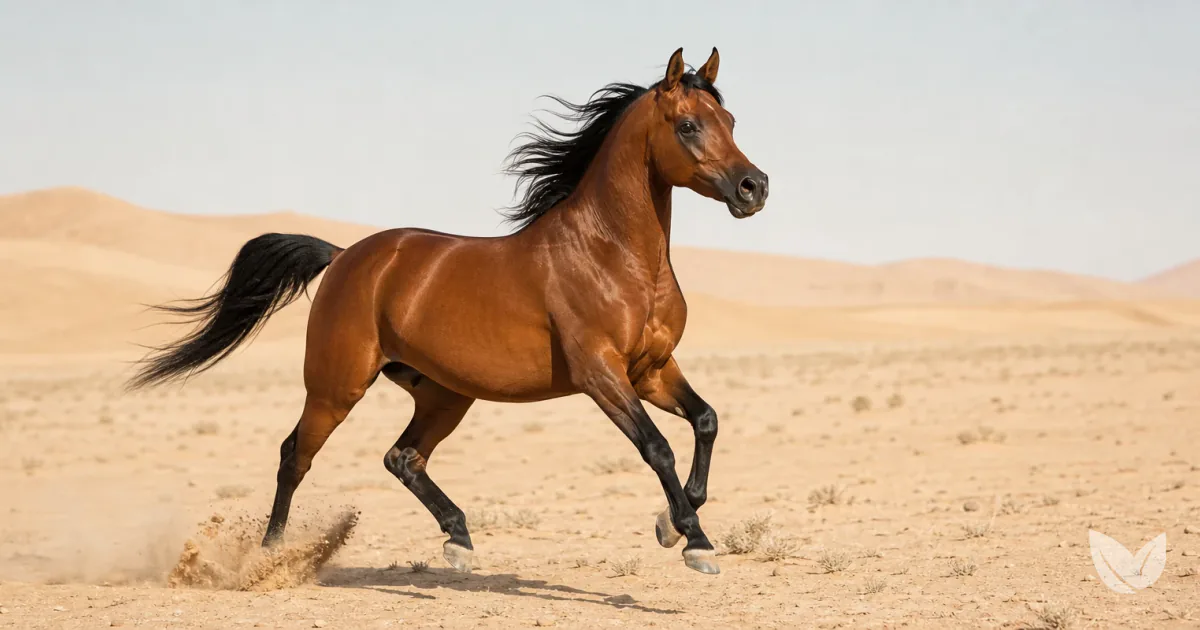
Yes, sport horses working in Middle Eastern heat have genuinely elevated nutritional needs that the right supplementation can meet. Heat stress brings reduced or absent sweating, electrolyte loss, and an inability to work properly; restoring electrolytes is one of the few interventions shown to ease those symptoms. Hard training adds another layer of pressure: horses left unsupported develop a measurable imbalance in their antioxidant defences over a season, whereas those receiving antioxidants, including vitamin E, beta-carotene, and selenium, hold steady. Betaine helps on both fronts: it protects cells against heat-related damage, lowers core temperature, and cuts oxidative stress in animal models exposed to heat, making it a sensible inclusion in a hot-climate performance formula.
If a horse’s plasma carnitine rises after supplementation, its muscles are getting the benefit
I hear this reasoning constantly, and I understand why it’s compelling, you supplement, you test the blood, the levels go up, so the job is done. Logical. Also wrong.
Blood and muscle are two separate worlds, and carnitine doesn’t travel freely between them in horses. A 58-day oral supplementation trial showed exactly this: despite elevated levels in the blood throughout the study, carnitine in the muscle stayed completely unchanged [10]. That matters, because muscle is where carnitine actually earns its keep, it’s responsible for carrying long-chain fats into the part of the cell that burns them for energy [12]. If muscle carnitine isn’t moving, neither is fat burning.
Part of the problem is how poorly horses absorb carnitine from the gut in the first place. Only 5-10% of what you feed actually makes it into the bloodstream, and that figure falls further as the dose goes up [10]. Most supplement labels don’t mention that.
None of this means carnitine supplementation is pointless. One study found that horses given a carnitine-containing product held greater freedom of movement in the fetlock joint after a recovery day compared to controls, a real, measurable signal of faster post-exercise recovery [11]. In young Standardbreds, carnitine combined with training also led to a healthier muscle profile and higher stored energy compared to untrained controls [5]. So there are genuine effects, they just have nothing to do with the “rising blood level means the muscles are sorted” logic that most marketing quietly rests on.
For sport horses working hard in heat, where fat burning and recovery speed genuinely matter, carnitine is worth including. Just pick a product with real evidence behind it, and don’t let a tidy blood result convince you the work is done.
How these nutrients work under heat and exercise stress
Heat stress starts at the sweat gland. In horses exposed to prolonged heat and humidity, the sweat glands gradually stop responding to the signals that tell them to work, resulting in anhidrosis, where sweating reduces or stops altogether. Body temperature climbs, breathing rate rises, and the horse is in trouble. Electrolyte supplementation is one of the few interventions shown to directly ease those symptoms.
Betaine takes on heat stress in two ways. First, it acts as an osmolyte, essentially a cellular stabiliser that helps membranes hold their shape under thermal load. Second, it donates methyl groups in metabolic reactions that restore the body’s own antioxidant defences and keep the mitochondria, the cells’ power generators, functioning properly. In controlled animal studies of cyclical heat stress, betaine reduced body temperature, death rate, and oxidative damage, and those effects were consistent across short-, medium-, and long-term protocols.
Antioxidant nutrients, including vitamin E (alpha-tocopherol), beta-carotene, and selenium, work by preventing the oxidative imbalance that hard training creates. Horses generate damaging free radicals when they work, and without nutritional support, those free radicals win. In Thoroughbreds in active training, unsupplemented horses showed significant drops in the antioxidant enzyme glutathione peroxidase and in selenium over three months, while supplemented horses held their antioxidant levels steady. That’s not a marginal difference, that’s the difference between a horse whose cells are protected and one whose aren’t.
L-carnitine has a clear job: it is made in the liver from the amino acids lysine and methionine, and its role is to carry long-chain fatty acids into the mitochondria so they can be burned for energy. Without enough carnitine, fat oxidation stalls. The complication in horses is absorption, only 5-10% of an oral dose actually gets in, and even 58 days of supplementation in Thoroughbreds didn’t raise muscle carnitine levels, despite raising blood levels. Where carnitine-containing products have shown a real benefit is in recovery: horses given one before strenuous exercise had better fetlock joint movement the following day compared to controls. And in young Standardbreds, combining L-carnitine with training led to more of the high-performance muscle fibre type (type IIA), better blood supply to muscles, and higher muscle glycogen stores compared to untrained controls.
Chromium propionate works on blood sugar regulation. At 2-8 mg/day, it helped horses clear glucose from the bloodstream more quickly after a carbohydrate load, with stronger effects at higher doses. For horses carrying metabolic pressure alongside physical demands, that’s worth noting.
During intense endurance competition, blood levels of the amino acids arginine, citrulline, and ornithine all fall, with ornithine in particular identified as critically depleted. These three amino acids are central to how the body processes and removes waste nitrogen during prolonged effort, and their depletion suggests that system comes under real strain during long-distance racing. The research in horses is currently descriptive, it identifies the problem rather than testing a fix, but it points clearly to where amino acid support may matter.
Coenzyme Q10 (CoQ10) is part of the energy-production chain inside mitochondria and acts as a fat-soluble antioxidant. In horses given 1,600 mg/day for 30 days, muscle CoQ10 levels didn’t actually increase, though there were changes in the muscle proteins involved in mitochondrial function. The absorption problem is real, and it’s worth understanding before committing to it.
Getting the most from heat-focused supplements: What the research actually tells US
The research pool supports specific guidance on a handful of supplements, chromium propionate, antioxidant blends, betaine, and L-carnitine. Here is what the evidence actually says about using them, without filling the gaps with marketing copy.
Antioxidant supplementation, maintain it across the training season
A field study on trained Thoroughbreds found that three months of antioxidant supplementation kept key protective markers, including selenium and vitamin E, stable, while the unsupplemented horses saw those same markers fall progressively over the same training period [1]. The practical takeaway: training steadily depletes your horse’s antioxidant reserves. This is not a pre-competition top-up; it is a season-long commitment. Waiting until a competition is approaching is too late.
Betaine, start early, not just on hot days
In animal heat-stress studies, betaine reduced core temperature, death rate, and cell damage consistently across short (6-day), medium (21-day), and long (63-day) supplementation periods [9]. That consistency across all three timeframes is the point, betaine does not work as a last-minute intervention. In hot-climate training, it earns its place as a permanent fixture in the daily feed. Its ability to protect cells from dehydration stress and support the body’s own antioxidant defences reinforces that sustained approach [13].
Chromium propionate
In yearling horses, chromium propionate improved the speed at which the body cleared blood sugar following a carbohydrate challenge [7].
L-carnitine, the absorption problem is real and must inform your expectations
Horses are poor absorbers of oral L-carnitine: only 5-10% of the supplied dose gets through, and that figure drops even further at higher doses. After 58 days of supplementation, carnitine levels in the muscle itself remained unchanged, even though levels in the blood had risen [10]. Elevated blood carnitine does not mean elevated muscle carnitine, and it is the muscle that matters for performance. That said, one study using a carnitine-containing product found that horses kept greater freedom of movement in the fetlock joint after a hard-work recovery day compared to controls [11], which suggests some post-exercise recovery benefit even where muscle loading appears limited.
L-carnitine is made in the body from two amino acids, lysine and methionine [12]. Horses whose diets run short of these building blocks may respond better to supplementation than horses whose own production is already running well.
What we’d recommend
Supplies ornithine, carnitine, and antioxidants to support horses training hard in the heat.
See the product
Frequently asked questions
Do antioxidant supplements actually help horses training in the heat?
Yes, and the field evidence is fairly clear. A study on trained Thoroughbreds found that horses receiving antioxidant supplements held their protective nutrient levels steady and came out with significantly higher vitamin E and beta-carotene than the control group, who developed a measurable antioxidant shortfall after just three months of training. In a hot climate, where heat piles extra stress on top of exercise, that protection matters.
What causes anhidrosis in horses and can supplements help?
Anhidrosis, reduced or absent sweating, happens when the sweat glands stop responding properly to adrenaline, usually in horses exposed to prolonged heat and humidity. Affected horses struggle to exercise, overheat, and breathe harder than normal. Electrolyte supplementation is recognised in the literature as something that can ease symptoms, though it does not fix the underlying problem with sweat gland sensitivity.
Does betaine help horses cope with heat stress?
The evidence is promising, though most of it comes from non-equine models so far. Betaine works as a cell protectant and methyl donor, it keeps cell membranes stable, supports the body’s own antioxidant defences, and helps mitochondria function better under pressure. In heat-stressed animal studies, betaine supplementation brought down core temperature, reduced cell damage, and lowered mortality across short-, medium-, and long-term feeding trials.
Is L-carnitine worth giving to sport horses?
The picture is mixed, and I think it is worth being honest about that. Horses absorb oral carnitine poorly, around 5-10% of the dose supplied, and one study found muscle carnitine levels unchanged after 58 days of supplementation. That said, a carnitine-containing product did improve post-exercise joint mobility in a separate trial, and work in Standardbreds showed that L-carnitine combined with training increased a key muscle fibre type and improved glycogen storage.
Which amino acids are depleted most in endurance horses during competition?
A metabolic study of Arabian endurance horses found significant drops in arginine, citrulline, and ornithine following competition, with ornithine flagged as being in particular demand during intense effort. These are all part of the same metabolic pathway, which suggests that pathway comes under real pressure when horses race over long distances.
Can I trust the marketing claims on equine supplement labels?
I would be cautious. A UK survey found that owners’ supplement choices were driven more by marketing than by their horses’ actual health needs. A broader review of equine nutraceuticals confirms that consumer demand consistently runs ahead of independent research into whether products actually work, and regulators have struggled to keep up. That does not mean supplements are useless. It means you should look for products backed by published evidence, not just polished packaging.
Sources
- Effect of oral antioxidant supplementation on blood antioxidant status in trained thoroughbred horses
- Heat stress in horses: a literature review
- The use of nutritional supplements in dressage and eventing horses
- Equine Nutraceuticals: Is Science Finally Catching up to Fiction?
- Oral L-carnitine combined with training promotes changes in skeletal muscle
- Impact of Coenzyme Q10 Supplementation on Skeletal Muscle Respiration, Antioxidants, and the Muscle Proteome in Thoroughbred Horses
- Chromium propionate increases insulin sensitivity in horses following oral and intravenous carbohydrate administration
- Metabolic Predictors of Equine Performance in Endurance Racing
- Betaine Supplementation May Improve Heat Tolerance: Potential Mechanisms in Humans
- The effect of oral L-carnitine supplementation on the muscle and plasma concentrations in the Thoroughbred horse
- A Carnitine-Containing Product Improves Aspects of Post-Exercise Recovery in Adult Horses
- Metabolic functions of L-carnitine and its effects as feed additive in horses. A review
- Betaine and related compounds: Chemistry, metabolism and role in mitigating heat stress in poultry