Active horses · Dec 11, 2025
Beta-alanine is the natural supplement that actually makes horses faster
There’s real horse trial data behind this one, and a clear reason why it works that any owner can follow.
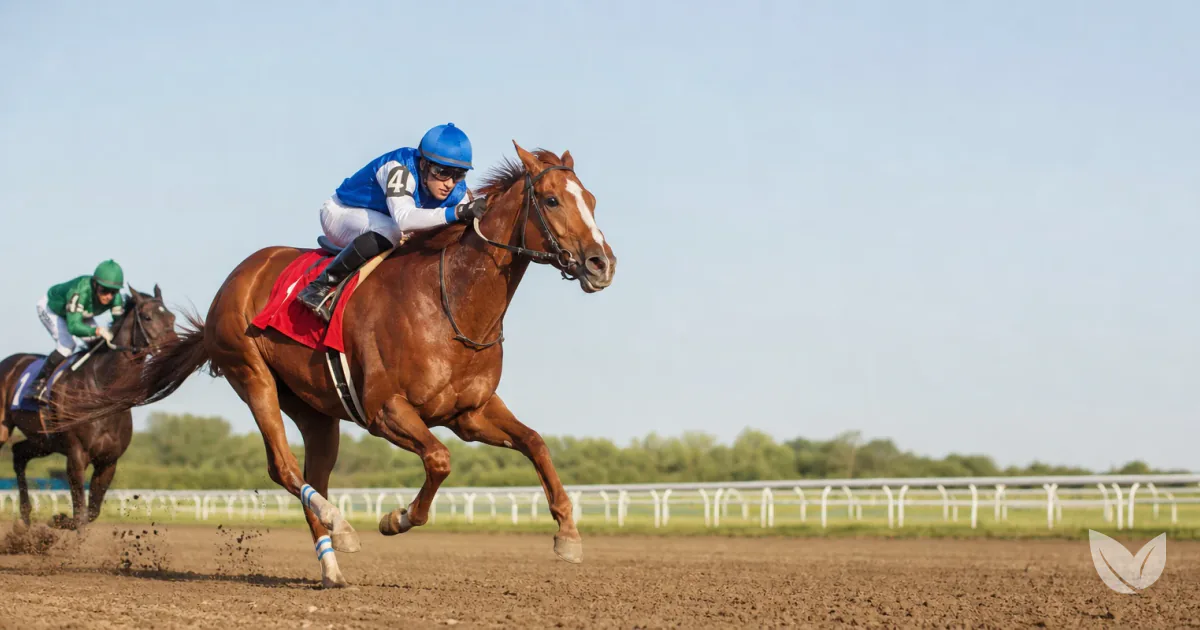
Yes, beta-alanine can genuinely make a horse faster. A controlled trial in speed-racing Yili horses found a 12.01% improvement in 1,000-metre race times after just 30 days of supplementation. Here’s why it works: beta-alanine helps muscles build up carnosine, which keeps muscle acidity in cheque when your horse is working flat out, and less acid means less fatigue. That said, it’s not a quick fix. You need to keep supplementing consistently; a single dose won’t cut it.
A supplement can’t make a racehorse faster
I hear this one regularly, usually from vets who associate beta-alanine with gym culture and dismiss it out of hand. The logic goes: it’s a human sports supplement, horses are not humans, therefore it’s irrelevant. That doesn’t hold up.
Here’s the simple version of what’s actually happening. When a horse works flat out, the muscles start to acidify, hydrogen ions build up, and it’s that acidity, not lactic acid itself, that makes the muscles give out. Carnosine, a small molecule your horse’s muscles naturally produce, mops up those hydrogen ions directly, slowing that acidic build-up and helping the muscles keep firing for longer [3]. Beta-alanine matters because without enough of it, the body simply can’t make enough carnosine, it’s the ingredient the process runs short of first [1]. Top up beta-alanine and muscle carnosine levels rise, by anywhere from 20 to 80% in supplemented individuals [1, 12]. That translates to a real, measurable improvement in the muscle’s ability to handle that acidity, roughly 3-5% more buffering capacity overall [6].
And this has been tested in horses, not just people. A controlled 30-day trial in speed-racing Yili horses found a 12.01% improvement in 1,000-metre race time, the supplemented horses finished 13.29 seconds faster than the controls [2, 13]. That’s not a rounding error; that’s a meaningful difference in a sprint race. It also makes complete sense mechanistically: the biggest benefits show up in efforts lasting roughly 60-240 seconds, which is exactly when acidity becomes the thing standing between a horse and a faster time [4, 7].
The honest caveat: this isn’t something you can add the week before a race. It takes at least four weeks of consistent supplementation before muscle carnosine builds up to levels that actually matter [11]. One-off dosing achieves nothing. But writing beta-alanine off as a gym fad with nothing to offer the equine athlete? The evidence simply doesn’t support that.
How beta-alanine, l-carnitine, and beetroot nitrate work in the exercising muscle
Here’s what’s actually happening inside your horse’s muscles during hard work, and why each of these ingredients earns its place.
Beta-alanine is the building block the body needs to make carnosine in muscle tissue. Without enough beta-alanine coming in, carnosine production simply can’t keep up. Supplement it at meaningful doses and muscle carnosine levels rise by 20-80%.
So why does carnosine matter? When your horse is sprinting, muscle fibres start filling up with hydrogen ions very quickly, and that acidity is a major driver of fatigue. Carnosine acts as a natural sponge for those hydrogen ions, soaking them up and keeping the muscle environment more stable. It also supports the electrical signalling that tells muscles to contract, and helps mop up damaging reactive oxygen species. The buffering boost from supplementation is estimated at a 3-5% increase in overall muscle buffering capacity. This matters most for efforts in the 60-240 second range, exactly where acidosis becomes the limiting factor. Shorter bursts under 60 seconds don’t benefit in the same way. In real-world terms: Yili horses supplemented with beta-alanine for 30 days ran a 1,000 m race 13.29 seconds faster than controls, a 12.01% improvement.
L-carnitine works through a completely different route. Horses don’t absorb it particularly well from feed, only around 5-10% of what you give them makes it into the bloodstream. Yet despite that, daily supplementation during five weeks of training was shown to increase muscle carnitine content by 50% in Standardbreds compared to unsupplemented horses. Over ten weeks of training, L-carnitine produced striking structural changes in Standardbred muscle: a 35% increase in type IIA muscle fibres and a 40% increase in capillary-to-fibre ratio. More capillaries means better oxygen delivery to working muscle, that’s a meaningful adaptation. There’s also recovery evidence: a study in Thoroughbreds found that an L-carnitine-containing product helped horses retain fetlock range of motion the day after intense exercise, compared to controls, though that’s a recovery effect, not a speed effect.
Beetroot juice brings something different again: it’s a natural source of dietary nitrate. The body converts that nitrate into nitric oxide, which relaxes blood vessels, increases blood flow, improves oxygen delivery to muscles, and helps mitochondria produce energy more efficiently. Peak levels in the bloodstream arrive roughly 1-3 hours after consumption.
What we’d recommend
A blend of beta-alanine, L-carnitine, beetroot, and Boswellia to support your horse’s stamina and recovery during hard work.
See the product
Frequently asked questions
How does beta-alanine actually make a horse run faster?
Here’s the simple version: when a horse works hard, muscles produce acid, and that acid builds up faster than the body can clear it, causing fatigue. Beta-alanine is the building block for a compound called carnosine, which acts like a sponge, soaking up that acid before it shuts the muscles down. More beta-alanine means more carnosine, which means the muscles keep firing for longer when it counts.
Has beta-alanine been tested in horses, or is this just extrapolated from human data?
It’s been tested directly in horses. A controlled 30-day trial in speed-racing Yili horses found a 12.01% improvement in 1,000-metre race time, the test group finished 13.29 seconds faster than controls. Blood tests confirmed that the carnosine-buffering mechanism was working in the same way we see in human research. That’s a proper equine trial, not a guess.
How long does beta-alanine need to be fed before it has any effect?
Beta-alanine is not a quick fix, a single dose does nothing measurable. The research is consistent: you need at least four weeks of supplementation before muscle carnosine levels rise enough to make a real difference to performance. Think of it as a slow build, not a switch you flick.
Does beta-alanine only help in certain types of exercise, or is it broadly useful?
It’s most useful for high-intensity efforts lasting roughly 60-240 seconds, the window where acid build-up is the thing that actually stops the muscles working properly. Controlled trials show no real benefit for efforts under 60 seconds, but a strong, consistent effect in that 60-240 second zone. Sprint racing sits right in that range, which is exactly why the equine trial used a 1,000-metre race as its test.
What does carnosine actually contribute to muscle buffering capacity, is the effect meaningful?
Yes, meaningfully so. A 60-80% rise in muscle carnosine following beta-alanine supplementation is estimated to increase the muscle’s acid-soaking capacity by around 3-5%. Across a large meta-analysis of human trials, the median performance improvement came out at 2.85%, with bigger gains in well-trained individuals. That’s a real, measurable difference, not a rounding error.
Can L-carnitine also support equine athletic performance, and how does it compare to beta-alanine?
L-carnitine works completely differently, it’s about fat burning and building better muscle, not acid buffering. Equine studies show that daily supplementation over 10 weeks of training increased a key type of performance muscle fibre (type IIA) by 35% and improved blood supply to muscles by 40% in Standardbreds. Absorption is low at 5-10%, but muscle levels still rose meaningfully with consistent use. The two compounds tackle different problems, so they complement rather than replace each other.
Sources
- Effects of Beta-Alanine on Muscle Carnosine and Exercise Performance: A Review of the Current Literature
- Effect of β-alanine on the athletic performance and blood amino acid metabolism of speed-racing Yili horses
- Muscle carnosine metabolism and beta-alanine supplementation in relation to exercise and training
- International society of sports nutrition position stand: Beta-Alanine
- Effects of β-alanine supplementation on exercise performance: a meta-analysis
- Nutritional Strategies to Modulate Intracellular and Extracellular Buffering Capacity During High-Intensity Exercise
- Nutritional Strategies to Modulate Intracellular and Extracellular Buffering Capacity During High-Intensity Exercise
- Concurrent use of veterinary drugs and herbal medicines in racing Standardbreds
- Increased Bioavailability of β-Alanine by a Novel Controlled-Release Powder Blend Compared to a Slow-Release Tablet
- Effects of Beta-Alanine on Muscle Carnosine and Exercise Performance: A Review of the Current Literature
- Effect of β-alanine on the athletic performance and blood amino acid metabolism of speed-racing Yili horses
- Possible Effects of Beetroot Supplementation on Physical Performance Through Metabolic, Neuroendocrine, and Antioxidant Mechanisms: A Narrative Review
- Effects of Beetroot Juice Supplementation on Cardiorespiratory Endurance in Athletes. A Systematic Review
- Metabolic functions of L-carnitine and its effects as feed additive in horses. A review
- Oral L-carnitine combined with training promotes changes in skeletal muscle
- A Carnitine-Containing Product Improves Aspects of Post-Exercise Recovery in Adult Horses
- Dietary Supplementation with Boswellia serrata, Verbascum thapsus, and Curcuma longa in Show Jumping Horses: Effects on Serum Proteome, Antioxidant Status, and Anti-Inflammatory Gene Expression
- Physiological Effects of Beetroot in Athletes and Patients