About natural supplements · Nov 13, 2026
Itchy dog season: allergy triggers in a South African summer
All of a sudden, scores of South African dogs are being taken to the vet – for itching, red tummies and paw licking. Why is this and how can we help, naturally?
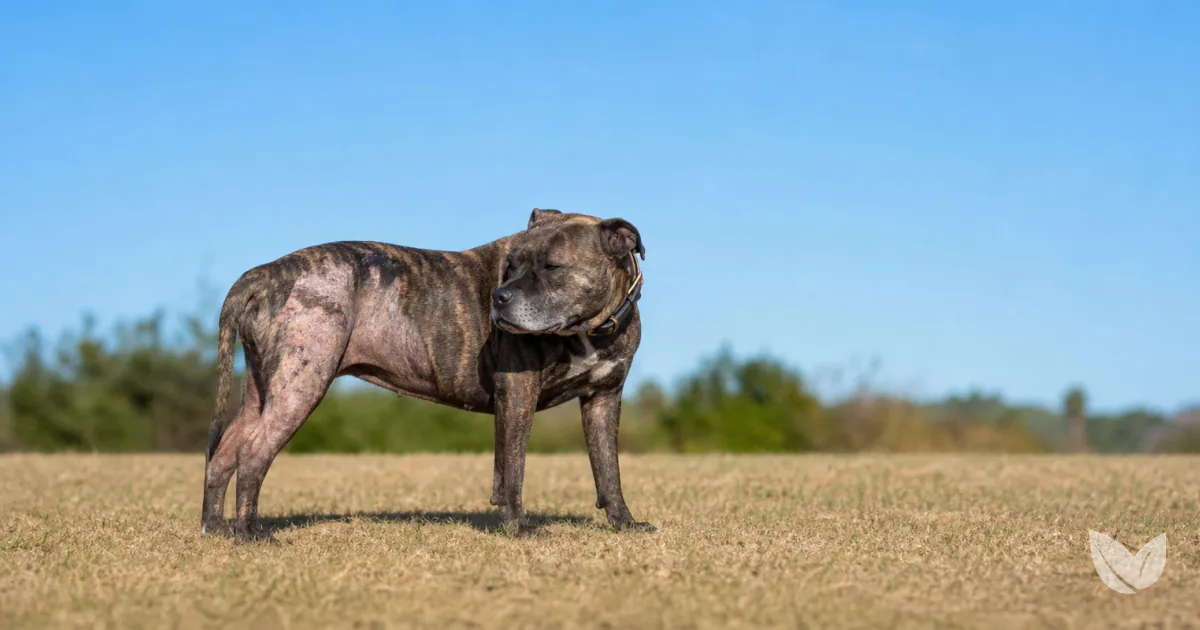
Itchy dog season: Allergy triggers in a South African summer
The first summer rains have fallen, the lawns are green again, and somewhere in the house you can hear it: *lick, lick, scratch, thump.* For many dogs, the South African summer is the itchiest time of the year. Heat, humidity and long, lush grass create good conditions for three common itch triggers. These are grass pollen, fleas and, less obviously, what’s in the food bowl.
Here is what’s going on under your dog’s skin, and what you can do about it.
First, why do dogs itch so much?
In people, allergies tend to show up as sneezing and streaming eyes. In dogs, they show up mostly in the skin. The medical term is *canine atopic dermatitis*. It is one of the most common reasons dogs visit the vet. Estimates suggest that roughly one in ten dogs is affected.
Here is the science in a nutshell:
– A leaky skin barrier. Healthy skin works like a brick wall. The skin cells are the bricks, and fats such as ceramides are the mortar. Many allergic dogs are born with weaker “mortar.” That lets allergens slip into the skin and lets moisture escape.
– An over-eager immune system. Once allergens get in, the immune system of a sensitised dog overreacts. It produces IgE antibodies and releases itch-causing chemicals, including histamine and a messenger called IL-31, which has been nicknamed the “itch cytokine.”
– Genetics. Some breeds are predisposed to atopic dermatitis. They include Labradors, Golden Retrievers, French Bulldogs, Boxers, West Highland Terriers, Shar-Peis and Staffies. Signs usually appear between six months and three years of age.
The itch threshold. Imagine your dog’s tolerance as a bucket. A few fleas might not overflow it. Neither might a little pollen, or a mild food sensitivity. Add all three together in midsummer and the bucket spills over into itch. This is why tackling *several* triggers at once often works better than chasing a single culprit.
## Trigger 1: Grass pollen
## What’s in the air
Across most of South Africa, which gets its rain in summer, grasses flower from about September to March. Counts usually peak between November and February. In the Western Cape, which gets its rain in winter, grass pollen tends to peak a little earlier, from spring into early summer.
A few grasses do much of the damage:
– Bermuda grass / kweekgras (*Cynodon dactylon*). It is found in lawns, sports fields and verges countrywide, and it is one of the most allergenic grasses in the country.
– Ryegrass (*Lolium* species). It is common in pastures and winter-green lawns.
– **Bahia and other *Paspalum* grasses. They grow in lawns and roadsides, especially in wetter regions.
– Kikuyu. It is the classic SA lawn. When kept mown it flowers less, but long, unmown kikuyu can still release pollen.
Pollen counts tend to be highest on warm, dry, windy days, especially from mid-morning to the afternoon. Rain washes pollen out of the air for a while, but the regrowth afterwards often brings a fresh flush.
### How dogs meet it
Dogs don’t only breathe pollen in. They also absorb it through the skin, especially where the fur is thin and the skin touches the grass. That means paws, belly, armpits, groin and muzzle. Every romp through a long-grass field is a full-body pollen bath.
### Signs to watch for
– Licking and chewing the paws, often with rusty-brown saliva staining between the toes on pale dogs
– Rubbing the face on carpets or furniture, and itchy eyes
– Red skin in the armpits, groin and belly
– Ear infections that keep coming back. These are often the first sign, and sometimes the only one.
– A pattern that flares in summer and settles in winter
### What helps
1. Wipe down after walks. Use a damp cloth or an unscented pet wipe on the paws, belly and face. This removes pollen before it soaks in.
2. Time your walks. Go early in the morning or after rain, and avoid hot, windy afternoons.
3. Keep the lawn short, so the grass doesn’t get the chance to flower. Keep allergic dogs off freshly cut grass for a few hours.
4. Bath weekly with a gentle, soap-free or oatmeal-based dog shampoo. This rinses allergens off and soothes the skin. Avoid human shampoos, which have the wrong pH for dog skin.
5. Wash bedding every week in hot water.
## Trigger 2: Flea allergy dermatitis (FAD)
### The real culprit is saliva
Flea allergy dermatitis is not caused by the flea itself. It is an allergic reaction to proteins in flea saliva, which the flea injects when it feeds. In a sensitised dog, a single bite can cause intense itching for days. That’s why an allergic dog can be miserable even when you can’t find a flea on it.
The usual offender on South African dogs is the cat flea** (*Ctenocephalides felis*). Despite the name, it is perfectly happy living on dogs.
### Why summer is flea season
The flea life cycle speeds up dramatically in warmth and humidity. A cycle that can take months in a cold winter can run in two to three weeks in a humid summer. The numbers are striking:
– Adult fleas on your dog make up only about 5% of the flea population.
– The other 95% are eggs, larvae and pupae living in carpets, bedding, between floorboards and in shady garden spots.
– Pupae sit inside sticky cocoons that resist most sprays. They can lie dormant for months, waiting for the warmth, vibration and carbon dioxide that signal a host is nearby. The first hot spell then brings a sudden “flea explosion.”
### Signs to watch for
– Itching concentrated on the lower back, the base of the tail, the back of the thighs and the belly. This is the classic “flea triangle.”
– Hair loss, scabs and thickened skin over the rump
– Frantic nibbling at the base of the tail
– Flea dirt, which looks like tiny black specks in the coat
The wet paper test: Comb your dog over a white, damp paper towel. If the black specks turn reddish-brown, that’s digested blood, which means flea droppings.
### What helps
1. Treat every pet in the household, cats included, with a vet-recommended flea product. One untreated cat can keep the whole cycle going. Dogs can be sprayed with our natural Tick and Flea spray.
2. Stay on schedule all year, not just once you see fleas. With SA’s mild winters, fleas never fully go away.
3. Treat the environment. Vacuum carpets, couches and car seats often, and throw away the vacuum bag or empty the canister outside. Wash bedding in hot water. Pay attention to shady, sheltered spots in the garden where your dog likes to lie.
4. Be patient. Because pupae keep hatching, expect to see some fleas for up to about three months after you start a proper control programme. That doesn’t mean it’s failing.
5. Deworm too. Dogs that swallow fleas while grooming can pick up the flea tapeworm (*Dipylidium caninum*).
## Trigger 3: Diet
### Food allergy is real, but it’s not seasonal
True food allergies, which vets call *cutaneous adverse food reactions*, are less common than pollen or flea allergies. They do occur, though, and they can make summer itch much worse. The key clue is that food-related itch doesn’t follow the seasons. If your dog itches all year and simply gets worse in summer, food may be part of the picture.
Dogs are usually allergic to a protein, not to “grains” or “additives” in general. The ingredients most often reported in studies are:
– Beef
– Dairy
– Chicken
– Wheat
– Lamb, soy and egg, which are reported less often
Dogs tend to react to proteins they have eaten for a long time. This is why “but he’s been on the same food for years” doesn’t rule it out.
Food allergy often shows up as itchy ears and paws, itching around the bottom, and digestive signs alongside the skin signs. These include soft stools, frequent bowel movements or wind.
### How it’s diagnosed
There is no reliable blood, hair or saliva test for food allergy in dogs. The gold standard is an elimination diet trial:
– Your vet puts your dog on a diet made of a novel protein (one your dog has never eaten) or a hydrolysed protein (one broken into pieces too small to trigger the immune system).
– The diet is fed strictly for about eight weeks, with no treats, table scraps or flavoured chews.
– If the itch improves, the old food is brought back. A flare within days confirms the diagnosis.
### Feeding the skin
Even dogs without a food allergy benefit from a diet that supports the skin barrier:
– Omega-3 fatty acids (EPA and DHA), mainly from marine sources such as fish oil, have good evidence for reducing skin inflammation. They take six to eight weeks to show full effect, so start before the peak season.
– Omega-6 fatty acids (linoleic acid) help the skin produce its own ceramides, the “mortar” between the bricks.
– Quality protein, zinc and B vitamins such as biotin are building blocks for healthy skin and coat.
– Gut health. Research into the “gut-skin axis” suggests that a balanced gut microbiome may help regulate immune responses in the skin. This is a promising field, but the evidence in dogs is still emerging.
## Your summer itch action plan
| What to do | Why it helps |
| — | — |
| Year-round flea control for all pets | Removes the most common and most preventable trigger |
| Give a natural allergy supplement like our Allergy Care chews |
| Wipe paws and belly after walks | Removes pollen before it penetrates the skin |
| Weekly soothing bath | Rinses off allergens and calms inflamed skin |
| Short lawns, early-morning walks | Reduces pollen exposure |
| Omega-3 supplementation from spring | Supports the skin barrier and dampens inflammation |
| Hot-wash bedding weekly | Removes pollen, flea eggs and dust mites |
| Keep a simple itch diary | Helps you and your vet spot seasonal or food patterns |
## When to see the vet
Itchy skin can quickly become infected. Summer humidity favours bacteria (*Staphylococcus*) and yeast (*Malassezia*). Book a vet visit if you notice:
– Hot spots. These are red, wet, painful patches that can appear within hours, especially on thick-coated dogs after swimming or rain.
– A greasy, smelly coat, or skin that is darkening and thickening
– Ear head-shaking, odour or discharge
– Itch that disturbs your dog’s sleep or stops them from settling
– Open sores, pustules or hair loss that is spreading
Vets now have several effective, targeted treatments for allergic itch. There is also *allergen immunotherapy*, a long-term “vaccine” built around your dog’s specific allergies. You don’t have to just put up with a miserable summer.
## The bottom line
Summer itch is rarely about one thing. It is usually pollen, fleas and sometimes food, all filling the same itch bucket. If you lower each one a little, many dogs drop back below their threshold. Then summer goes back to being about long walks, swims and lazy afternoons in the shade, instead of scratching.
*This article is for general information and isn’t a substitute for a consultation with your veterinarian.*
What we’d recommend
A natural supplement that helps to control allergies in various different ways.
See the product
Frequently asked questions
Is my dog’s seasonal itching caused by their food?
Probably not, which surprises a lot of owners. Food allergy and intolerance are rare in dogs and cats, while pollens and many other environmental allergens are well implicated in canine atopic dermatitis. Fleas are worth ruling out too. If you do suspect food, the proper route is an elimination diet followed by rechallenge. One study used a 60-day home-cooked trial. Blood and hair tests can’t diagnose it.
Do omega-3 fatty acids help dogs with itchy skin?
There’s a genuinely plausible case, and it’s one I like. Lab work on cells from atopic dogs shows omega-3s reducing immune cell proliferation, and an open-label trial points the same way, though with no control group it can’t prove the supplement did the work. Other studies suggest total fatty acid intake, or the omega-6 to omega-3 ratio, matters, and long-term supplementation deserves further testing. Expect modest, supportive benefit.
Do quercetin or citrus bioflavonoids stop allergic itching in dogs?
Flavonoids such as quercetin and rutin, and rooibos aspalathin, can dampen mast-cell histamine release and allergic signalling in mechanism studies.
Sources
- An update on the treatment of canine atopic
- Diagnosis and management of food allergy and
- Diagnosis of food allergy in dogs
- Medicinal plants as therapeutic options for topical
- Non-controlled, open-label clinical trial to assess
- Scientific Validation of Cannabidiol for Management
- An update on the treatment of canine atopic dermatitis
- The ACVD task force on canine atopic dermatitis (XXIV): allergen-specific immunotherapy
- The ACVD task force on canine atopic dermatitis (IV): environmental allergens
- Effect of omega-3 fatty acids on canine atopic dermatitis
- Non-controlled, open-label clinical trial to assess omega-3 supplementation in canine atopic dermatitis
- Treatment of canine atopic dermatitis: 2015 updated guidelines from the International Committee on Allergic Diseases of Animals (ICADA)
- An update on the treatment of canine atopic dermatitis
- Effect of omega-3 fatty acids on canine atopic dermatitis
- Analysis of epidermal lipids in normal and atopic
- Results of allergen-specific immunotherapy in 117
- Allergen-specific immunotherapy in dogs with atopic
- Medicinal plants as therapeutic options for topical
- Chemistry and pharmacology of the Citrus
- Treatment of canine atopic dermatitis: 2015 updated
- An update on the treatment of canine atopic dermatitis
- Allergen-specific immunotherapy in dogs with atopic
- Weekly topical therapy based on plant extracts
- Flavonoids inhibit histamine release and expression
- Aspalathin, a Primary Rooibos Flavonoid, Alleviates Mast Cell-Mediated Allergic Inflammation by the Inhibition of FcεRI Signaling Pathway
- Mucosal mast cells. II. Effects of anti-allergic