About natural supplements · Oct 20, 2026
Rotational worming is broken, natural alternatives deserve a proper look
Anthelmintic resistance is endemic on most UK and European yards, and if you’re still dosing on a calendar, you’re making it worse, here’s what the evidence actually supports.
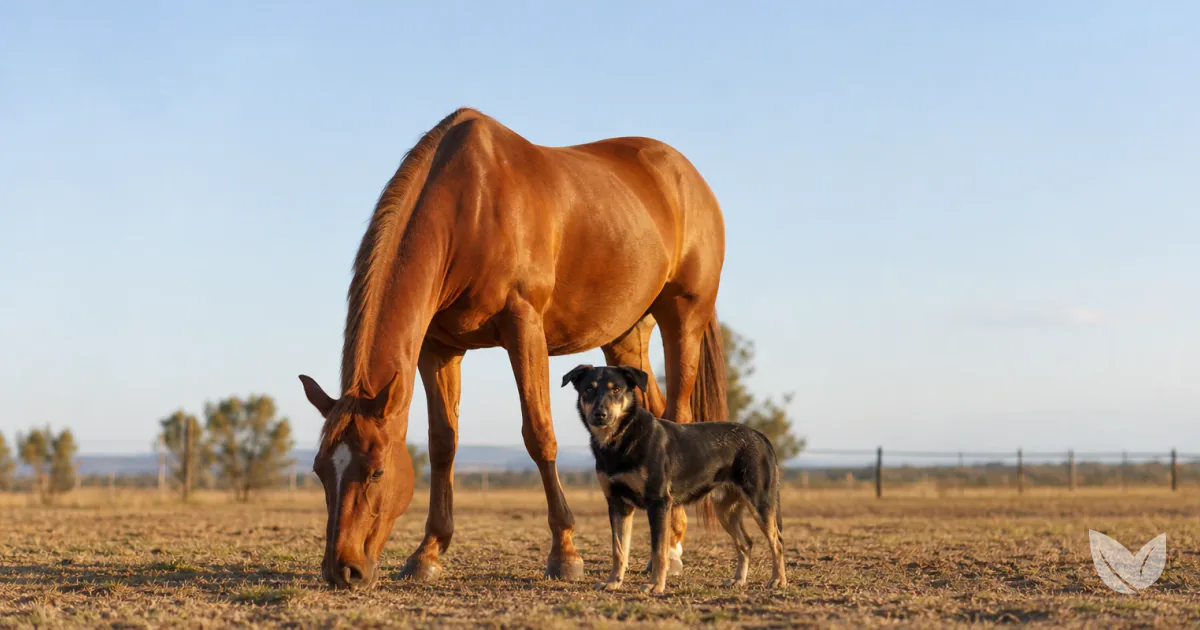
Natural dewormers do have real science behind them. Pumpkin seed (*Cucurbita pepo*) reduces faecal egg counts and worm burdens in a dose-dependent way; chamomile (*Matricaria recutita*) has shown efficacy comparable to albendazole against intestinal nematodes in vivo; and wormwood (*Artemisia annua*) demonstrates anthelmintic activity in vitro. That said, I’d never recommend using any of them as a blanket swap for conventional treatment, especially now that resistance to benzimidazoles is rife. Build your programme around faecal egg counts, use naturals as part of an integrated approach, and let the evidence guide when and what you treat.
Common misconception: Natural dewormers are just “worm prevention”, they can’t actually kill parasites
I hear this one constantly, and I get why it sticks. Conventional anthelmintics, benzimidazoles, macrocyclic lactones, pyrantels, have decades of clinical data behind them, and the assumption is that nothing herbal could genuinely compete. So when someone mentions pumpkin seeds or wormwood, the knee-jerk reaction from many vets and owners is: “nice idea, but it won’t actually kill worms.”
The evidence says otherwise. And it’s worth being specific about what that evidence actually shows.
Take pumpkin seed (Cucurbita pepo). It contains a compound called cucurbitin, which works by paralyzing the musculature of nematode worms, a real, documented mechanism, not a folk story. In vitro and in vivo studies have shown dose-dependent anthelmintic activity against gastrointestinal nematodes, with measurable reductions in faecal egg counts and worm burden in animal models [3, 4]. Efficacy scales with dose, and whole-plant formulations appear to outperform isolated compounds, which matters a great deal when you’re deciding what actually goes into a product [4].
Artemisia species have also been studied directly for anthelmintic activity. Crude alcoholic extracts of Artemisia annua (sweet wormwood) showed trematocidal activity at low doses in vitro [6], and artemisinin, A. annua’s signature active compound, has demonstrated immunomodulatory effects on top of its antiparasitic properties [5]. These aren’t vague “supportive” actions. They’re direct antiparasitic mechanisms.
And then there’s chamomile (Matricaria recutita / M. chamomilla), which tends to get dismissed as a mild digestive herb. In vitro, a 1% aqueous tincture produced over 65% larval mortality in nematodes within 24 hours [9]. A separate in vivo study found efficacy against Heligmosomoides polygyrus comparable to albendazole, alongside real reductions in intestinal oxidative stress and inflammation [8].
None of this means you abandon your faecal egg counts or stop thinking about dose. Conventional anthelmintics remain effective where resistance hasn’t taken hold, and having good evidence for natural compounds isn’t the same as having a replacement protocol. But the claim that natural herbs simply cannot kill parasites is flatly contradicted by the research. What’s genuinely true is that the evidence base is younger, dosing is less standardised, and the regulatory pathway is different. That’s a fair distinction to make. “It doesn’t work” isn’t.
How these herbs and minerals act against parasites
These ingredients aren’t folklore dressed up in supplement packaging, they have documented mechanisms, and it’s worth understanding how each one actually works.
Cucurbitin, the active compound in pumpkin seed (Cucurbita pepo), goes straight for the worm’s musculature. It paralyses the muscles of gastrointestinal nematodes, so the worm can no longer hold its position in the gut. The effect is dose-dependent, more extract, more paralysis, and animal studies back this up with measurably reduced faecal egg counts and overall worm burdens. There’s also good reason to think whole-seed formulations outperform isolated cucurbitin, suggesting the seed’s other constituents are pulling their weight too.
Artemisia annua (sweet wormwood) brings artemisinin to the table, a compound with confirmed anthelmintic activity in vitro. Crude alcoholic extracts of A. annua have shown activity against parasitic worms at low doses in laboratory studies, which makes it a serious candidate for natural parasite control rather than just a traditional curiosity. One thing I want to be clear about: A. annua is not the same plant as Artemisia absinthium (common wormwood). The presence of artemisinin is what sets them apart chemically, and they should not be treated as interchangeable. On safety: the artemisinin derivative artemether has shown neurotoxic effects in dogs at high parenteral doses, but oral administration in studies didn’t produce comparable neuronal damage. Route of administration matters here, considerably.
Chamomile (Matricaria recutita / Matricaria chamomilla) works through two measurable pathways. In vitro, a 1% aqueous tincture killed over 65% of nematode larvae within 24 hours. In vivo, methanolic chamomile extract reduced worm burden in infected mice with efficacy comparable to albendazole, and on top of that, it reduced the intestinal oxidative stress and inflammatory damage that helminth infections cause in gut tissue. That dual action is genuinely useful.
Diatomaceous earth (food-grade kieselguhr) works physically rather than biochemically. It’s EU-approved as a feed additive at up to 5,000 mg/kg of complete feed in terrestrial animals and is considered safe at those levels. But inhalation is a real risk, always mix it into damp feed, never administer it dry.
Finally, a species caveat I consider non-negotiable: cats have poor hepatic metabolism of many plant compounds. A herbal formula that’s appropriate for a horse or a dog is not automatically safe for a cat. Species-appropriate formulation isn’t a minor footnote, it’s a fundamental safety requirement.
What we’d recommend
Herb-based parasite support formulated around real anthelmintic evidence, not guesswork
See the product
Frequently asked questions
Do natural dewormers actually work, or is this just wishful thinking?
The evidence is real, but context matters. Pumpkin seed (Cucurbita pepo) extracts show dose-dependent reductions in faecal egg counts and worm burdens in animal studies. Chamomile (*Matricaria chamomilla*) hit over 65% larval mortality in vitro within 24 hours, comparable to albendazole in some models. Artemisia annua showed anthelmintic activity at low doses in vitro. None of these replace a properly targeted anthelmintic programme. But folklore? No. There’s real biochemistry behind them.
Why does my vet keep recommending faecal egg counts before worming?
Because blanket interval dosing has made a serious mess of things. Anthelmintic resistance, particularly to benzimidazoles, has been documented in over 80% of UK horse yards. Modern integrated parasite management uses faecal egg counts to identify which animals actually need treating, so the drugs that still work get preserved for when they’re genuinely needed. Testing before you treat isn’t excessive caution, it’s the responsible standard of care.
Is diatomaceous earth safe to feed to horses?
Food-grade diatomaceous earth (kieselguhr) is EU-approved as a feed additive for all terrestrial animal species at up to 5,000 mg/kg of complete feed, and it’s considered safe within those limits. The one caveat worth taking seriously: the dust. Fine particles are a respiratory hazard, so mix it into damp feed, don’t let it float around in the air. Used correctly, it’s straightforward.
Can I use the same herbal wormer for my horse and my cat?
No, and this is a hill I’ll die on. Cats have significantly impaired hepatic metabolism of many plant compounds compared with horses and dogs, making them genuinely unsuitable for herbal deworming formulations designed for other species. What a horse handles without a second thought can be hazardous to a cat. Species-specific formulation isn’t a marketing distinction, it’s a safety necessity.
Is wormwood (Artemisia) safe to give to horses?
Route and dose are everything here. Artemether, an artemisinin derivative from Artemisia annua, caused dose-dependent neurotoxicity in dogs at high parenteral doses, but oral administration didn’t produce comparable neuronal damage. For horses, the concern is high-dose or injectable preparations. Oral formulations at sensible doses are a genuinely different risk profile, and in vitro anthelmintic activity has been demonstrated at low doses. The distinction matters.
What is cucurbitin and how does it kill worms?
Cucurbitin is the active compound in pumpkin seeds (Cucurbita pepo) that does the heavy lifting against parasites. It works by paralysing worm musculature, the worm loses its grip on the gut wall and gets expelled. The effect is dose-dependent, with higher extract concentrations producing stronger results, and whole-seed formulations appear to offer synergistic benefits over isolated cucurbitin alone.
Sources
- Novel Equine Faecal Egg Diagnostics: Validation of the FECPAKG2
- Deworming programs for horses in the United States: past, present, and future
- Evaluation of Anthelmintic Activity and Composition of Pumpkin (Cucurbita pepo L.) Seed Extracts—In Vitro and in Vivo Studies
- The use of pumpkin seeds as an alternative anthelmintic to reduce parasite burden in naturally infected lambs
- Standardized Artemisia annua Exhibits Dual Antileishmanial Activity and Immunomodulatory Potential In Vitro
- In vitro trematocidal effects of crude alcoholic extracts of Artemisia annua, A. absinthium, Asimina triloba, and Fumaria officinalis
- Differential effects of orally versus parenterally administered qinghaosu derivative artemether in dogs
- Chamomile Methanolic Extract Mitigates Small Bowel Inflammation and ROS Overload Related to the Intestinal Nematodes Infection in Mice
- Anthelmintic Activity of Traditional Medicinal Plants Used in Europe
- Safety and efficacy of a feed additive consisting of Kieselguhr (diatomaceous earth) for all animal species
- Potential role of natural products in veterinary stem cell therapy
- Anthelmintic resistance in cyathostomin populations from horse yards in Italy, United Kingdom and Germany